In breve: Tranche 2 software di conformità aiuta le imprese e i professionisti non finanziari designati (DNFBP) a soddisfare gli obblighi normativi. Questa tranche 2 norme di conformità sono dovuti al regime australiano di antiriciclaggio (AML) e contrasto al finanziamento del terrorismo (CTF). Questa guida è destinata alle aziende della Tranche 2. alla ricerca di una soluzione impegnandosi al massimo per soddisfare le loro esigenze.
Cosa ha portato alla seconda fase delle riforme antiriciclaggio e antiterrorismo?
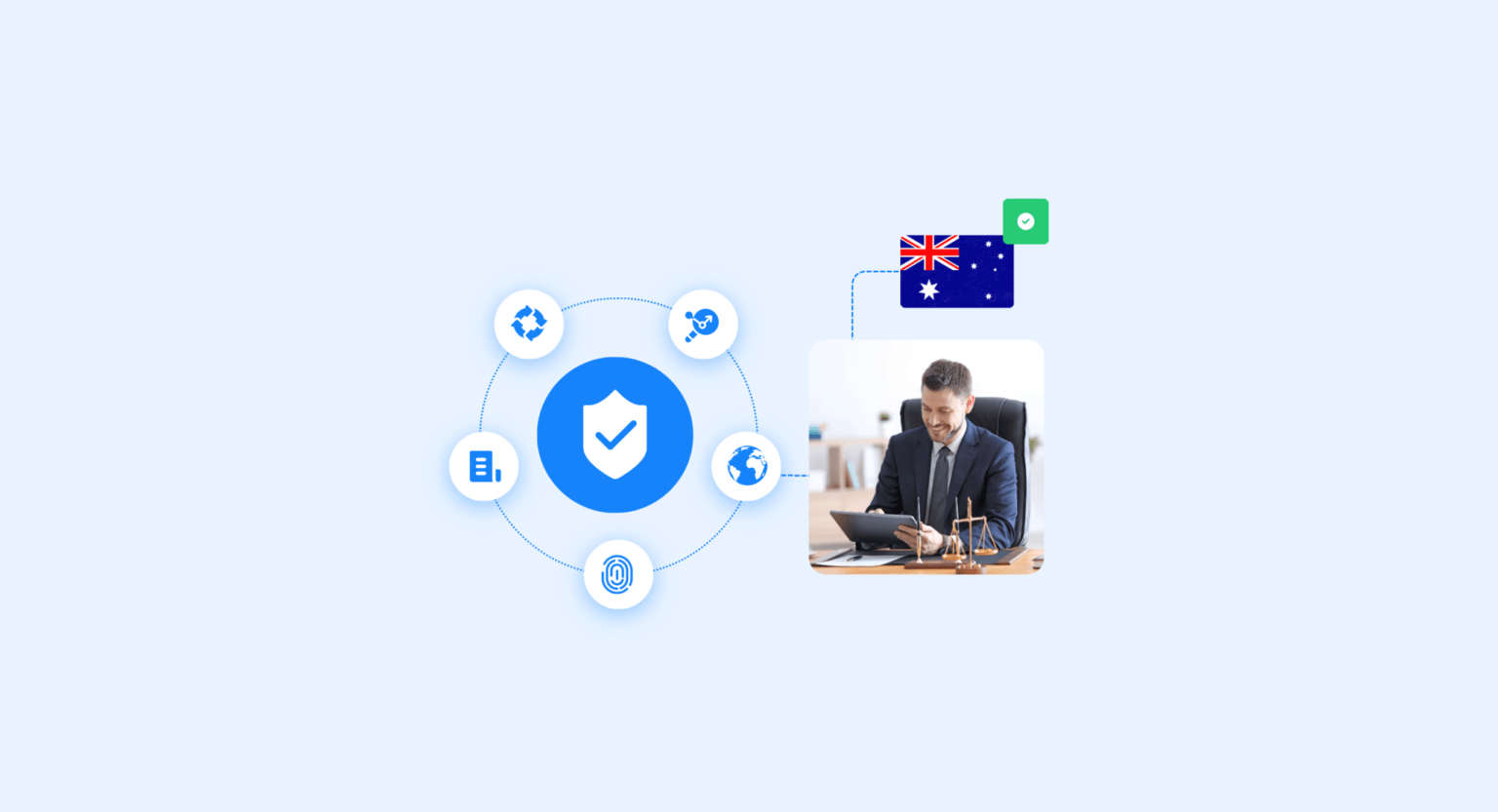
A partire dal 1° luglio 2026, la seconda fase del programma antiriciclaggio australiano (Tranche 2) si estende a un maggior numero di professioni ad alto rischio, allineandosi agli standard globali in materia. Queste nuove riforme si applicano ad avvocati, commercialisti, agenti immobiliari, notai e altri professionisti.
Le linee guida dell'Australian Transaction Reports and Analysis Centre (AUSTRAC) affermano che le riforme mirano a colmare le lacune che i criminali hanno precedentemente sfruttato. Sfortunatamente, i punti ciechi dei requisiti di conformità sono costati all'Australia fino a circa $82,3 miliardi AUD (1.000.700.570 miliardi di USD) all'anno.
AUSTRAC funge sia da agenzia australiana di intelligence finanziaria che da organismo di regolamentazione AML/CTF, raccogliendo dati dalle entità segnalanti. Il loro obiettivo è identificare e contrastare la criminalità finanziaria. Seconda tranche di riforme antiriciclaggio e antiterrorismo Questo rappresenta un enorme cambiamento per le aziende australiane. Si prevede che 90.000 entità saranno soggette a una nuova regolamentazione. In ogni caso, AUSTRAC si aspetta che le aziende che forniscono questi servizi specifici si registrino e rispettino i nuovi obblighi di rendicontazione e conformità.
Che cos'è il software di conformità Tranche 2?
Il software di conformità Tranche 2 è una tecnologia che aiuta le aziende e le imprese australiane recentemente regolamentate a rispettare i propri obblighi in materia di antiriciclaggio e contrasto al finanziamento del terrorismo (AML/CTF). Questo software deve supportare diverse soluzioni AML per le diverse istituzioni regolamentate. Come minimo, per prevenire i rischi di reati finanziari, un software di conformità Tranche 2 efficace deve possedere le seguenti caratteristiche:
- Verifica dell'identità (IDV) e conoscenza del cliente (KYC)
- Due Diligence della Clientela (CDD) e Due Diligence Rafforzata (EDD)
- Sanzioni globali e screening delle persone politicamente esposte (PEP)
- Identificazione del titolare effettivo finale (UBO)
- Screening antiriciclaggio (AML)
- Esecuzione di un monitoraggio continuo
- Gestione dei casi e dei rischi
- Flussi di lavoro relativi ad attività sospette
- Mantenere registri e prove accurati
Di conseguenza, il miglior software di conformità AML di Tranch 2 deve concentrarsi sull'aiutare le aziende a passare a un sistema di conformità più dinamico. Un flusso di lavoro di conformità esclusivamente manuale è ormai superato.
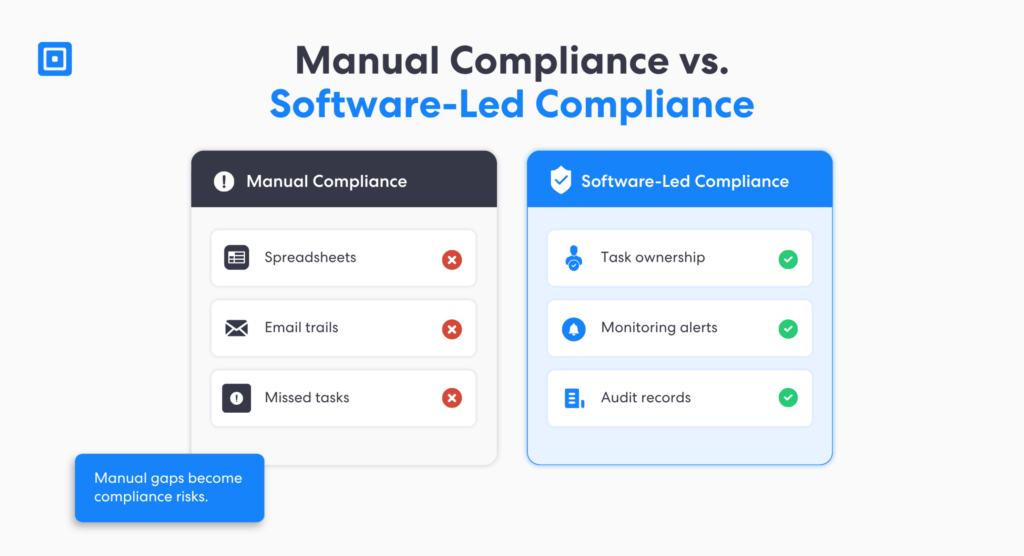
I team di compliance hanno bisogno di supporto nell'applicazione delle politiche AML/CTF quando acquisiscono nuovi clienti, esaminano i rapporti commerciali o valutano i clienti ad alto rischio. Soprattutto, devono segnalare qualsiasi attività sospetta quando richiesto.
Inoltre, le soluzioni software di conformità Tranche 2 più efficaci si integrano bene con i sistemi di gestione dello studio. Le soluzioni devono produrre dati a supporto delle segnalazioni di attività sospette (SAR) e delle segnalazioni di transazioni di soglia. Il loro compito è quello di semplificare il processo. Responsabili delle segnalazioni di riciclaggio di denaro (MLRO) e gli altri membri del team di conformità cercano prove per prendere decisioni con facilità. Rende le revisioni interne di conformità più fluide.
Funzionalità del software di conformità della tranche 2
Il software AML di Tranché 2 più adatto deve essere indicativo del profilo di rischio attuale di un'azienda. Ciò che può essere considerato rischioso per un'agenzia immobiliare o uno studio legale potrebbe non esserlo per uno studio contabile o di consulenza fiscale. Allo stesso modo, un notaio, un trust o un fornitore di servizi aziendali potrebbero dover soddisfare requisiti di conformità diversi. I loro flussi di lavoro non sono pensati per essere identici. Una piattaforma solida dovrebbe supportare:
Due Diligence della clientela (CDD)
La CDD (Customer Due Diligence) aiuta le aziende a capire chi è il cliente. Questa soluzione analizza anche il servizio offerto dalle aziende, i rischi connessi e la necessità di una Due Diligence rafforzata (EDD). Il miglior software AML (Antiriciclaggio) deve supportare la verifica dell'identità (IDV), i controlli sulla titolarità effettiva e diversi livelli di screening AML basati sul rischio.
Gestione e valutazione dei rischi
Un approccio basato sul rischio, rigoroso, dovrebbe considerare il cliente, il servizio fornito e la struttura proprietaria alla base del rapporto. Deve inoltre fornire dati sul tipo di transazione, sui canali di distribuzione e sulle relazioni commerciali.
Un buon software per la seconda fase del processo di revisione dei rischi rende la valutazione coerente e facilmente interpretabile. Attraverso le piattaforme di conformità, i team possono visualizzare quali rischi sono stati identificati, il livello di rischio assegnato e se sono state intraprese azioni correttive.
Effettuare un monitoraggio continuo per i clienti
La conformità manuale tende a presentare delle criticità. È qui che il monitoraggio continuo diventa fondamentale. Se un cliente risulta ad alto rischio dopo la fase di onboarding, le aziende devono esserne informate. Che si tratti di modifiche alle sanzioni, notizie negative sui media o attività sospette, qualsiasi variazione del rischio deve essere nota. Un software AML efficace supporta la ri-verifica, gli avvisi e i flussi di lavoro di revisione. Inoltre, per i clienti ad alto rischio, il monitoraggio continuo deve essere più frequente e documentato in modo più accurato.
Obblighi del gruppo di riferimento e tenuta dei registri
Infine, gli enti regolamentati sono tenuti a seguire linee guida fondamentali in materia di tenuta di registri completi. Gli obblighi di segnalazione includono la presentazione di segnalazioni di attività sospette, soprattutto in caso di attività illecite o di determinate transazioni in contanti fino a una soglia di 10.000 AUD o superiore, che risultano segnalate nelle relative segnalazioni. Un software affidabile conserva la documentazione delle transazioni finanziarie e i dati relativi a qualsiasi decisione di segnalazione o di escalation.
Analogamente, la tenuta dei registri è altrettanto importante. È necessario conservare registrazioni che indichino quali clienti sono stati controllati, quali informazioni sono state verificate e quali rischi sono stati rilevati. Inoltre, i team devono sapere chi ha approvato ciascun caso e se le revisioni periodiche sono state completate.
Preparazione alla seconda fase delle operazioni di conformità in materia di antiriciclaggio e contrasto al finanziamento del terrorismo (AML/CTF).
Tuttavia, molte aziende considerano la conformità alla Tranche 2 come un progetto una tantum. Per loro, si tratta semplicemente di ottenere un modello, nominare un responsabile e registrarsi presso AUSTRAC per rispettare la scadenza del 1° luglio 2026. Questo porta a trascurare un rischio operativo ben più grande.
Gli obblighi di conformità della seconda tranche diventeranno parte integrante delle attività quotidiane di queste aziende recentemente regolamentate. Saranno integrati nel processo di acquisizione e gestione dei clienti. Ogni nuova pratica, transazione immobiliare e operazione di elevato valore richiederà ora una procedura standardizzata.
Quale software di conformità per la Tranche 2 è quello giusto?
Spesso, la domanda giusta non è "quale strumento ci aiuta a prepararci?", ma piuttosto "quale strumento ci aiuta a gestire un programma AML/CTF difendibile dopo il 1° luglio 2026?". È così che le soluzioni software di compliance di seconda generazione possono distinguersi. Le piattaforme migliori aiutano le aziende a identificare, verificare e valutare i clienti durante l'intero rapporto commerciale. Integrando diverse soluzioni di prevenzione AML in un unico flusso di lavoro controllato, i team possono costruire il modello operativo più solido per proteggersi dai rischi.
Software per la verifica dell'identità e la conformità alla Tranche 2
Oggi, la verifica dell'identità è necessaria poiché le aziende devono verificare i clienti prima di fornire loro specifici servizi. Ciò può comportare la verifica di persone fisiche, amministratori e titolari effettivi. Altre verifiche includono quelle di fiduciari, acquirenti, venditori o rappresentanti.
Tuttavia, la verifica dell'identità è solo il primo livello di controllo. Un cliente può superare facilmente un controllo di verifica dei documenti e vedersi comunque associato a rischi di riciclaggio di denaro o finanziamento del terrorismo. Questi rischi vengono rilevati attraverso notizie negative sui media, esposizione a sanzioni e una struttura proprietaria complessa.
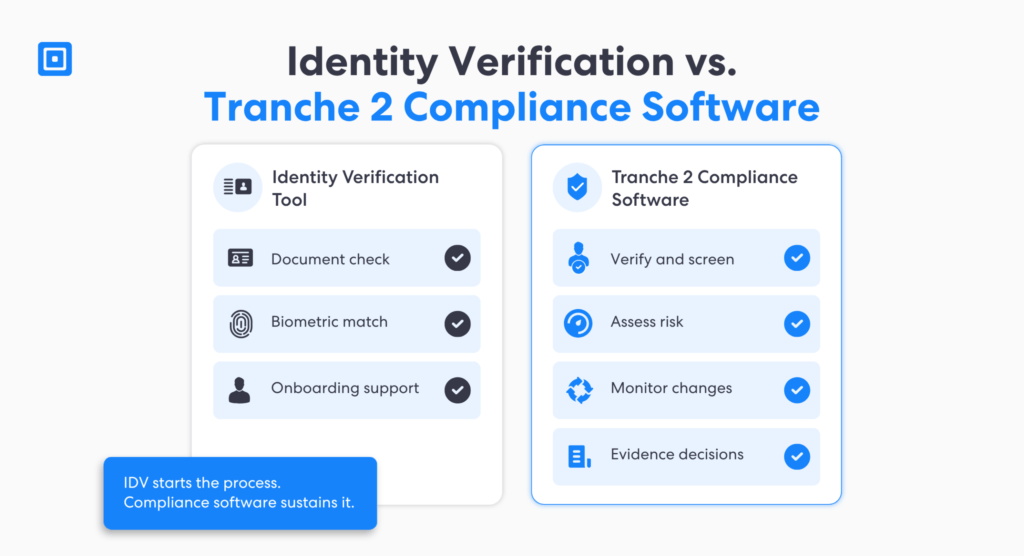
Il miglior software di conformità AML integrerà la verifica dell'identità con altre soluzioni e funzionalità AML, come la gestione dei casi, il supporto alla reportistica e le tracce di audit. Un controllo dell'identità una tantum non può sostituire un programma di conformità attivo e continuativo.
Modello di maturità del software di conformità - Tranche 2
Per confrontare i software di compliance di seconda generazione, i team devono conoscere il proprio livello di maturità in materia di compliance. Mentre alcuni strumenti di compliance aiutano a preparare i documenti, altri supportano la verifica dei clienti. Le piattaforme migliori aiutano le aziende a gestire la compliance nel tempo.
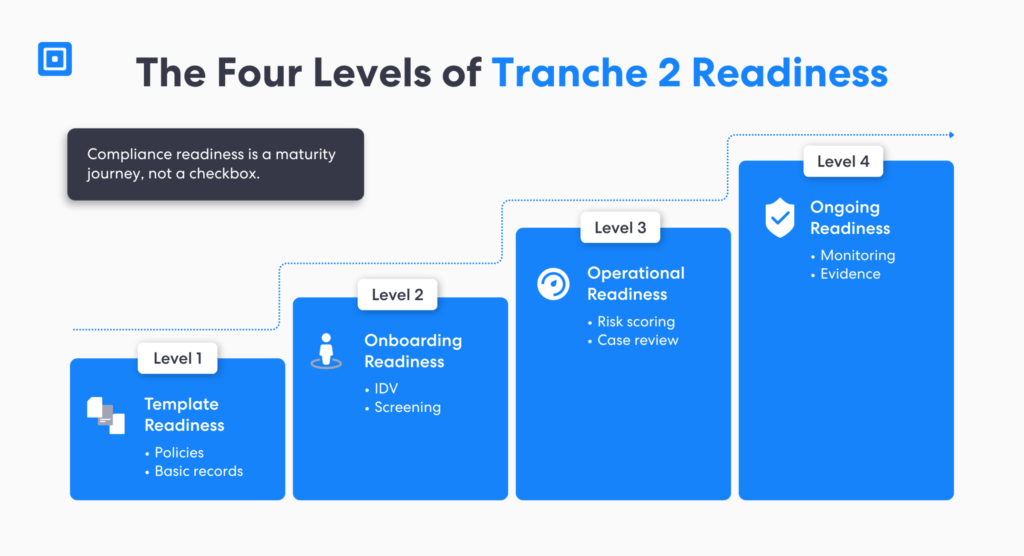
Un buon modello di maturità per la Tranche 2 può aiutare acquirenti e potenziali clienti a comprendere il livello di preparazione che ogni piattaforma è in grado di supportare. Ciò può prevenire ulteriori complicazioni con gli obblighi in materia di antiriciclaggio e contrasto al finanziamento del terrorismo (AML/CTF) previsti dalle nuove riforme. Per saperne di più, clicca qui: Come le aziende australiane possono creare una soluzione KYC per la seconda fase
Livello 1: Preparazione al modello
Spesso, le aziende di questa categoria dispongono di una solida base documentale. Ciò significa che potrebbero avere una sorta di politica antiriciclaggio/antiterrorismo o una bozza di programma di conformità. Questa potrebbe consistere in un modello di valutazione del rischio, semplici linee guida per il personale e un luogo dove archiviare i documenti.
Tuttavia, ciò non significa che l'azienda possa effettivamente verificare i clienti, sottoporli a screening o valutarne il rischio. Inoltre, non può segnalare problemi, monitorarli o dimostrare in alcun modo che ogni passaggio sia effettivamente avvenuto. È qui che i team non dispongono necessariamente di un processo di lavoro adeguato e non sono conformi alle procedure operative.
Livello 2: Preparazione all'inserimento in azienda
Alcune aziende devono verificare i clienti al momento del loro ingresso. Le imprese possono raccogliere informazioni sui clienti, verificare i documenti di identità e controllare i nomi rispetto alle liste di sanzioni o PEP (Persone Politicamente Esposte). Si tratta di una procedura di base di due diligence del cliente che in genere avviene durante qualsiasi procedura di onboarding.
Qui l'attenzione è ancora focalizzata sull'inizio del rapporto commerciale/cliente. Non copre completamente cosa accade se un cliente in seguito diventa più rischioso. Ad esempio, se cambia la proprietà, emergono questioni sospette o se l'azienda deve documentare l'intero processo decisionale, ciò potrebbe modificare il suo punteggio di rischio. Sebbene i team siano in grado di acquisire clienti in conformità con le normative, non dispongono di un processo di conformità completo e continuativo.
Livello 3: Prontezza operativa
In questo modo, le aziende possono gestire la conformità come parte integrante delle operazioni quotidiane. I loro sistemi vanno oltre la semplice verifica dei clienti, assegnando punteggi di rischio, attivando la procedura di due diligence rafforzata (EDD) per i clienti ad alto rischio e inoltrando i casi ai responsabili della conformità, ove necessario. Inoltre, sono in grado di gestire le approvazioni dei clienti, aggiungere note o prove e dimostrare in modo preciso le motivazioni di una decisione.
In questa fase, i processi di conformità sono facilmente difendibili. Possono rispondere a tutte le domande importanti sul perché è stata concessa l'approvazione del cliente, quali rischi sono stati identificati, chi ha condotto la revisione e, soprattutto, quali prove supportano le decisioni. Vengono prese decisioni di conformità basate sul rischio, non semplici verifiche complete.
Livello 4: Preparazione continua alla conformità
La fase finale consiste nel verificare se le aziende riescono a mantenere la conformità attiva anche dopo il processo di onboarding. In questa fase, le imprese possono monitorare le variazioni di rischio, ricontrollare i clienti e aggiornare i dati esistenti. Possono inoltre rivedere i clienti esistenti, ricevere avvisi per eventuali modifiche relative a sanzioni/persone politicamente esposte (PEP)/notizie negative dai media e avere la prova che le verifiche in corso sono state effettuate e continuano ad essere effettuate.
Questo rappresenta il livello più elevato di maturità in materia di conformità per la Tranche 2, poiché la conformità AML/CTF non si limita a una verifica una tantum. Ad esempio, un sistema può avvisare il team di conformità, avviare verifiche, aggiornare la valutazione del rischio e memorizzare il nuovo esito della verifica. Le aziende monitorano e gestiscono la conformità nel tempo.
Scelta tra i software antiriciclaggio della Tranche 2
Le aziende recentemente regolamentate dovrebbero scegliere il software di conformità Tranche 2 in base al loro profilo di rischio, ai servizi designati e al livello di maturità della conformità. Dagli agenti immobiliari ai servizi legali e dagli agenti fiscali ai fornitori di servizi di asset virtuali, gli obblighi variano a seconda di linee guida specifiche per settore dai soggetti che presentano i dati di rendicontazione.
Innanzitutto, iniziate definendo nel dettaglio il servizio che intendete fornire. Ad esempio, uno studio legale gestisce i fondi dei clienti o un agente immobiliare si occupa di transazioni immobiliari. Il diverso grado di esposizione al rischio determina quali strumenti o soluzioni siano più adatti.
Successivamente, è necessario definire il livello di maturità di conformità della Tranche 2. Ogni livello ha esigenze diverse. Un'azienda di Livello 1 potrebbe aver bisogno di politiche, valutazioni del rischio e formazione del personale. Un'azienda di Livello 2, invece, richiederà la verifica indiretta (IDV) e lo screening. Se si raggiunge il Livello 3 o 4, è necessario un processo molto più intensivo che includa la valutazione del rischio, una due diligence rafforzata e la gestione dei casi. Inoltre, le aziende a questo livello avranno bisogno anche di monitoraggio continuo, supporto alla reportistica e documentazione pronta per l'audit.
È inoltre di fondamentale importanza evitare, ove possibile, l'utilizzo di strumenti di conformità scollegati tra loro. Pertanto, se i documenti di identità si trovano in un sistema e i risultati degli screening o le valutazioni del rischio in un altro, diventa molto più difficile dimostrare alle autorità di regolamentazione che il programma AML/CTF (Antiriciclaggio e Contrasto al Finanziamento) redatto per iscritto funziona effettivamente nella pratica.
Il miglior software di conformità per la Tranche 2 deve rendere la conformità facile da seguire. Delineando chi è stato controllato, quali informazioni sono state verificate e quale rischio è stato identificato, crea una solida base di informazioni per i responsabili e i team di conformità. Inoltre, essere in grado di tracciare quale decisione è stata presa, chi l'ha approvata e se il monitoraggio continuo ha successivamente modificato la profilo di rischio può avere un impatto enorme sull'intero processo.
Le 5 migliori soluzioni software per la conformità alla seconda tranche del 2026
Scegliere il software di conformità Tranche 2 più adatto significa selezionare una piattaforma in grado di trasformare gli obblighi AML/CTF in un processo di conformità efficace per le aziende australiane recentemente regolamentate. I fornitori elencati di seguito supportano molte fasi importanti del percorso di conformità.
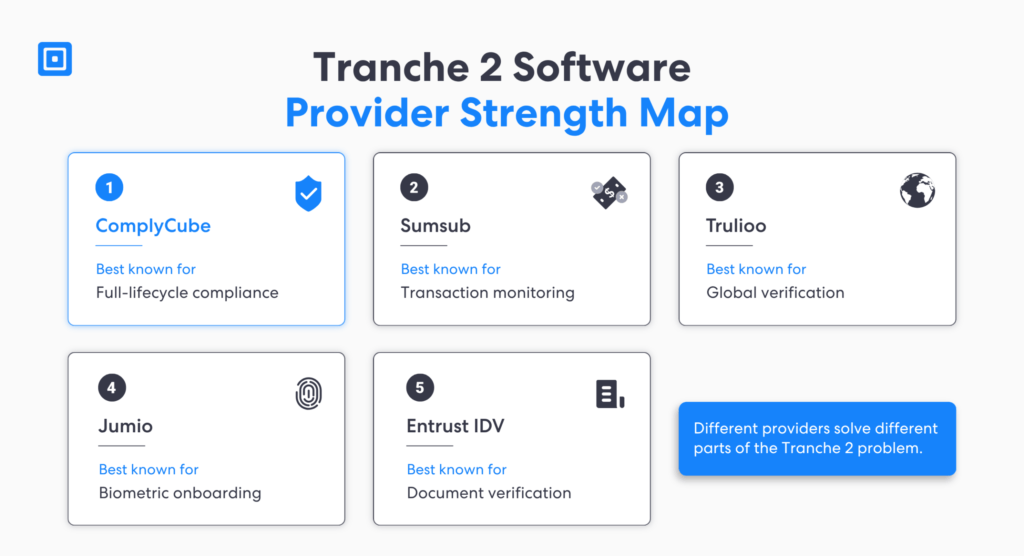
Tuttavia, queste soluzioni software per la conformità alla Tranche 2 non sono progettate per lo stesso livello di maturità in materia di conformità. La guida comparativa che segue valuta quale soluzione si adatta meglio al profilo di rischio della vostra azienda, ai servizi specifici e alle esigenze a lungo termine relative alla Tranche 2.
1. ComplyCube
ComplyCube è nota soprattutto per la conformità AML/CTF completa, che copre l'intero ciclo di vita del cliente. Rappresenta la soluzione ideale per le aziende che si sono recentemente sottoposte a regolamentazione e desiderano integrare diverse soluzioni, come l'onboarding, la verifica dei clienti, il monitoraggio continuo e la creazione di policy personalizzate, il tutto all'interno di un'unica piattaforma. I team possono personalizzare le regole di rischio e i flussi di lavoro in base agli specifici obblighi previsti dalla Tranche 2.
- Ideale per: Aziende che desiderano centralizzare la conformità alla Tranche 2 anziché utilizzare strumenti separati.
- Dove si distingue: Quando i team hanno bisogno di aiuto per verificare i clienti, valutare i rischi e documentare le decisioni nel tempo.
- Livello di maturità della tranche 2: Dal livello 1 al livello 4, per supportare chi utilizza il modello fino al mantenimento della conformità.
- Considerazione fondamentale: ComplyCube è la soluzione ideale per le aziende che desiderano una copertura di conformità ampia e completa. Se un'azienda necessita di una verifica dell'identità di base, un fornitore di servizi di verifica dell'identità più specifico potrebbe essere più indicato.
2. Sumsub
Sumsub è nota soprattutto per il monitoraggio delle transazioni e l'orchestrazione dei rischi. Questo è particolarmente importante per le aziende che devono monitorare l'attività dei clienti, collegare i segnali di rischio e gestire scenari di frode o di conformità più complessi.
- Ideale per: Aziende in cui il comportamento transazionale è strettamente legato al modello di rischio.
- Dove si distingue: Quando le aziende hanno bisogno di collegare la verifica al monitoraggio delle transazioni. Questo è utile per le aziende che gestiscono volumi elevati di attività, servizi digitali o comportamenti complessi dei clienti.
- Livello di maturità della tranche 2: Dal livello 3 al livello 4, supportando coloro che si occupano di conformità operativa nel mantenimento di una preparazione continua in materia di conformità.
- Considerazione fondamentale: Le aziende che hanno recentemente introdotto la regolamentazione dovrebbero valutare come Sumsub garantisca al meglio la conformità e si integri nei flussi di lavoro dei servizi professionali. Inoltre, è importante verificare la conformità con le aspettative di AUSTRAC in materia di reporting e i rischi relativi ai fondi dei clienti a livello locale.
3. Trulioo
Trulioo è nota soprattutto per la sua copertura globale di verifica dell'identità e dell'attività commerciale tramite la procedura Know Your Business (KYB). Rappresenta un'ottima soluzione per le aziende che lavorano con clienti internazionali, titolari effettivi esteri o strutture proprietarie transfrontaliere.
- Ideale per: Aziende che necessitano di assistenza per la verifica di persone fisiche o giuridiche in diverse giurisdizioni e paesi.
- Dove si distingue: Il punto di forza principale di Trulioo è la sua portata globale. Per le aziende della seconda fase del programma, che operano con clienti esteri, strutture aziendali complesse o proprietà straniera, una verifica capillare a livello globale può rivelarsi preziosa.
- Livello di maturità della tranche 2: Passaggio dal livello 2 al livello 3, supportando coloro che si trovano nella fase di inserimento e nel raggiungimento della piena operatività.
- Considerazione fondamentale: Sebbene Trulioo sia particolarmente efficace come piattaforma di verifica globale, le aziende potrebbero comunque aver bisogno di supporto per la gestione dei casi, il monitoraggio continuo e i flussi di lavoro relativi alle prove conformi agli standard AUSTRAC.
4. Jumio
Jumio è nota soprattutto per la sua solida verifica biometrica dell'identità e per la procedura di onboarding Electronic KYC (eKYC). Per la maggior parte delle aziende, si tratta di una scelta pratica che desidera digitalizzare l'acquisizione dei clienti e ridurre i controlli manuali dell'identità.
- Ideale per: Aziende che necessitano di una solida esperienza di onboarding digitale.
- Dove si distingue: Dove la priorità è verificare i clienti in modo rapido e sicuro. Può aiutare le aziende a sostituire la raccolta manuale dei documenti con un processo di acquisizione digitale più coerente.
- Livello di maturità della tranche 2: Passaggio dal livello 2 al livello 3, aiutando coloro che sono in fase di onboarding a raggiungere la piena operatività.
- Considerazione fondamentale: È vero che Jumio può supportare efficacemente l'onboarding. Tuttavia, le aziende della Tranche 2 devono valutare se necessitano anche di flussi di lavoro per la gestione del rischio, di due diligence rafforzata (EDD) e di monitoraggio continuo.
5. Entrust (precedentemente Onfido)
Entrust IDV, precedentemente nota come Onfido, è una soluzione a cui le aziende possono rivolgersi specificamente per la verifica dei documenti e il rilevamento delle frodi in fase di onboarding. Offre un solido livello di verifica dell'identità (IDV) per le aziende che necessitano di verificare gli utenti reali e ridurre le frodi in fase di onboarding.
- Ideale per: Aziende che necessitano di un livello di verifica dell'identità (IDV) prima di implementare flussi di lavoro AML/CTF più ampi.
- Dove si distingue: Entrust è ideale come strumento di verifica per l'onboarding. Aiuta le aziende che già dispongono di processi interni di antiriciclaggio e antiterrorismo a verificare meglio i documenti di identità, ridurre le frodi e creare un processo di acquisizione clienti più fluido.
- Livello di maturità della tranche 2: Livello 2, a supporto di coloro che si trovano nella fase di preparazione all'inserimento in azienda.
- Considerazione fondamentale: Entrust dovrà affiancare altri strumenti. Le aziende potrebbero comunque aver bisogno di sistemi di valutazione del rischio, verifiche sulla titolarità effettiva e monitoraggio continuo.
Caso di studio: Le sanzioni civili della Corte Federale australiana
La Corte Federale australiana ha imposto sanzioni civili per un importo di 50.000 AUD (34.000 USD) a Castra Licensee Pty Ltd. e di 45.000 AUD (31.050 USD) a Princeton Securities (NSW) Pty Ltd. Entrambe le società non hanno pagato le sanzioni inflitte da AUSTRAC per presunte violazioni della legge antiriciclaggio e antiterrorismo.
Mancata redazione della relazione annuale sulla conformità
Non sono riusciti a soddisfare gli obblighi di segnalazione obbligatori, in particolare la segnalazione annuale di conformità nel 2023. Questo caso AUSTRAC è importante poiché l'Australia si è allineata più strettamente agli standard globali dal Gruppo di azione finanziaria (GAFI). Le aziende che rientrano nella seconda tranche della regolamentazione necessitano di sistemi che supportino la governance fin dal primo giorno.
Risultati
La mancata segnalazione degli obblighi in materia di antiriciclaggio e contrasto al finanziamento del terrorismo (AML/CTF) ha comportato sanzioni da parte dei tribunali federali.
Le violazioni delle norme di conformità non si limitano alle grandi banche o ai sistemi di riciclaggio di denaro.
Per le aziende della seconda tranche, il software di conformità deve aiutare a tenere traccia degli obblighi di segnalazione, a conservare le prove e a rendere visibile la responsabilità degli obblighi in materia di antiriciclaggio e contrasto al finanziamento del terrorismo.
Supporto al raggiungimento della maturità con il software di conformità di Tranche 2
Per le aziende della seconda tranche, il miglior test per valutare la conformità di una piattaforma consiste nel verificare se sia in grado di supportare un modello operativo AML/CTF difendibile anche dopo la scadenza. Non si tratta solo della velocità di verifica dei documenti, ma di come tutti gli elementi interagiscono per prevenire reati finanziari e frodi in conformità con le nuove normative.
Tuttavia, per le aziende della Tranche 2, questa distinzione di soluzione è importante. Un fornitore noto per la verifica dell'identità può essere eccellente per l'onboarding. Tuttavia, le aziende che devono gestire in modo continuativo Obblighi in materia di antiriciclaggio e contrasto al finanziamento del terrorismo Devono esaminare i flussi di lavoro relativi ai rischi, il monitoraggio e la gestione dei casi. Devono inoltre esaminare i controlli di reporting e le prove pronte per le verifiche.
Punti chiave
Software di conformità della tranche 2 deve aiutare le aziende a gestire un programma AML/CTF.
Verifica dell'identità è solo una parte di un processo di conformità AML/CTF più ampio.
Le piattaforme devono supportare Valutazione dei rischi, monitoraggio, rendicontazione e tenuta dei registri.
Molte opzioni credibili supportare diversi livelli di maturità di conformità alla Tranche 2.
La soluzione più adatta per le aziende Per chi cerca una preparazione continua alla conformità e un software completo per la conformità AML che copra l'intero ciclo di vita, la soluzione ideale è ComplyCube.
Aggiornamento dei programmi AML per la seconda tranche con ComplyCube
Sebbene il 1° luglio 2026 sia trascorso, gli obblighi della seconda tranche sono solo all'inizio. Le entità recentemente regolamentate, che gestiscano fondi dei clienti, servizi di trasferimento di denaro, asset digitali e altro ancora, devono implementare un solido programma antiriciclaggio e antiterrorismo (AML/CTF). Tale programma deve essere difendibile, replicabile e scalabile per proteggere la propria azienda, l'identità dei clienti e il sistema finanziario australiano.
In sintesi, ComplyCube aiuta queste aziende ad automatizzare diverse soluzioni di conformità, come IDV, CDD, AML e KYB. La loro pluripremiata soluzione software supporta anche le verifiche della titolarità effettiva, il monitoraggio continuo e la gestione del rischio. Se la vostra azienda necessita di flussi di lavoro di conformità pronti per gli audit per la Tranche 2, ComplyCube può aiutarvi a passare dalla conformità manuale a un programma operativo. Contatta il nostro team oggi stesso.

Domande frequenti
Come dovrebbero scegliere le aziende australiane il software per la conformità alla Tranch 2?
Le aziende australiane devono scegliere il software di conformità per la Tranche 2 in base a fattori quali il profilo di rischio del cliente, i servizi offerti e le tipologie di clienti. Le nuove entità soggette all'obbligo di rendicontazione devono inoltre considerare i livelli di maturità in materia di conformità. In seguito, potranno determinare quali soluzioni sono necessarie per essere conformi ai continui miglioramenti introdotti da AUSTRAC.
Perché la verifica inter vivos (IDV) non è sufficiente per la conformità alla Tranche 2?
La verifica indiretta (IDV) aiuta a confermare l'identità di un cliente. Tuttavia, la conformità alla Tranche 2 richiede alle aziende di valutare il rischio complessivo di reati finanziari sull'intera relazione commerciale. Ciò richiede che le aziende dispongano di processi di adeguata verifica della clientela (CDD), controlli sulla titolarità effettiva e screening per sanzioni o persone politicamente esposte (PEP). Richiede inoltre che abbiano in atto protocolli di adeguata verifica dell'economia (EDD), che conducano un monitoraggio continuo, segnalino attività sospette e conservino la documentazione.
Quali imprese sono maggiormente colpite dalla seconda fase delle riforme in Australia?
La seconda fase delle riforme antiriciclaggio e antiterrorismo in Australia ha un impatto sulle imprese che forniscono servizi recentemente regolamentati e che influenzeranno il sistema finanziario. Tra queste figurano i professionisti del settore immobiliare, i professionisti legali e i commercialisti. Altre associazioni di categoria interessate sono i servizi fiduciari, i servizi alle imprese e i commercianti di metalli e pietre preziose.
Qual è la differenza tra la preparazione all'onboarding e la preparazione continua alla conformità?
La fase di onboarding si verifica quando un'azienda è in grado di identificare i clienti, raccogliere informazioni, verificare i documenti e controllare i nomi. La conformità continua si riferisce alla capacità delle aziende di monitorare i cambiamenti del rischio, ricontrollare i clienti e aggiornare i registri. Inoltre, queste aziende si impegnano a gestire le segnalazioni, presentare segnalazioni di attività sospette e rivedere le prove nel tempo.
Il protocollo ComplyCube è adatto per la conformità alla Tranche 2?
Sì. ComplyCube è adatto alla conformità alla Tranche 2 perché supporta la verifica dell'identità, la CDD (Documentazione di Due Diligence) e la KYC (Know Your Customer). Offre inoltre soluzioni software aggiuntive, tra cui KYB (Know Your Business), screening AML (Antiriciclaggio) e monitoraggio continuo. Inoltre, grazie ai flussi di lavoro di rischio, alla revisione dei casi e alla documentazione pronta per l'audit, ComplyCube rappresenta un'ottima opzione per le aziende australiane che necessitano di un software completo per la conformità AML/CTF (Antiriciclaggio/Contro il Finanziamento del Tesoro) piuttosto che di un singolo strumento di verifica dell'identità.