In breve: Understanding the stages of money laundering matters because criminals aim for different objectives at each stage. The three stages are known as placement, layering, and integration in money laundering terms. Money laundering red flags vary across stages and therefore require different detection and prevention methods.
What are the Different Stages of Money Laundering?
In compliance, the three stages of money laundering are placement, layering, and integration. These stages were created in early Anti-Money Laundering (AML) policy, giving businesses a visual idea of how illicit funds and financial crimes move in the real world.
Placement, layering, and integration in money laundering were formally introduced in 1986 for U.S. law enforcement training. Later, in the 1990s, the framework was popularized by international governance bodies, including the Financial Action Task Force (FATF) and the United Nations Office on Drugs and Crime (UNODC).
Although the three-stage model is not law, understanding it is crucial for LMA and Counter Terrorist Financing (CTF) compliance. Under AML and CTF rules, businesses must identify and prevent suspicious activities involving criminal proceeds linked to fraud schemes, insider trading, tax evasion, human trafficking, and other financial crimes.
The placement, layering, and integration stages of money laundering:
- Placement stage: Criminals first introduce dirty money into legitimate financial systems. Common methods include splitting large transactions into smaller deposits to avoid detection.
- Layering stage: Criminals then move this money through multiple accounts across commercial banks and various countries so suspicious transactions are harder to trace back to a single account.
- Integration stage: Lastly, these laundered funds can re-enter the economy as “clean wealth” where they can be used freely without raising concerns from monitoring systems.
1. Placement Stage: How to Identify Red Flags?
From a criminal’s perspective, the placement stage of money laundering is the riskiest, as it is closest to the predicate offenses. More often than not, these criminals use cash-intensive businesses, including car washes, nail salons, and convenience stores, to conceal illegal funds within daily sales.

In the placement stages of money laundering, the term “smurfing” is commonly mentioned. Smurfing is a placement technique that splits large cash amounts. Because cash-heavy businesses often facilitate the placement of illegal funds, compliance teams should watch for common red flags.
Strong KYC and Risk Intelligence During the Placement Stage
Forte Know Your Customer (KYC) processes and fraud intelligence solutions help firms detect illicit proceeds earlier, reducing financial and reputational damage while strengthening AML processes. How to effectively disrupt money laundering:
- Implement robust Customer Due Diligence (CDD): Effective CDD establishes the purpose and nature of customer and business relationships. It involves gathering contextual information, such as occupation, expected transaction volumes, and intended account activity, to build stronger risk assessments. These help identify inconsistencies beyond basic identity checks.
- Incorporate wider risk signals: To build a stronger overall risk assessment, businesses can use a range of risk indicators. For instance, device, email, and phone intelligence solutions can reveal VPN usage, suspicious network activity, or contact details linked to criminal activity. Together, these signals strengthen risk assessments before onboarding.
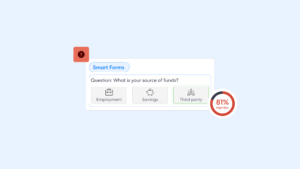
- Source of Funds Verification: Gathering supporting evidence around source of funds is critical. Common examples include bank account statements, payslips, or asset sale agreements. This information helps banks detect unexplained discrepancies by confirming the origin of funds.
2. Layering Stage: Complex Financial Instruments Hides the Trail
During the layering stage of money laundering, the launderer moves money through a mix of channels, jurisdictions, and transactions via other accounts. The goal is to obscure the original source of the funds so it cannot be traced to its owner.

Common money laundering red flags at this stage include rapid transfers across high-risk jurisdictions and large cross-border payments. Typically, shell companies are used to layer money, with quick wire transfers due to the anonymity around their structure.
Ongoing AML Screening During the Layering Stage
Layering is the hardest stage for many financial institutions to detect. This is because bad actors use multiple options to layer illicit money, completely severing the link to one account. This can break the audit trail, making the activity appear low-risk across the money laundering process.
- Monitoraggio continuo: To detect changes in a customer’s or entity’s risk throughout their lifecycle journey, businesses must implement monitoraggio continuo. This includes continuous monitoring of fund movements and parties against sanctions, Politically Exposed Persons (PEPs) and adverse media. This helps firms automatically detect unusual transfers and emerging risks.
- UBO & ownership transparency: Because layering makes use of complex corporate structures to conceal funds, identifying and verifying Ultimate Beneficial Owners (UBOs) is crucial. It can expose complex ownership structures and hidden relationships and connections between entities or high-risk individuals.
- Risk-based controls: Choose vendors that can support tailored risk-based AML controls. This includes customizable risk factors, weightage, and thresholds. For businesses, this means they can receive instant alerts on unusual behavior, prioritize high-risk cases, and support investigations into suspicious activity.
Case Study: Hong Kong Firm Pays HK$19.5M Over AML Failures
Incomplete Customer Information and Weak Monitoring
Risultati
- The firm received a HK$19.5 million penalty, approximately USD $2.5 million.
- Weak screening and missed alerts meant that suspicious and high-risk activity was undetected.
- Regulators demand strong ownership verification, ongoing screening, and proactive risk investigations for AML compliance.
3. Integration Stage: Laundered Money Turns to “Real” Wealth
Integration in money laundering is where criminals reintroduce the illicit funds into everyday economic activity. By this stage, any single transaction appears genuine because it blends into everyday business activity. Common examples include investing in luxury assets, such as branded cars or real estate, to disguise laundered money.

While the integration stage of money laundering is the hardest to detect, authorities have introduced several tools to slow the flow of funds. For instance, in the UK, law enforcement uses Unexplained Wealth Orders (UWOs) to require individuals to explain how they afford luxury assets.
EDD and UBO Verification During the Integration Stage
During the integration stage, the criminals are ready to use the money to spend on everyday items. This typically involves expensive materials. At this stage, the money is already being spent, so controls should focus on verifying the source of wealth.
- Source of wealth verification: Businesses should verify how the customer or entity accumulated their wealth over time. This includes capturing information around their career compensation, business ownership, investments, and even inheritance documents. This highlights inconsistencies between declared income and assets.
- Due diligence rafforzata (EDD): During EDD, firms must conduct thorough background checks on high-risk customers or triggers. For example, high-value investments, complex business relationships, and customers with unexplained wealth can be routed to manual investigation or AML screening, such as PEP checks.
- Know Your Business (KYB) Verification: Controlli KYB are used to confirm that a company is legitimate before forming a relationship with them. Through KYB, firms can cross-reference government registries, identify UBOs, and screen them against sanctions and adverse media databases.
Punti chiave
The three stages of money laundering are placement, layering, and integration.
In practice, launderers may skip or combine stages to conceal the movement of illicit funds.
Aziende must tailor money laundering controls to each stage to detect financial crime.
Customer diligenza dovuta, ongoing monitoring, and risk management are key t AML compliance.
A unified AML platform detects money laundering red flags across the customer relationship.
Unifying AML Across the Three Stages of Money Laundering
For compliance teams, mapping AML controls to each stage is crucial for detecting illicit proceeds earlier. An all-in-one AML platform combines strong identity verification, Know Your Business (KYB), and ongoing monitoring capabilities so businesses can mitigate financial crime risks across the customer journey.
ComplyCube’s risk intelligence platform brings these capabilities together, helping firms verify customers at placement, uncover hidden ownership structures during layering, and strengthen due diligence against integration risks. Detect risk at the point of entry and align with global AML compliance standards today. Speak with a team member per saperne di più.

Domande frequenti
Do all three stages of money laundering always occur in every case?
Not every launderer will go through all three stages of money laundering. For instance, fraud schemes can skip placement because the funds already exist in bank accounts. Classifying the stages as illicit money entering, moving, and being spent will determine which controls to apply.
Which stages of money laundering should compliance teams prioritize for detection?
Ideally, compliance teams should design tailored controls to detect money laundering red flags at each stage. However, placement signals and layering patterns can deliver the greatest prevention impact because they are closer to the criminal activity and the funds’ origin.
What are common money laundering red flags during the placement stage?
Common red flags during the placement stage are repeated transactions made below reporting thresholds to avoid detection, large cash deposits, and unexplained third-party payments. Additionally, review customers who cannot substantiate the source of funds or engage in activities inconsistent with their profile.
What is the difference between the layering and integration in money laundering?
Layering is when illicit funds go through multiple accounts and channels to conceal their origin and movement. Integration involves using the funds to purchase real goods, making dirty money appear as legitimate transactions. The criminal’s goal shifts from hiding to enjoying.
Does ComplyCube detect money laundering at each stage?
Yes, ComplyCube offers unified AML solutions to help firms mitigate risks at every stage. It supports robust identity verification, including liveness detection and ongoing AML screening to identify high-risk customers. It also integrates due diligence checks, such as UBO, SOF, and SOW verification, to support comprehensive risk management.