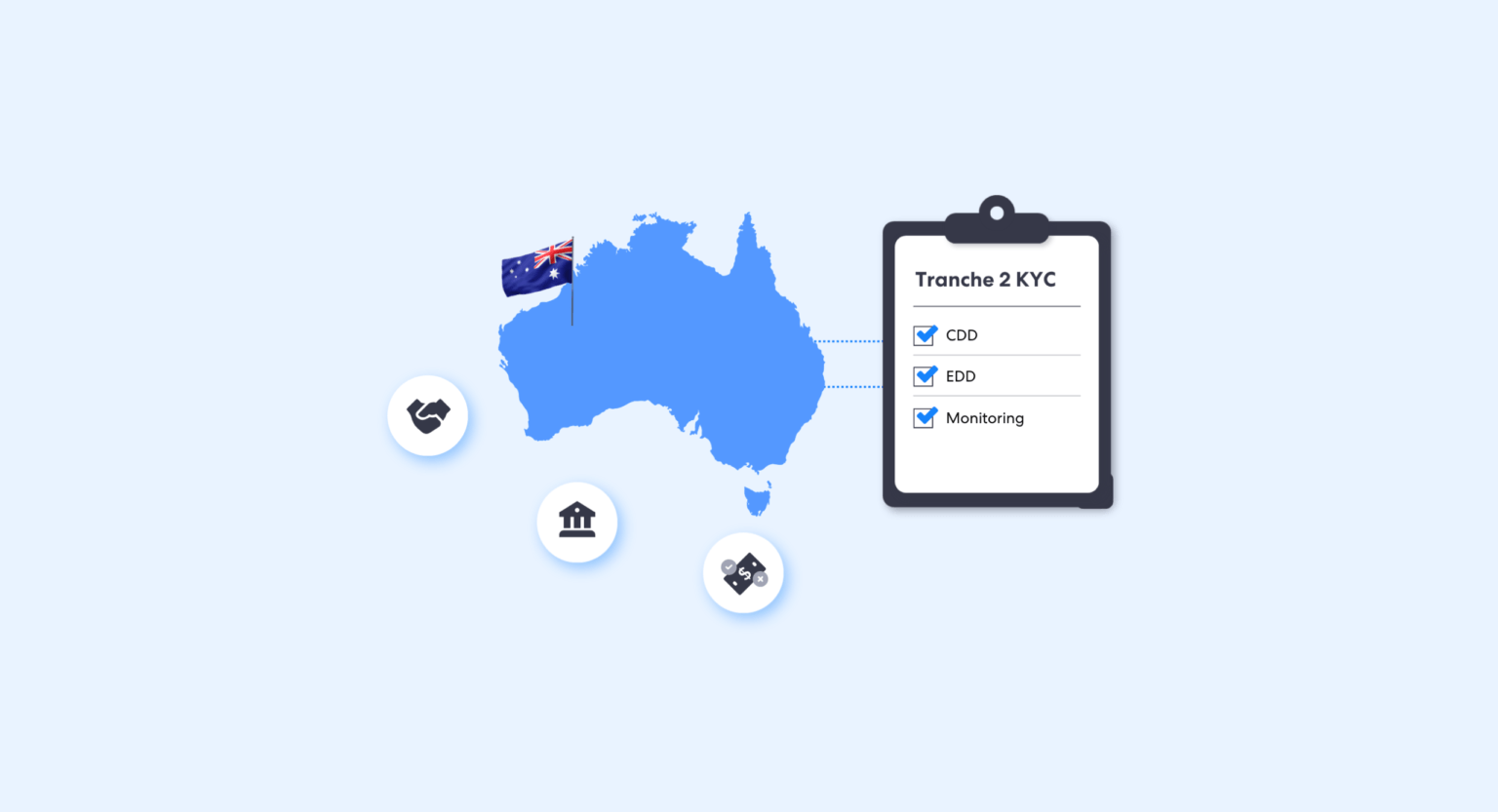
TL;DR: A Tranche 2 Know Your Customer (KYC) solution helps Australian businesses prepare for expanded Anti-Money Laundering and Counter-Terrorism Financing (AML/CTF) obligations. The right Tranche 2 KYC solution can reduce manual compliance work. Building the right solution with Tranche 2 KYC verification supports a risk-based approach.
What is a Tranche 2 KYC Solution?
A Tranche 2 KYC solution is a system that helps Australian firms verify clients, review financial risk, and keep records that are needed for Anti-Money Laundering and Counter-Terrorism Financing (AML/CTF) compliance. Now, customer onboarding becomes a repeatable workflow that links customer due diligence, risk management, and ongoing monitoring.
Tranche 2 brings newly regulated sections by extending regulations that previously applied to financial institutions and firms. AUSTRAC’s Tranche 2 factsheet states that AML/CTF obligations will be applicable from 1 July 2026 onwards to services typically provided by:
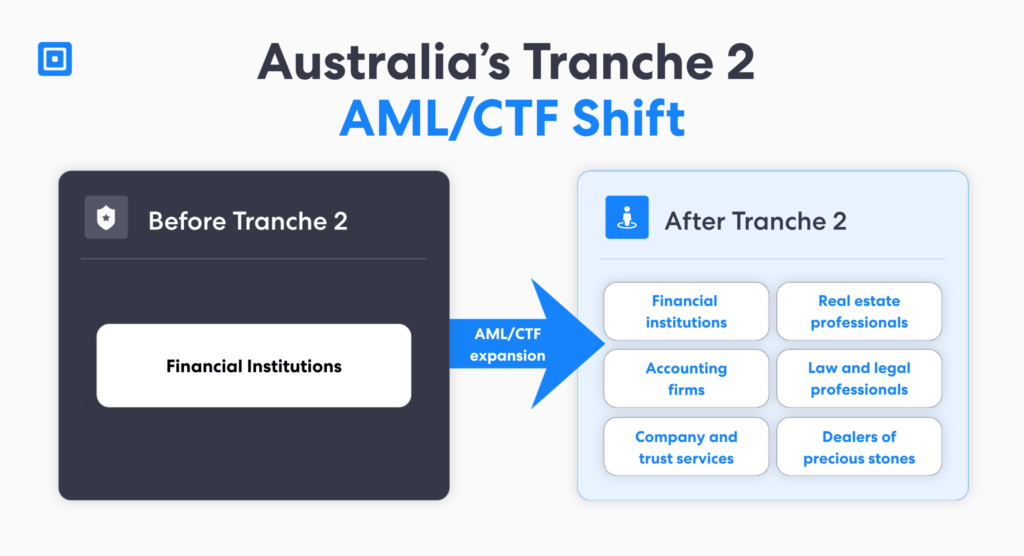
- Lawyers and legal professionals
- Conveyancers
- Real estate businesses
- Accountants
- Trust providers
- Company service providers
- Dealers in precious metals, stones, and products
The right Tranche 2 KYC solutions do not replace real legal advice or regulatory guidance from AUSTRAC. It provides current reporting entities with the operational structure to conduct due diligence processes where risk is higher and conduct ongoing review when risk changes over time.
Why Tranche 2 Combats Financial Crime
Most firms think of the new Tranche 2 regulations as a hassle and wonder why Australia is making the change. Tranche 2 is an attempt to align Australia to global regulatory reforms and diligence processes. By widening the AML/CTF perimeter, professional services and high-value sectors have a more active role in protecting the financial system. You can learn more here: The Ultimate Guide to Tranche 2 AML Software for Australian Businesses
The Department of Home Affairs states that the new AML/CTF obligations for Tranche 2 designated non-financial businesses and professions (DNFBPs) apply from 1 July 2026. This enrollment period began on 31 March 2026 giving newly regulated firms a window of preparation before compliance requirements apply. Additionally, many entities covered by this new regulation have been identified as high or very high risk for money laundering exploitation.
The reforms and ongoing enhancements are not just about meeting international standards of existing reporting entities. By closing regulatory gaps, illicit funds can no longer move through legitimate services. For Australian firms, KYC must become part of how the business understands its clients, its risk appetite, and its reporting obligations.
How a Tranche 2 KYC Solution Closes Regulatory Gaps
However, these days, criminals do not move money through the most obvious channels. Using property, legal structures or trusts are a common way to hide ownership. It makes criminal activity such as money laundering and terrorism financing risk look legitimate.
It is for this reason that Australia remains ideal for storing and integrating criminal proceeds. Their stable economy, independent legal system, developed financial services sector, and strong real estate market make them attractive to fraudsters and criminals.
There are practical risk applications for Australian firms. For example, a real estate transaction can move large sums through a legitimate channel and a company structure can make beneficial owners harder to identify. Similarly, a professional adviser can be misused by clients seeking to obscure the source or destination of their illicit funds.
That risk context becomes practical for firms preparing for Tranche 2 AML/CTF. A real estate transaction can move large sums through a legitimate channel. A company structure can make beneficial owners harder to identify. A professional adviser can be misused by clients seeking to obscure the source or destination of funds.
Preparing for AML/CTF reforms with a Tranche 2 KYC solutions makes these risks easier to see. Firms can better understand who the client is, who controls the relationship, and whether the transaction or service fits the firm’s risk appetite.
AML/CTF Programs Built Around Global Standards
A Tranche 2 KYC Solution should be built around risk management. The purpose is to understand where money laundering, terrorism financing, and proliferation financing risk could enter the client journey. An AML/CTF compliance program must consider these risks in its policies, procedures, systems, and controls. Additionally, senior management must approve of the program and appoint an AML/CTF compliance officer.
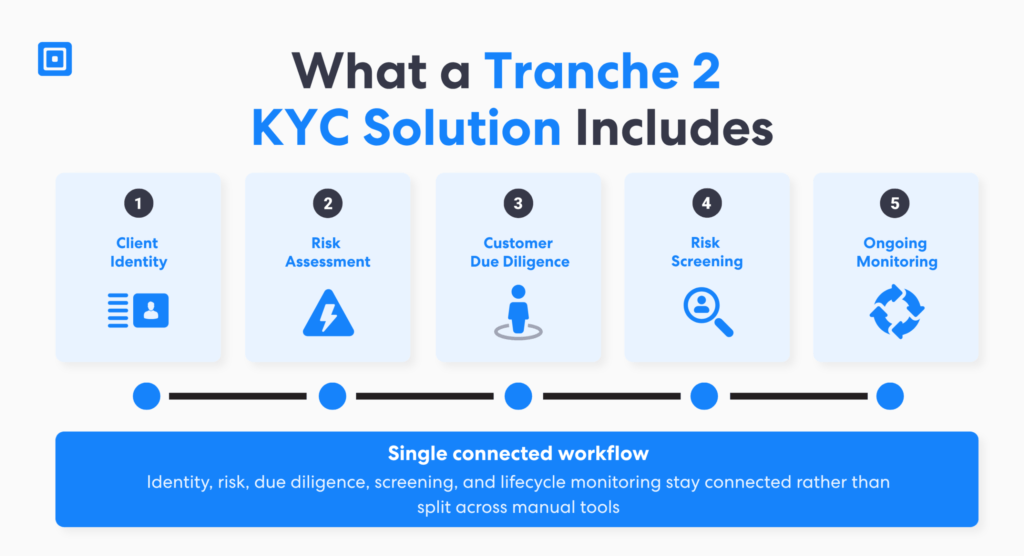
This changes how newly regulated firms and reporting groups think about onboarding. For example, a low-risk domestic client should not face the same level of friction as a high-risk customer using complex structures. A firm’s compliance system should be linked to risk. The same process should not be applied to every single client.
Tranche 2 firms should not start by asking how many documents they need to collect.
Harry Varatharasan, Chief Product Officer at ComplyCube states that firms, “…should start by asking where financial crime exposures begins. Based on this, they can design controls that are appropriate, explainable, and repeatable.”
Tranche 2 KYC Solution Compliance with Customer Due Diligence
According to AUSTRAC, conducting initial Customer Due Diligence (CDD) involves determining specific data about a customer or client on reasonable grounds before providing a designated service. This protects businesses from the very start of the customer relationship by identifying and mitigating risks such as money laundering, terrorism financing, and proliferation financing.
Aside from verifying client identity, it should also help identify beneficial owners and clarify who controls the relationship as a whole. Know Your Business (KYB) solutions can be helpful, particularly those firms looking to keep client onboarding central to their operations.
With identity risk becoming more complex, Identity Verification (IDV) is another core part of an AML/CTF control. As artificial intelligence and deepfakes are expected to make verification more contested, such a service will make a lasting impact on ensuring compliance under the new Tranche 2 regulations.
Escalation Pathways with Enhanced Customer Due Diligence
After initial checks are in place, the next stage is escalation. This is where Enhanced Due Diligence (EDD) comes in, when standard checks are not enough. The purpose to to understand how higher-risk relationships expose the firm to money laundering, terrorism financing, or sanctions risk.
EDD is most relevant when a client’s profile is very complex. If beneficial ownership is unclear, politically exposed persons are involved, or the activity is inconsistent with the stated purposed of the relationship, that is where it is needed most. A practical EDD review should look at three areas:
- Who controls the client or transaction.
- Where funds or assets appear to come from.
- Whether screening results require escalation.
In practice, technology should support judgement, it is not a replacement. A Tranche 2 KYC solution can show risk signals, apply rules, and create a record of decisions. Compliance teams still need clear criteria for accepting, rejecting, or escalating a customer relationship.
Technology should support judgement, not replace it. A Tranche 2 KYC Solution can surface risk signals, apply rules, and create a record of decisions. Compliance teams still need clear criteria for accepting, rejecting, or escalating a customer relationship.
Address Key Obligations By Conducting Ongoing Monitoring
Lastly, once a client is approved, it is important to keep checking in. Ongoing monitoring turns KYC into a live compliance function. A client may be low risk at the top of onboarding, but become higher risk as ownership changes, screening alerts appear, or suspicious transactions emerge. You can learn more here: What is an Ongoing Monitoring Process?
This type of view matters for most DNFBPs. For example, a real estate agent may onboard a buyer before their funding details change. Similarly, a law firm may start with one matter before a new beneficial owner appears. Ongoing monitoring helps firms notice three types of changes in data:
- Client identity or beneficial ownership.
- Sanctions, PEP, or adverse media exposure.
- Activity that may indicate suspicious transactions.
Case Study: Strike Force Myddleton in New South Wales
In 2026, the New South Wales (NSW) Police reported that Strike Force Myddleton uncovered a fraud and money laundering syndicate that began with “ghost car” loans. This expanded into large-scale personal, business, and home loan fraud. As a result, the New South Wales Crime Commission restrained $95M AUD ($61.8 M USD) in assets.
Professional Layers Enabling Fraud
Shortly after, investigators targeted other professional layers that helped the syndicate move fraudulent documents to mortgages, loans, and other large transactions. In April 2026, a Sydney solicitor became the first legal professional charged under Strike Force Myddleton. The police alleged that he helped facilitate mortgaged property purchases.
Outcomes
NSW Police’s investigation reached a critical phase focused on professional facilitators.
Police alleged that professional authority was used to support fraudulent activity.
This demonstrates why Tranche 2 firms need stronger AML/CTF controls.
Reporting, Records, and Escalation
When a risk signal shows up, newly regulated firms need a clear path from review to escalation. Moreover, they have a path that shows how an escalation moves toward a document decision. This is how a Tranche 2 KYC solution can become an accountability framework.
According to AUSTRAC, reporting entities must support reports relating to transactions of a certain monetary threshold and suspicious matters. These suspicious matter reports must be submitted 24 hours from when the suspicion arises. These compliance reports may involve any suspicion related to terrorism financing or certain transactions.
Maintaining accurate and complete records are necessary for AML/CTF compliance as part of Tranche 2 regulations. To be compliant, firms must retain any reporting or records for at least seven years.
Key Dates for Tranche 2 AML/CTF Readiness
The last step in building a Tranche 2 KYC solution is turning the AML/CTF reform timeline into an implementation plan. Key dates must become operational milestones as firms need time to assess scope, build workflows, test controls, and train teams before obligations begin. With enrollment in effect from 31 March 2026, the AUSTRAC AML/CTF obligations apply from 1 July 2026. Firms should look to focus on three workstreams:
- Scope and reporting entity assessment.
- AML/CTF program and risk assessment.
- KYC verification, monitoring, and record keeping workflows.
It is important that Australian firms look to AUSTRAC for further guidance. They will provide core guidance and sector specific guidance updates. This is especially important for businesses balancing legal professional privilege, reporting obligations, and client confidentiality.
Key Takeaways
A Tranche 2 KYC solution links IDV, risk assessment, and record keeping.
Tranche 2 Know Your Customer rules apply to firms providing designated services.
Tranche 2 KYC helps firms verify client identity and understand beneficial ownership.
Ongoing customer due diligence helps firms detect changes in risk after onboarding.
Global RegTech infrastructure can help Australian firms build scalable AML/CTF compliance workflows.
Build a Tranche 2 KYC Solution with ComplyCube
The new Tranche 2 regulations are a compliance deadline that marks a shift in Australia’s Anti-Money Laundering framework. It brings professional services and newly regulated sectors into a much more active role in protecting the financial system.
Strong Tranche 2 KYC solutions help firms move from uncertainty to control giving teams a practical way to conduct ongoing customer due diligence across the full client lifecycle. Talk to ComplyCube about how Tranche 2 KYC verification can help your newly regulated business.

Frequently Asked Questions
Why do Australian firms need Tranche 2 KYC Solutions?
Tranche 2 regulations were put in place in order to support Australian firms in protecting the financial system from money laundering, counter terrorism financing and fraud as a whole. A Tranche 2 KYC solution helps verify clients, assess risk, monitor relationships and keep records.
Who Needs a Tranche 2 KYC Solution in Australia?
Australian firms that provide designated services covered by the expanded AML/CTF regime need Tranche 2 KYC verification . This applies to newly regulated sectors; real estate agents, lawyers, accountants, trust services, company services and dealers in precious metals, stones, and products.
What Should Tranche 2 KYC Verification Include?
Proper Tranche 2 KYC verification must include strong client identity checks, beneficial ownership review, and risk-based screening based on respective risk appetite. It should also support enhanced customer due diligence based on complexity and ongoing monitoring when client risk changes.
When Do Tranche 2 AML/CTF Obligations Start?
According to the Australian Home Affairs office, Tranche 2 regulated entities providing new designated services can enrol with AUSTRAC from 31 March 2026. New AML/CTF obligations apply from the 1 July 2026 deadline.
How Can ComplyCube Support Tranche 2 Readiness?
ComplyCube supports Tranche 2 readiness through IDV, KYC, AML screening, biometric liveness detection, workflow automation, case management, and ongoing monitoring. These solutions help firms build scalable workflows while keeping responsibility for legal interpretation with the firm and its advisers.