TL;DR: Tranche 2 AML changes how regulated Australian firms identify clients, review risk, and prove compliance decisions. The best Tranche 2 AML software links identity verification, customer due diligence, and regular monitoring. These Tranche 2 AML/CTF reforms start from 1 July 2026 and must close any new regulatory gaps that arise.
What is Tranche 2 AML Software?
Australia’s AML/CTF framework was introduced in stages, referred to as “tranches.” Tranche 1 focused primarily on financial institutions such as banks, remittance providers, and gambling services under the AML/CTF Act 2006. On the other hand, Tranche 2 refers to the expansion of these obligations to Designated Non-Financial Businesses and Professions (DNFBPs), including lawyers, accountants, real estate agents, and trust or company service providers.
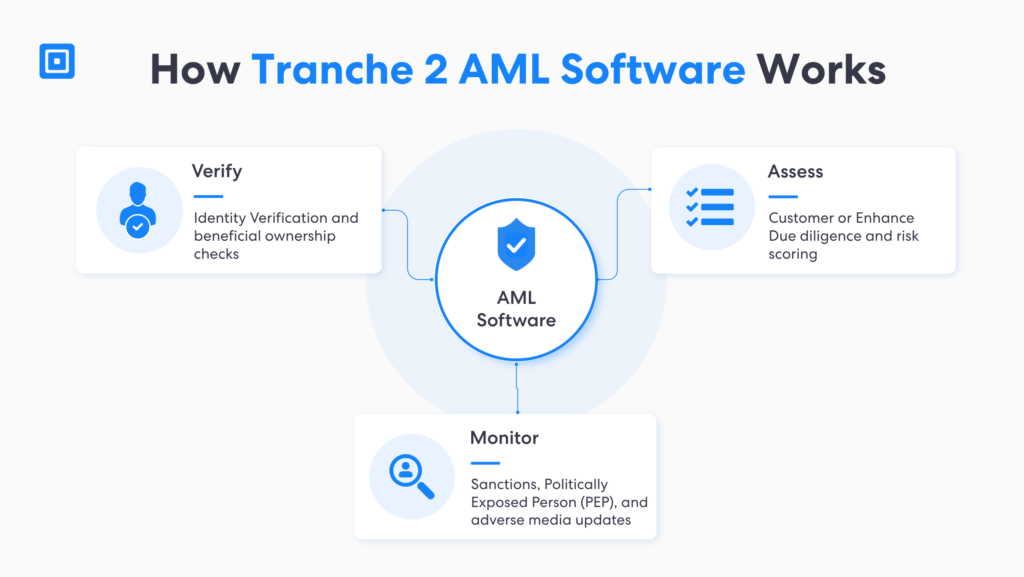
Tranche 2 AML software helps firms meet Australia’s Anti-Money Laundering (AML) and Counter-Terrorism Financing (CTF) obligations all in one place. They typically support Identity Verification (IDV), Customer Due Diligence (CDD), and AML screening. It helps firms review risk, create compliance reports, and keep evidence for the future.
Under the upcoming Tranche 2 requirements, AML/CTF obligations will apply to certain designated services such as the legal profession, accountants, and real estate businesses. Additionally, it applies to company service providers, conveyancers, and dealers in precious metals where necessary. The Australian Transaction Reports and Analysis Centre (AUSTRAC), states that AML/CTF obligations will apply from 1 July 2026.
For many firms, this is a shift from relationship-based client intake to evidence-based AML compliance. For example, a lawyer may know a client, but it is in the firm’s best interest to verify customer identity and assess risks. Similarly, a real estate agent may know a high-value transaction, but the business must still manage any money laundering risks and suspicious transactions.
The best Tranche 2 AML software makes it incredibly easy to turn regulatory obligations into repeatable workflows. It supports compliance teams by identifying the ultimate beneficial owner and routing high-risk customers to review. They also ensure that ongoing monitoring takes place. Firms can now move through the compliance journey with much stronger evidence and less manual work.
Why AML/CTF Reform Changes the Regulatory Landscape
However, the reason for Australia’s Tranche 2 AML/CTF reforms was to close big gaps in regulation with any non-financial sectors or DNFBPs. AUSTRAC explains that these reforms were meant to “…deter, detect, and disrupt any money laundering”. Additionally, it strengthens Australia’s alignment with international anti-money laundering standards.
According to Home Affairs, the AML/CTF Amendment Act 2025 supports Australia’s ability to meet standards set by the Financial Action Task Force (FATF). Meeting these AML standards matter because the regulatory landscape is no longer focused simply on financial institutions alone. Designated non-financial businesses such as legal, accountancy, and real estate now require rigorous AML controls to stand up to AUSTRAC scrutiny.
Tranche 2 is a shift in how firms are expected to identify, evidence, and manage financial crime risk.
Solutions Consultant, Milosh Caunhye, goes on to say, “Risks need to be managed across the full client relationship and lifecycle. Firms and other organizations require controls that work in practice, from first onboarding all the way through to continuous monitoring, escalation, and audit evidence.”
These AML regulatory changes go beyond rewriting policies. It also shows how businesses can find and deal with illicit criminal activities. Additionally, the reforms outline details around how organizations must respond to any suspicious criminal activities and ensure ongoing monitoring of any customer risk.
Tranche 2 Sectors and AML Compliance Requirements
AUSTRAC reforms apply to sectors such as legal, conveyancing, and the real estate sector to name a few. Also, it names accounting services, trust services, and company services. These firms affected are often described as “gatekeepers” because they sit very close to various types of property, client funds, and legal arrangements.
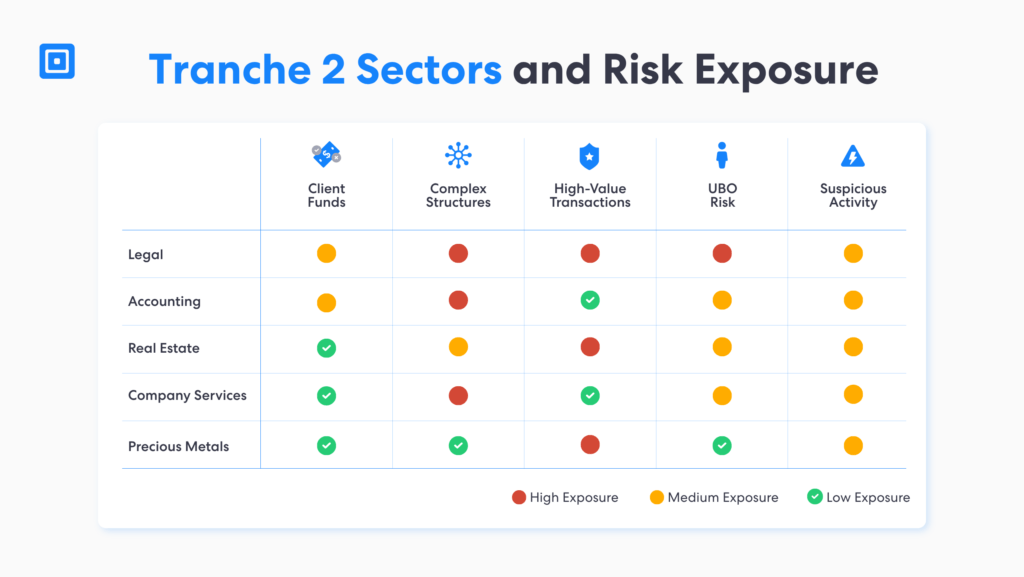
It is important to note that there is a clear difference between Tranche 1 and Tranche 2 AML/CTF reforms. Previously, many AML tools were built just for banks, insurers, and current reporting entities. However, Tranche 2 reaches smaller non-financial sectors with fewer compliance resources. That is why the best Tranche 2 AML software must be easy to put in place, but strong enough to evidence compliance needs.
Customer Due Diligence and AML Tools Firms Need
Key to Tranche 2 AML/CTF reform is the role of ongoing Customer Due Diligence (CDD) and Enhanced Due Diligence (EDD). Australia’s Home Affairs office says CDD helps reporting entities find, review, and fix any money laundering risks. It also covers any illicit financial activities such as terrorist financing and proliferation financing risk linked to any clients.
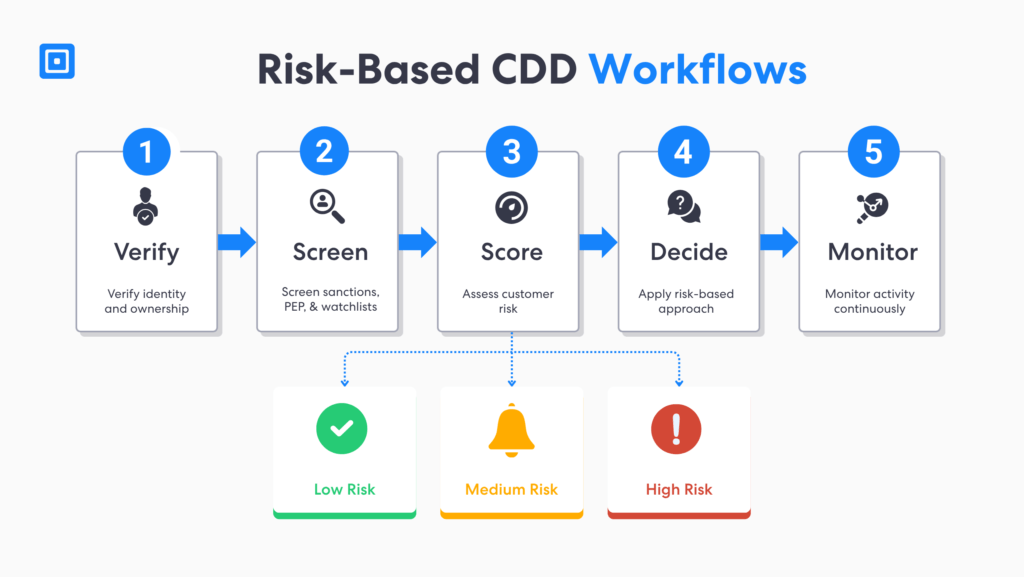
Therefore, a strong compliance program should help with customer onboarding processes such as identity checks, business verification, and ultimate beneficial owner identification. It must also screen for any sanctions, politically exposed persons, or adverse media. These types of checks support firms in their understanding of their existing diligence processes. This allows them to easily decide whether they need standard CDD or EDD. You can learn more here: Navigating the World of Enhanced Due Diligence.
The strongest AML tools do not treat customers the same way. They apply risk profiling and customisable risk scoring to match the level of control they need to give to any kind of risk. For example, low-risk clients can move much faster, while high-risk clients receive enhanced KYC procedures or risk assessments. At the end of the day, it all boils down to each company’s respective risk appetite.
Anti-Money Laundering and Counter Terrorism Financing Controls
Many companies try to look at building internally first. Initially, an internal build may appear to be cheaper. However, companies must manage many variables such as identity checks, case notes, and audit trails. The best Tranche 2 AML software should also be responsible for managing any watchlist changes, regulatory obligations, and reporting triggers. The issue is that Tranche 2 AML/CTF reforms and controls do not stay the same. Sanctions lists inevitably change, new adverse media emerges, and customer risk status shift.
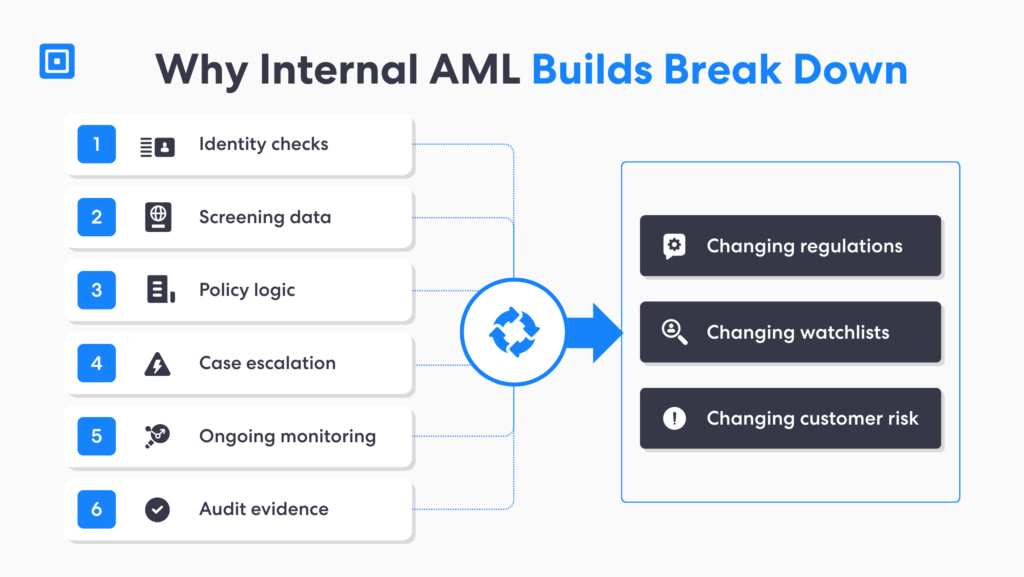
On the other hand, some firms do need internal procedures for legal professional privilege, client confidentiality, and suspicious transactions. This is where purpose-built AML software becomes important. Tranche 2 systems require hosted workflows, APIs, and reusable workflow templates. Additionally, they need region-aware policies, ongoing monitoring, and integrated IDV, AML, as well as fraud orchestration.
Case Study: AUSTRAC Court Proceedings with Mounties
In July 2025, AUSTRAC led Federal Court civil penalty proceedings against Mount Pritchard District and Community Club Ltd, also known as Mounties. The proceedings show systemic AML/CTF failures in its operations and non-compliance with Australia’s AML/CTF laws.
Money Laundering and Terrorism Financing Risks
The Mounties allowed almost $140 million to be bet by 10 gamblers considered high risk of money laundering or terrorism financing. Firms must build in customer assessments and escalation rules when certain clients or specific transactions appear to be high-risk.
Outcomes
AML/CTF policies must be backed by active controls and accountable oversight.
Tranche 2 firms should build in Customer Due Diligence before obligations begin.
- High-risk clients need ongoing monitoring, escalation, and evidence-based decisions.
How Tranche 2 AML Software Supports Operational Readiness
Now, for newly regulated Australian firms, Tranche 2 AML software is the most valuable when it can turn regulations into actionable compliance controls. Yet, the big problem is that customer identity verification at onboarding needs the right amount of ongoing customer due diligence. Companies also need to keep evidence of each and every decision. They must monitor when risk levels change. This makes a case for where a connected workflow is better for compliance than a set of disconnected AML tools.
Any strong setup for anti-money laundering helps firms put in place enhanced KYC procedures. To keep up with changing AML/CTF regulations in Australia, companies must move from manual reviews to structured risk management. This takes combining AML tools with clear escalation rules. Another key aspect of the best Tranche 2 AML software solutions is adverse media monitoring, fraud signals, and ongoing monitoring.
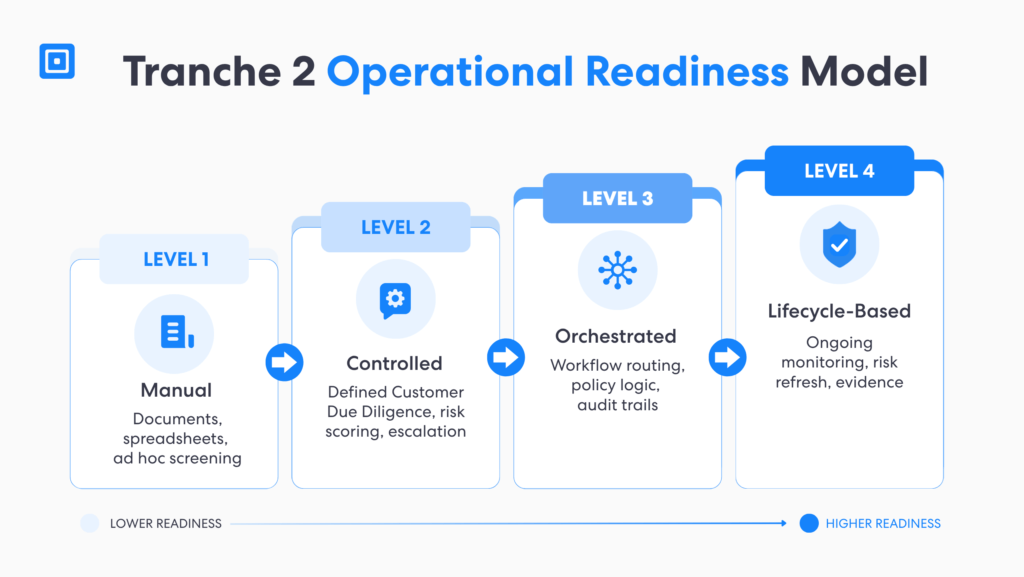
In order to bridge this gap, Tranche 2 AML companies must look at their overall compliance processes. Here is where no-code workflow orchestration, hosted workflows, and APIs can help businesses comply efficiently around their actual services. Teams can meet compliance obligations rather than forcing every customer through the exact same risk management journey.
For customers comparing the best Tranche 2 AML software, the smart decision is not whether a compliance platform can run checks, but rather if the platform itself can help with business evidence. For example, they can provide information on why a customer was accepted, escalated, monitored, or exited from a workflow. Being Tranche 2 ready means that companies need a practical way to link customer due diligence, enhanced due diligence, ongoing monitoring, and audit evidence without constructing a bank-grade system within.
Key Takeaways
The best Tranche 2 AML software connects onboarding, screening, and monitoring.
Internal builds are difficult because regulations, watchlists, and customer risk change.
Customer due diligence and enhance due diligence are core controls for high-risk clients
Operational readiness depends on orchestration, lifecycle monitoring, and audit-ready evidence.
Tranche 2 AML software supports firms moving toward more risk-based compliance.
Get Ready for Tranche 2 AML/CTF Reforms with ComplyCube
1 July 2026 is the Tranche 2 AML deadline. However, it gives firms the opportunity to build a stronger, and more defensible compliance journey. If companies act now, they can close compliance gaps, meet AML obligations, and improve customer onboarding processes. Talk to our compliance experts to enhance your sector specific guidance and prepare your firm for Tranche 2 AML needs.

Frequently Asked Questions
What are Tranche 2 AML obligations?
Tranche 2 AML expands Australia’s Anti-Money Laundering and Counter-Terrorism Financing (AML/CTF) regime to Designated Non-Financial Businesses and Professions (DNFBPs) from 1 July 2026. It applies to designated services in legal, accounting, real estate, and company services where firms may be exposed to financial crime risk.
What is Tranche 2 AML software?
Tranche 2 AML software helps firms automate customer checks, assess risk, and monitor relationships. It supports Identity Verification, screening, and evidence capture for activities such as managing client funds, verifying ownership, or reviewing transactions above a certain monetary threshold.
What Tranche 2 AML risks should firms monitor?
Firms should monitor risks linked to unusual transaction patterns, opaque ownership, and cross-border movement of funds or assets. This can include shipping physical currency, working with complex legal structures, or dealing with customers whose source of funds is difficult to verify.
Why is customer due diligence important under Tranche 2?
Customer Due Diligence helps firms understand who they are dealing with and whether the relationship presents financial crime risk. It is especially important when firms need to verify customer identity, identify beneficial ownership, and apply enhanced review to higher-risk clients.
How does ComplyCube help with Tranche 2 AML regulations?
ComplyCube helps firms automate customer onboarding, screen for AML risks, and maintain ongoing monitoring. It supports configurable workflows for risk-based checks across real estate transactions, company service providers, and virtual assets service providers.