Resumen: Right to work digital identity checks are a necessary part of the gig-economy. In October 2026, a digital right to work check centres on how platforms keep users confident that the verified person is the one actually carrying out each job. This guide demonstrates how account sharing, substitution, and worker identity continuity matter.
Why Right to Work Digital Identity Checks Change for the Gig Economy
To work in the UK, employers have to meet certain legal requirements to prevent illegal working. Moreover, right to work checks need to be completed before any actual working begins. It is an employer’s responsibility to establish a statutory excuse against any potential civil penalties. For example, they must check a Home Office share code for non-British citizens to prove right to work.
UK employers have a legal responsibility to prevent illegal working. Prescribed right to work checks should be completed before relevant work begins. This way an employer can establish a statutory excuse against a potential civil penalty. Today, UK employers can face a civil penalty of up to £45,000 (up from the initial £20,000) per worker for the first breach, and up to £60,000 per worker for repeated breaches in 2026.
Another major change is that the right to work framework covers more working arrangements. Though every worker does not automatically become an employee under wider employment law, gig economy right to work incorporates more platform models into the scheme. That is where the problem begins, after the job applicant’s right to work has been already established.
What Are Right to Work Digital Identity Checks?
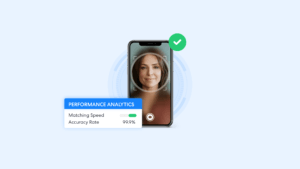
According to the UK government, right to work digital identity checks allow eligible British and Irish citizens to establish identities through a prescribed digital route. Identity Document Validation Technology also known as IDVT, was established on 6 April 2022. It authenticates eligible British passports, Irish passports, and passport cards. They help confirm that the evidence actually belongs to the applicant with most digital checks being completed in under 12 seconds.
It sits alongside manual checks and the free Home Office online checking service. Document authentication checks and facial comparison can strengthen identity assurance, but digital identity checks act as only one part of the whole prescribed Right to work check process.
Right to Work Digital Identity Checks Can Fail After a Worker Passes
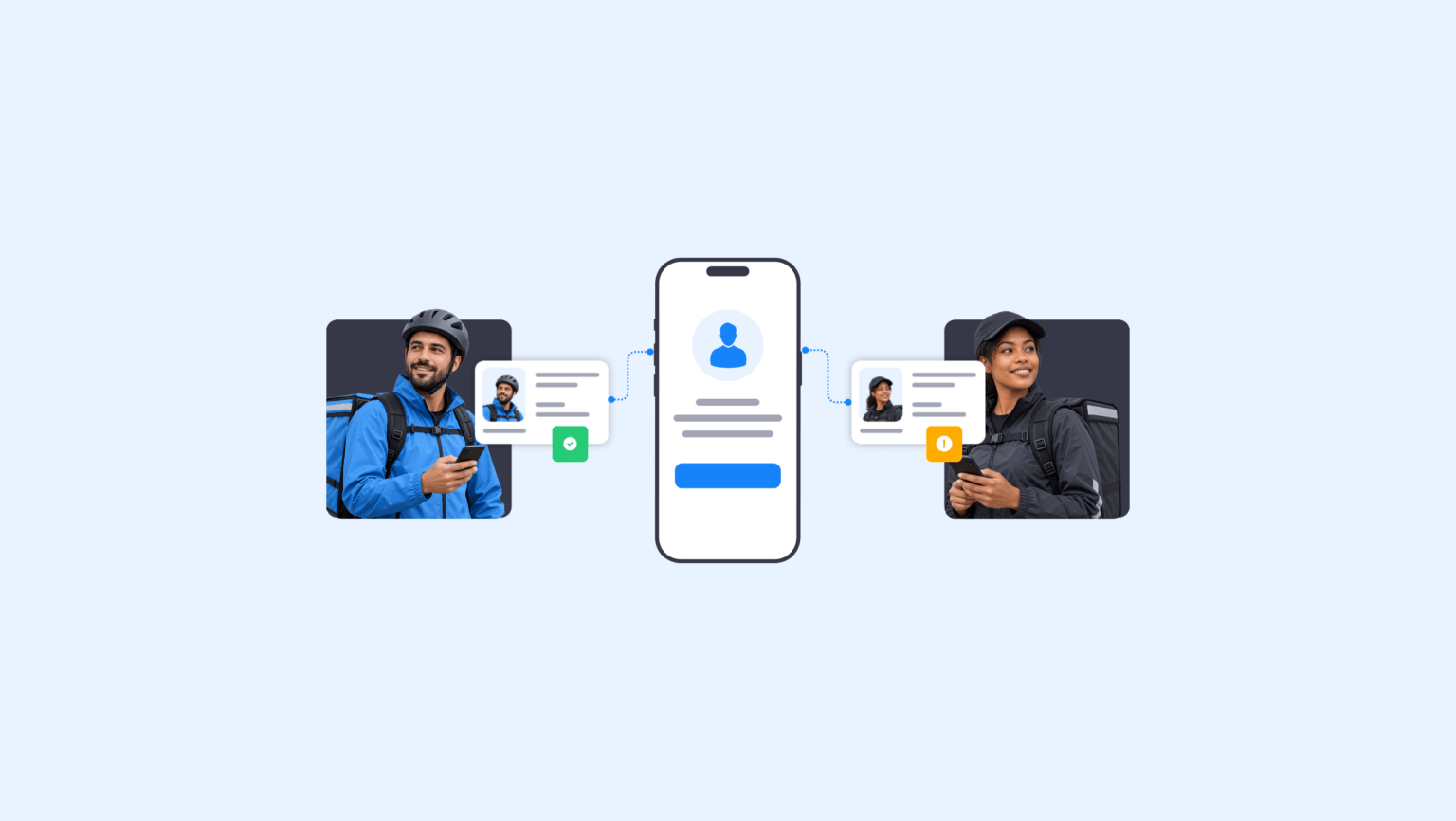
If a courier completes the onboarding process, they also need to pass identity verification, prove their right to work, and activate an account. However, weeks later, another person could begin completing deliveries through that profile. The original checks may have been correct, however, the platform no longer knows who is actually working.
The ability to work illegally is a driver of illegal migration and exploitation.
Alex Norris, MP, Minister for Border Security and Asylum goes on to state, “Illegal working undermines honest businesses and exposes vulnerable individuals to exploitation. This Government are clear that such activity will not be tolerated.”
The new rules in October 2026 extend the UK work scheme to more areas. This includes qualifying online matching services, individual subcontractors, and some agency workers. For many impacted platforms, the goal is around determining whether the identity approved during the onboarding process actually matches the person presenting or showing up to perform the work later on.
Digital Identity Certification Sets the Baseline
Digital identity verification is integrated into immigration and employment law. Generic digital identity checks are not automatically compliant Right to Work checks. Digital Verification Services (DVS) need to meet the relevant trust framework and supplementary-code requirements.
With these new changes, employers that are choosing the DVS route need a certified identity service provider registered against the UK Digital Attributes Trust Framework. They also need to have a relevant code in order to obtain a statutory excuse through that route. Digital identity certification does not transfer any employer’s legal responsibility to the certified provider.
Digital Right to Work Depends on Immigration Status
There is no single digital right route for every worker in gig economy right to work verification schemes. Eligible British or Irish citizen passport holder can use the relevant DVS route, while many non-British workers with an e-Visa can use the Home Office online service to prove their online immigration status.
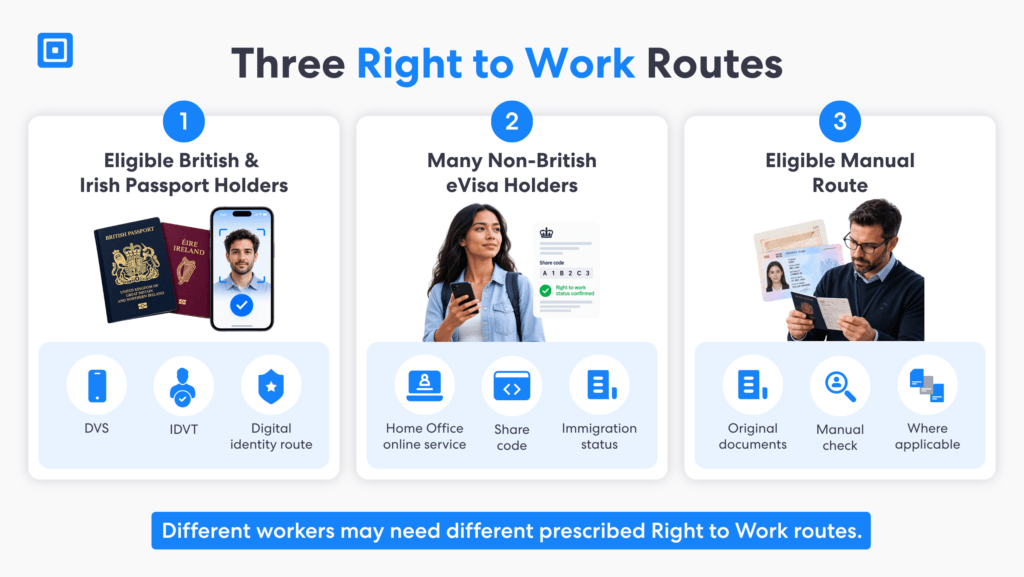
For many e-Visa holder, instead of presenting physical documents, the worker can generate an online share code which is typically valid for 90 calendar days. The employers use this code with the person’s date of birth through the Home Office online service.
Forcing every job applicant’s Right to Work through one commercial digital route where other permitted routes applies. Depending on the person, the process may instead involve the Home Office service or eligible physical documents.
Right to Work Digital Identity Checks After Onboarding
The current Home Office guidance says that relevant businesses need to have the appropriate systems. These systems must assure the person carrying out services is the right person. That is when a valid passport, work visa, biometric comparison, or confirmed Home Office status provides proof in the moment, but does not know who controls the account weeks later.
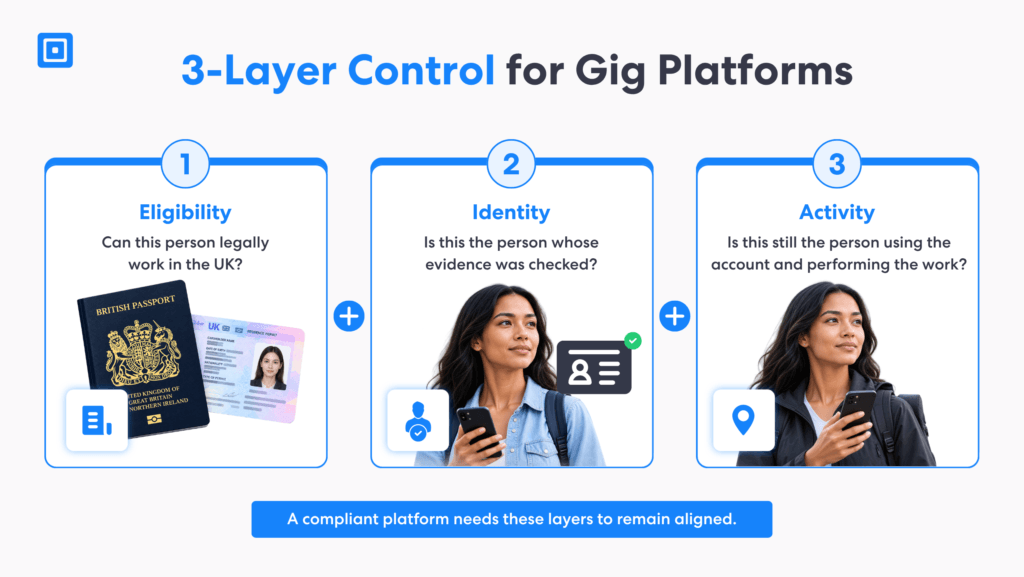
Even then, a verified profile is not a permanently transferable credential. Any identity assurance from the initial onboarding process is broken when someone who has not completed the required work checks ends up using another worker’s account.
Identity Verification Turns Account Sharing Into an Illegal Working Risk
One of the biggest issues with account sharing is how much it can disconnect compliant work verification from the person that is earning through the gig platform. This is where platform fraud and illegal working come into play.
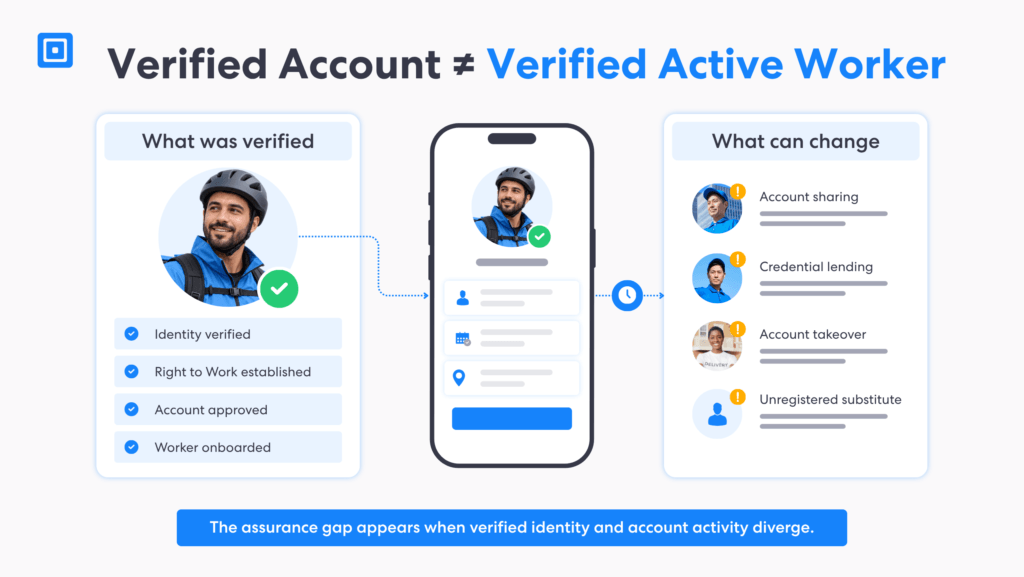
For instance, an illegal worker need not provide fraudulent documents for an onboarding process if they can gain access to an already-approved account. This is exactly why digital controls need strong privacy, cybersecurity, and accessibility safeguards.
Estudio de caso: Food Delivery Platforms Strengthen Digital Identity Checks
Most food-delivery platforms such as Deliveroo and Uber Eats have a huge post-onboarding identity verification problem. They often have one person verified with account sharing resulting in another person performing deliveries.
Home Office Fraud Detection Signals
By May 2026, Home Office found platforms had increase the quantity and quality of their facial recognition and fraud prevention software. It gave greater confidence that account holders and the registered substitutes were the people working through those accounts.
Resultados
- Food delivery applications conducted facial and fraud checks on a daily basis.
- They also increased how sophisticated their verification processes were.
- New fraud prevention controls focused on verifying right to work across account holders and registered substitutes.
Right to Work Digital Identity Checks for Registered Substitutes
Any and all registered gig worker substitutes need their own prescribed Right to Work check before performing any work. The original employee or worker’s right to work authorization does not transfer to another person.
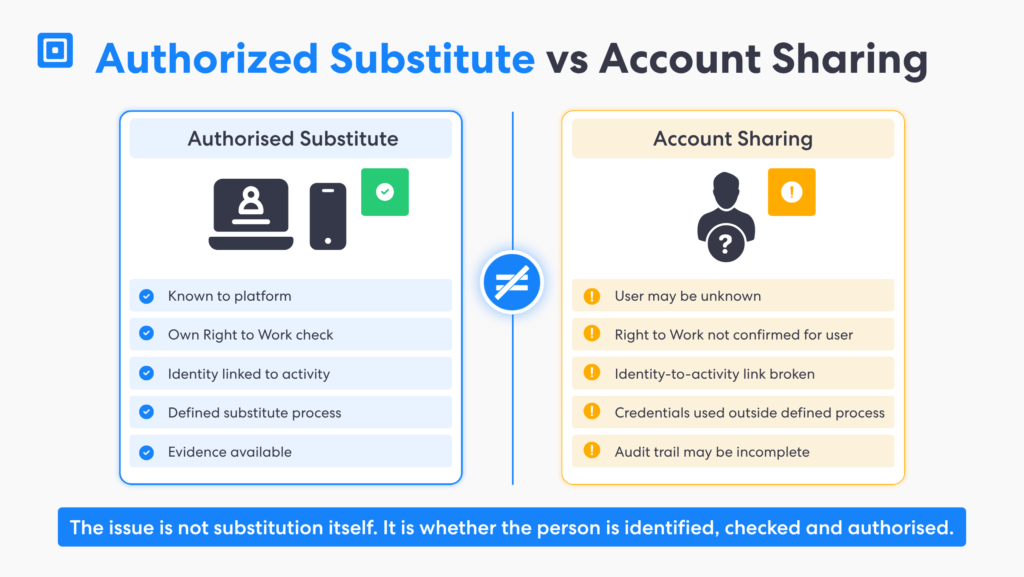
That is why it is crucial to have a distinct identity and eligibility record for original workers and authorised substitutes for these platforms. Ensuring that substitution is part of the full platform onboarding process helps distinguish any real activity from uncontrolled credential sharing.
Right to Work Digital Identity Checks Need Proportionate Re-Verification
Increasingly, platforms are re-checking identities at the start of shifts or after prolonged inactivity. Home Office guidance recommends that there be at least one check in during a 24-hour period or shift. Other times, they recommend re-checking identities are when registering a substitute, or for a particular assignment. The goal is to link platform activity with a previously verified digital identity instead of starting the onboarding process all over again.
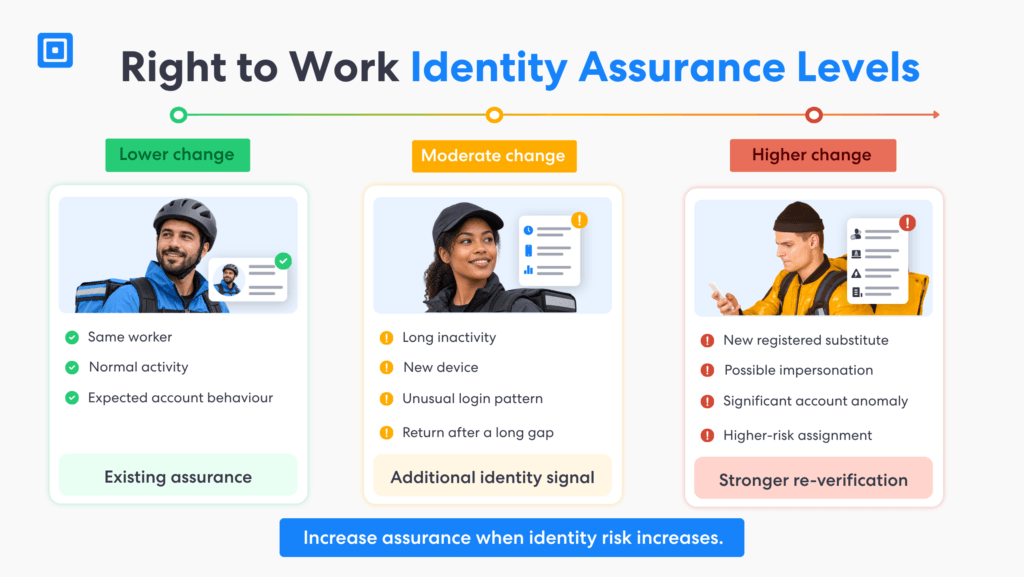
The frequency of checks need to be appropriate to the likelihood of impersonation or risks associated with substitutions. With many teams trying to make their work checks more digital, there needs to be stronger identity assurance when the worker-to-account relationship becomes murky or uncertain.
What Evidence Supports Right to Work Digital Identity Checks?
It is important for digital reports to remain securely stored and easily accessible if requested by regulators. Evidentiary support is incredibly important to retain during the working relationship and up to two years after much like they are for contractors. You can learn more here: La guía definitiva para la verificación del derecho a trabajar para contratistas en 2026.
As with most original documents, employers need to follow the manual process which includes checking original copies, making duplicate, and recording relevant dates. In this case, scanned copies, generic work documents, or showing identification at a Post Office will not serve as an approved statutory excuse.
A strong audit trail can connect the initial identity verification, worker profile, any authorised substitutes, and any other later identity events. This provides more clear evidence of who was truly authorized to carry out any work.
Illegal Working Makes Identity a Legal Responsibility
Serious cases of illegal working can lead up to criminal prosecution, which includes up to five years’ imprisonment and an unlimited number of fines. With the Home Office issuing 2,438 civil penalties worth more than £130 million in 2025 alone, gig platforms need to ensure compliance. They must connect identity, immigration status, account access, and actual work activity.
The issue is bigger than just border security or document verification. That is why a platform’s legal position largely depends on the prescribed checks and controls being applied to the gig workers they employ.
Conclusiones clave
Right to work digital identity checks involve identity assurance after onboarding.
The DVS/IDVT, share-codes, and ongoing assurance are three distinct processes.
All registered substitutes need their own right to work verification before working.
Re-verification as a chosen control must be proportionate to risk.
Platforms ensure compliance by linking identity, status, access, and evidence.
Choose ComplyCube for Right to Work Digital Identity Checks
In short, gig platforms need more than a point-in-time verification. ComplyCube helps platforms build in right to work digital identity checks into a onboarding process built for growth. It helps organisations link worker eligibility while keeping up stronger identity assurance over who is getting access to work through gig platforms. Learn how ComplyCube can support right to work digital identity checks for gig platforms to meet the October 2026 reforms.

Preguntas frecuentes
When do the new gig-economy Right to Work rules start?
The expanded Right to Work rules take effect on 1 October 2026. They extend responsibilities into additional working models, including qualifying online matching services and individual subcontracting arrangements.
Can every job applicant’s Right to Work be checked digitally?
No. The appropriate route depends on nationality, immigration status and the evidence available. Eligible British and Irish passport holders can use the relevant DVS route, while many non-British workers use the Home Office online service.
Is a Right to Work share code valid for 90 days?
Yes. A Right to Work share code is valid for 90 days from the date it is generated. It is primarily used by eligible workers whose immigration status can be viewed through the Home Office online checking service.
How long should employers retain Right to Work evidence?
Employers should retain the prescribed evidence throughout the relevant employment or working period and for two years afterwards. Records should be sufficient to demonstrate that the correct check was performed in the prescribed manner if the Home Office later reviews the case.
How will ComplyCube support right to work digital identity checks?
ComplyCube helps businesses integrate right to work digital identity checks into a scalable onboarding process. This helps gig platforms confirm worker eligibility, manage verification routes and apply stronger assurance where identity, substitution or account-access risks change.