On June 1, 2026, Belgian authorities announced that they are investigating Wise money laundering concerns. Allegedly, some of the company’s accounts were used by criminals to move illicit flows into fraud, corruption, and drug trafficking. The British FinTech company has responded to these allegations.
Fun Fact: Wise was launched back in 2011 by two Estonian entrepreneurs, Taavet Hinrikus and Kristo Käärman, living in London. The founders had interesting backgrounds, with Taavet being Skype’s first employee and Kristo working at Deloitte. The two bonded through their experiences of high international transfer costs, which led them to build Wise.
Why Was Wise Under Scrutiny?
The investigations began last year, when Wise accounts surfaced in hundreds of law enforcement requests. According to the Bureau of Investigative Journalism, Belgian prosecutors are expected to see over €500 million (USD$580M) in suspicious transactions, spanning across 30 European countries.
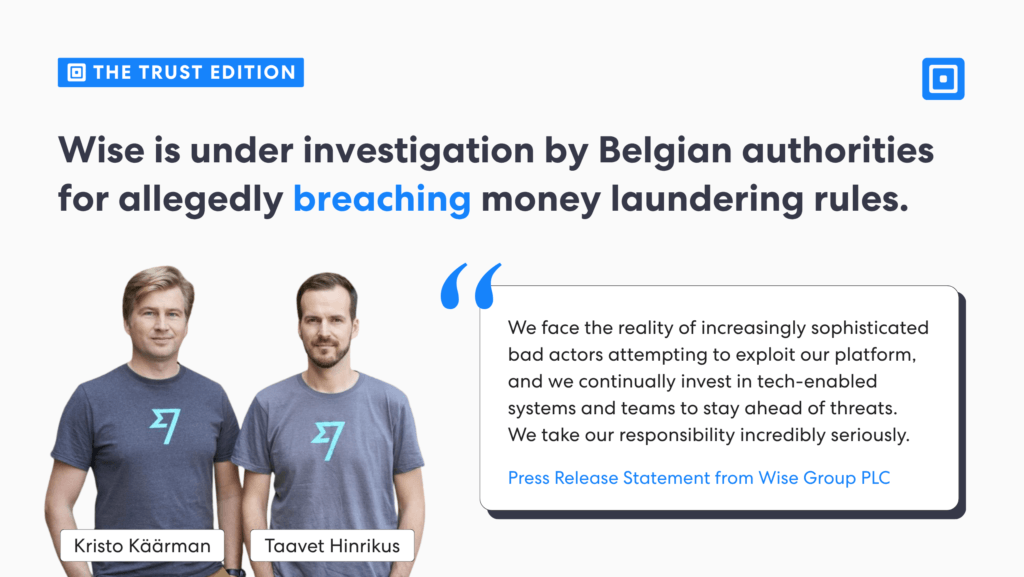
Notably, the Brussels prosecutor’s office focuses its investigations on Wise’s European branch, specifically, the Belgian entity. Belgian watchdogs are still inspecting the case, with Wise fully cooperating with authorities, according to their press release.
Enquiries are still incomplete, and no specific findings have been shared with us to date. As such, it would be speculative for us to comment on any allegations.
The scale of this case points to a wider systematic challenge, suggesting the lack of oversight and consistency in verifying high-risk users, businesses, and transactions. This could point to weak Enhanced Due Diligence (EDD) and ongoing monitoring, which can enable bad actors to exploit easily.
Wise Faces $4.2M Fine Last Year for AML Deficiencies
Unfortunately, this is not the first time the FinTech has been underwater for Anti-Money Laundering (AML) related scrutiny. Back in July 2025, Wise was penalized $4.2 million by multiple US state regulators for violating AML controls. Specifically, the firm struggled to meet key AML and Countering the Financing of Terrorism (CFT) controls. This includes inadequate due diligence and monitoring processes for suspicious activity.
We face the reality of increasingly sophisticated bad actors attempting to exploit our platform, and we continually invest in tech-enabled systems and teams to stay ahead of ever-evolving threats.
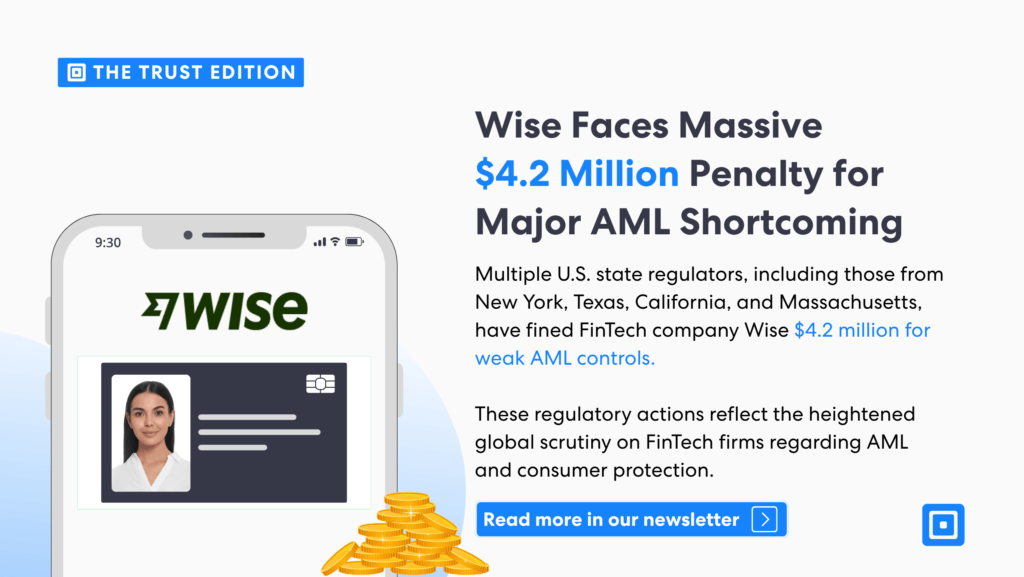
For FinTech firms, the pressure to meet heightened Know Your Customer (KYC) and AML regulations has peaked in recent years. Regulators are demanding tighter controls. This is partially due to the fast, low-friction transfers in the sector, which can act as a haven for fraudsters and criminals to lurk in.
Fun Fact: In 2025, FinTech and crypto firms racked up the highest amount of KYC and AML-related fines. Out of the top 10 penalties, around $1.1 billion, or 84% of fine were handed out to firms in this sector. Some of the familiar company names include OKX ($500M), KuCoin ($300M), and BitMEX ($100M).
The recent statement by Wise highlights the growing risks in the sector, with the team stating, “Like every financial institution, we face the reality of increasingly sophisticated bad actors attempting to exploit our platform, and we continually invest in tech-enabled systems and teams to stay ahead of ever-evolving threats”.

Subscribe to ComplyCube’s Trust Edition newsletter, where we explore the top developments across identity verification and AML globally. Plus, we share valuable insights on compliance with the latest regulations.