TL;DR: Adverse or Negative Media includes any unfavorable information obtained from various trusted news sources and outlets. Adverse Media checks can expose hidden AML risks such as association risk, Financial Crime (FinCrime) risk, or legal Risk. Explore how adverse media screening works in this guide.
What is Adverse Media Screening?
Adverse Media Screening involves interrogating reputable data sources for negative news associated with an individual or company. These checks can uncover hidden links with FinCrime or similar activities that may pose a reputational risk to the business. Therefore, Adverse Media Screening must be an integral part of the Know Your Customer (KYC) process to enable companies to identify and protect their business from various Anti-Money Laundering (AML) risks.
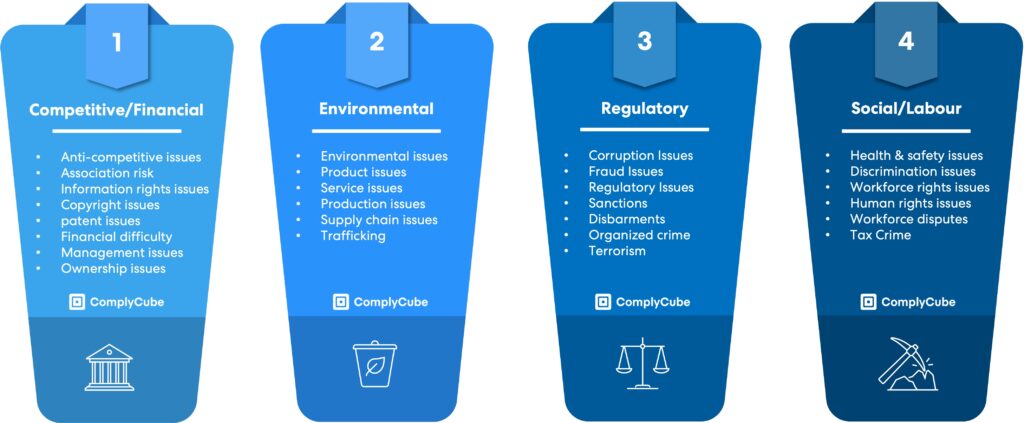
At ComplyCube, we use the following buckets to categorize Adverse Media:
Where does Adverse Media come from?
- Traditional news outlets and Media.
- International Organisation’s databases.
- Blogs and web articles.
- Specialized websites that publish issues involving AML and FinCrime.
- Social media and internet forums.
- Press releases and notices published by regulators, law enforcement agencies, tax authorities, and other government agencies.
What do regulators say about Adverse Media Checks?
It is no surprise that different jurisdictions and regulators enforce various Adverse Media AML regulations and guidance. However, they all highlight the need to build accurate risk profiles of clients.
Financial Action Task Force (FATF) recommends “verifiable Adverse Media searches” as part of customer risk assessments and underlines the need to “understand the client’s reputation”. It also requires firms to determine whether high-risk clients have been “previously investigated” for money laundering or terrorist financing or subject to regulatory enforcement in the past.
Similarly, the EU’s 4th Anti Money Laundering Directive (4MLD), also transposed into UK law, requires firms to perform enhanced customer due diligence (CDD) for high-risk customers, leveraging open-source or Adverse Media searches. 4MLD was strengthened by 5MLD on 10 January 2020 with the new directive encouraging automated Adverse Media Screening. On 3 December 2020, 6MLD came into effect, adding cybercrime and environmental crime to the list of money laundering predicate crimes and extending the AML criminal liability.
Following Brexit, the UK has opted out of the 6MLD, on the basis that domestic legislation already ‘goes much further’. However, any regulated UK businesses operating in Europe must comply with the 6MLD.
The United States Financial Crimes Enforcement Network (FinCEN) requires financial institutions to conduct Adverse Media Screening as part of the CDD process. FinCEN also requires a risk-based AML approach that includes Adverse Media Screening throughout the relationship, in other words, ongoing Adverse Media Checks.
Case Study: Barclays Bank £42 M Fine for Inadequate Screening
In 2025, the leading bank, Barclays Bank PLC, was fined £42 million (USD$56 M) by the UK’s Financial Conduct Authority (FCA) for gaps in its Anti-Money Laundering (AML) screening. Its outdated monitoring system enabled high-risk clients to transfer funds through the bank.
Lack of Oversight on Red Flags
In one of the cases, Barclays opened an account for Stunt & Co, a gold and trading business that had a relationship with Fowler Oldfield, a jewelry wholesaler linked to a money laundering operation. Despite warnings, the company failed to thoroughly verify its business relationships.
Solutions & Outcomes
The company was fined a total of £42 M, including £39.3 million for the case relating to Stunt & Co.
The FCA publicly censured the bank, requesting it to re-analyze the effectiveness of its AML processes.
The regulator put Barclays on a remediation plan and ordered it to invest in upgraded monitoring systems to close its risk gaps.
The Challenge of Adverse Media Screening
Manual Adverse Media Screening is time-consuming, highly ineffective, and does not scale. For instance:
- Institutions use internet searches and “googling” news articles to perform manual searches for negative news on high-risk clients.
- Compliance Officers must cross-reference the outcome of these searches with other data sources and approve them.
- This manual process is labor-intensive, costly, highly error-prone, and subject to increased human bias.
- Media coverage is changing at a staggering pace. Therefore, manual searches provide only a static risk snapshot.
- Media coverage may not be available in a familiar or accessible language and thus may be misunderstood.
- Limited access to some sources will lead to a few pieces of Adverse Media going unnoticed.
Key Takeaways
- Adverse media screening forms a critical layer of Know Your Customer and Anti-Money Laundering compliance programmes.
- Adverse media sources can include press releases, social media forums, and public government databases.
- The process includes scanning reputable data sources for negative news linked to a business or customer.
- Leading regulations, such as FinCEN and FATF, mandate a risk-based AML approach, including adverse checks as CDD.
- Automated negative media screening can scan multiple, vast databases and send risk notifications in real-time.
How our automated processes will help you?
In today’s media landscape, a process reliant on manual searches cannot contend with automated systems that digest enormous amounts of data in real-time, validate it, and then send notifications as soon as there is something of interest.
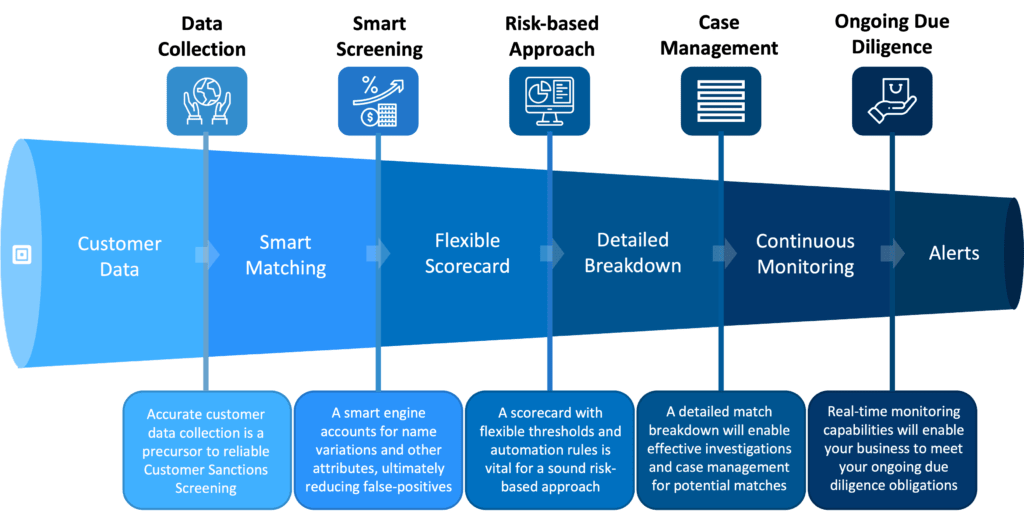
As such, systematic Adverse Media checks provide you with a more in-depth insight into your clients and allow you to tailor searches based on your risk approach and regulatory requirements. With state-of-the-art systems such as ComplyCube, you will be able to screen customers across a vast array of databases and news sources whilst receiving only risk-relevant results. Our leading platform will enable you to protect your company from reputational, and AML risks effortlessly and cost-effectively.
Check out www.complycube.com to learn more about our platform.
Frequently Asked Questions
How long does an adverse media check take?
Automated adverse media screening can be performed in milliseconds due to the usage of AI, with verification outcome occurring in real-time. However, manual adverse media checks can take anywhere from 12 to 72 hours, as it largely depends on analyst expertise.
What is an adverse media red flag?
An adverse media red flag is any form of negative news linked to a person or entity that may suggest a connection to illicit activity, including fraud, money laundering, corruption, and sanctions. A red flag is raised to notify compliance teams of potential high-risk harm.
Do all companies need adverse media screening?
Not necessarily. Regulated business subject to AML requirements must run adverse media checks as part of the Customer Due Diligence (CDD) process. Adverse media screening acts as an early risk indicator. Although not strictly mandated, it is strongly recommended by global regulatory authorities, such as the FATF, the UK’s FCA, and the U.S. FinCEN.
How much does an adverse media check cost?
Adverse media screening costs anywhere from $1.05 to $15 per individual. The cost can differ across various pricing models, which include pay-per-check, subscription-based, or tiered plans. ComplyCube offers adverse media screening from as low as $0.85 per user, with the cost per check further reduced with high volume verification.
Does ComplyCube offer automated adverse media screening?
Yes, ComplyCube offers automated adverse media screening, covering over 50,000 trusted news sources. Businesses can deploy it quickly into their current systems and workflows with low/no-code and via strong API and SDK integration. All of their data sources are credible, global, and authoritative, empowering companies to reduce fraud risks in a matter of seconds.