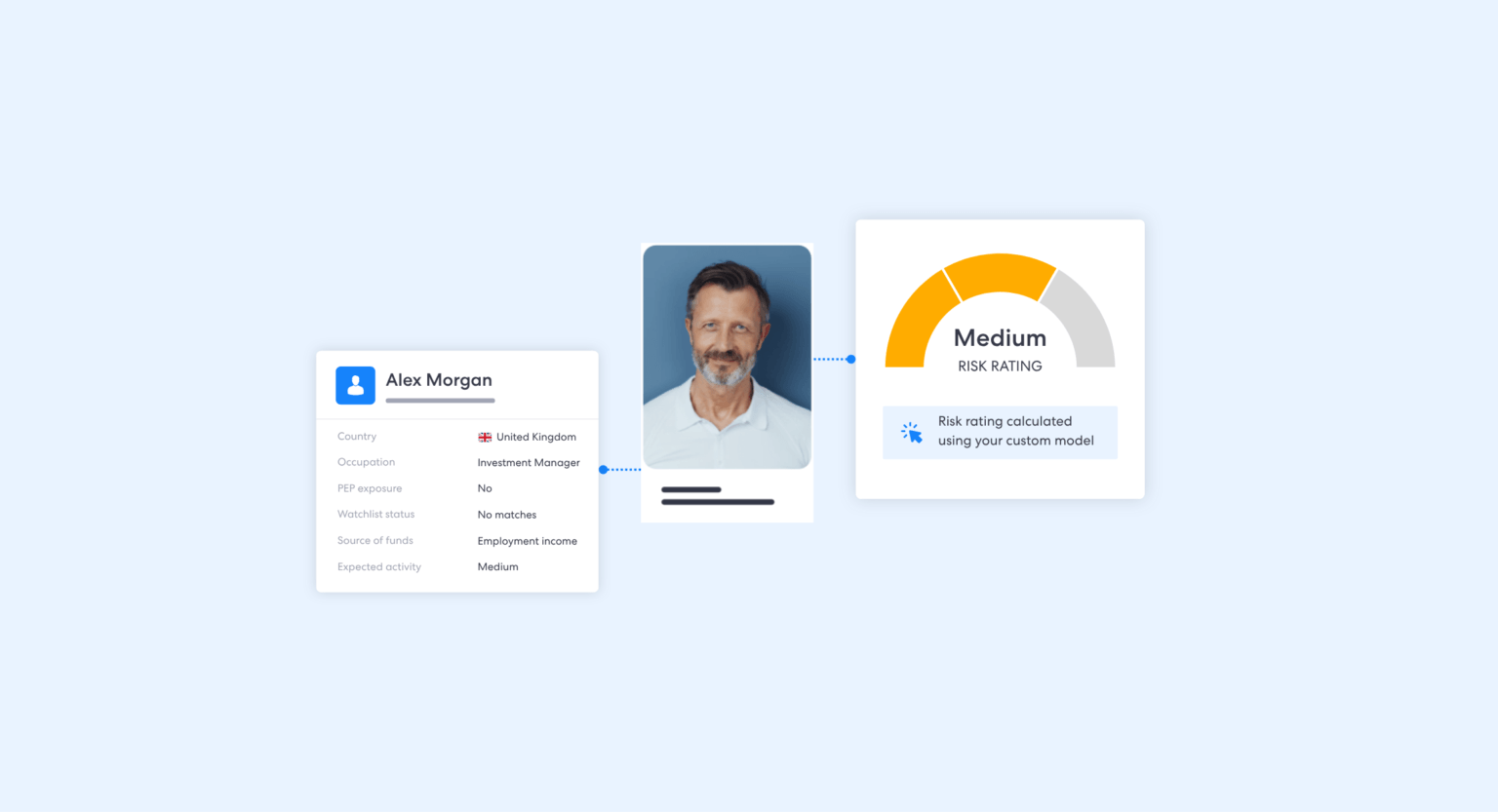
LONDON, OCTOBER 15, 2026 – Risk-based approaches are central to Anti-Money Laundering (AML) and Know Your Customer (KYC) compliance. As regulatory expectations change, businesses are facing more pressure to show how customer risk is assessed, justified, and kept up to date. Static assessments can quickly become outdated, and that is why continuous, explainable risk evaluation becomes important. ComplyCube has expanded its risk management capabilities with its Custom Risk Engine. This risk scoring engine automates assessments using models aligned with individual policies, risk appetite, and decision-making needs.
This risk scoring engine blends identity, fraud and compliance with both internal and third-party data. Through adaptable risk factors, weightings, and decision logic, teams can produce consistent and explainable risk scores that change based on new information. From Customer Due Diligence (CDD) to ongoing monitoring, companies can have greater control over how risk is measured, prioritized, and managed over the entire customer journey.
Why Fragmented Risk Data Demands Smarter Decisioning
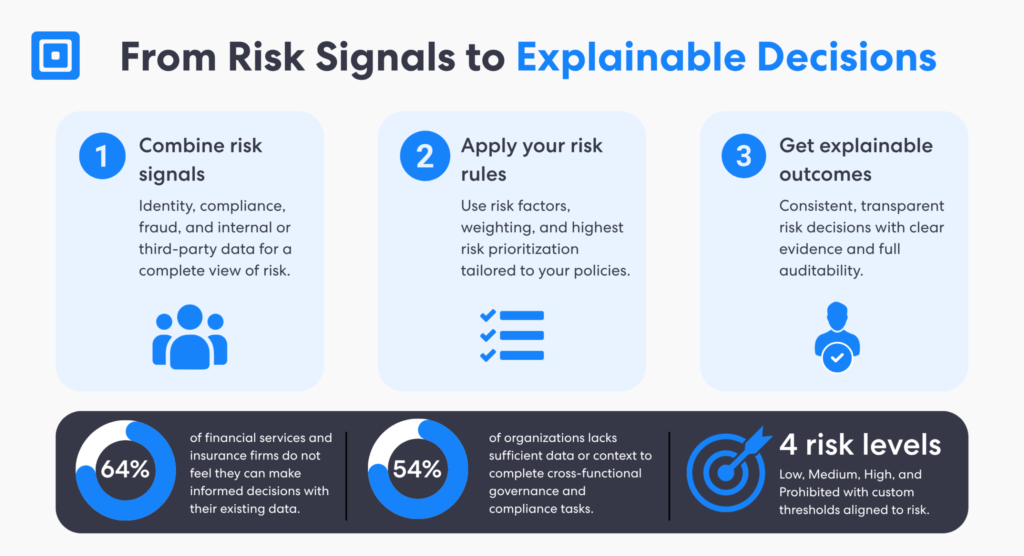
More than half of surveyed organizations by Thomson Reuters lack enough context to complete cross-functional compliance tasks, highlighting the difficulties of disconnected systems and fragmented data points. For businesses looking to manage risk across verification platforms, internal databases, and third-party providers, this fragmentation leads to inconsistent assessments, manual intervention, and limited visibility into how decisions are reached.
Traditional risk scoring frameworks present a challenge especially when predefined rules do not reflect an organization’s specific risk appetite. As risk environments become more difficult to navigate, businesses need more than just access to data. They need flexibility to understand which risk signals matter, how they are assessed, and when real action is required.
From Fixed Models to Automated Risk Scoring
ComplyCube’s custom risk scoring engine looks at the gap by translating an organization’s own risk methodology into automated, explainable decision logic. Unlike some scoring approaches that rely on weighted averages, the risk scoring engine supports hybrid calculation methods. It blends weighted scoring with the highest-risk prioritization. This allows critical indicators, such as confirmed sanctions matches, to take precedence instead of being diluted by otherwise low-risk attributes. It delivers three core capabilities:
- Configurable risk models: Blend native and external intelligence with tailored risk factors, weightings, and decision thresholds.
- Automated risk reassessment: Re-assign classifications based on changes in customer information and verification results. This allows risk assessments to stay up to date over the whole customer lifecycle.
- Explainable risk scoring: Link any risk scoring outcomes to underlying risk rules and evidence. It also supports documented analyst overrides to keep human judgement and accountability.
Configurable risk models, automated risk assessments, and explainable risk scoring come together to help organizations replace any static, fragmented risk assessments. It puts companies into the driver’s seat with more consistent, adaptable risk decisions.
Custom Risk Models Built for Real-World Complexity
These risk scoring engine applications go across various industries with completely different risk priorities and requirements. Some financial institutions such as banks may want sanctions exposure and customer due diligence coverage, whereas marketplaces can ask for identity and fraud indicators.
Spanning geographical exposure, products, and services, the risk engine’s framework shows how complex risk policies can inform structured and automated decisioning. It also considers factors such as transaction size, customer affordability, customer characteristics, and delivery channels. Instead of forcing businesses to adapt established methodologies to fixed technology, ComplyCube enables risk models to reflect the policies that organizations already use.
Advancing Explainable Risk Intelligence with the Custom Risk Scoring Engine
This expansion speaks to the broader evolution of ComplyCube’s platform. The custom risk scoring engine is extending ComplyCube’s identity verification, fraud intelligence, and compliance capabilities into configurable risk decisioning.
Risk isn’t one-size-fits-all. The technology businesses rely on shouldn’t be either.
Harry Varatharasan, Chief Product Officer of ComplyCube, said, “Every organization has its own risk appetite, data, and decision-making requirements. ComplyCube’s custom risk engine provides businesses with a way to turn intelligence into automated, explainable decisions. They can choose a solution that truly reflects how they operate instead of forcing them to adapt to rigid predefined models.”
ComplyCube helps businesses move toward making decisions they can understand internally, justify to regulators, and control. Uncover how ComplyCube’s custom risk engine can help your company automate risk scoring, implement custom risk models, and strengthen decision-making.
About ComplyCube
ComplyCube is an award-winning global identity verification, fraud prevention and compliance platform helping organizations build trust at scale. Its solutions cover KYC, KYB, and AML screening. It also empowers businesses to make smarter compliance decisions with biometric verification, fraud intelligence and risk management which empower businesses. Companies can streamline onboarding, strengthen risk controls and navigate evolving regulatory requirements.