Fans are scrambling to find tickets deals and packages online with the upcoming FIFA World Cup 2026. As a result, cybercriminals have a lucrative opportunity to spoof FIFA-related websites to steal personal and financial information globally. The Federal Bureau of Investigation (FBI) issued a warning about fake websites impersonating official 2026 FIFA World Cup platforms. What starts off as a fake ticketing page or scam will turn into a case of stolen identity, unauthorized payments, or suspicious criminal activity.
How a Global Tournament Creates a Scam Opportunity
Major sporting events often create instant demand and urgency. This is what fraudsters rely on to build a system of fast-moving fraud. For example, criminals build fake websites that replicate official FIFA World Cup 2026 branding to steal sensitive information using realistic domain names and promoting offers that seem legitimate.
According to Fortinet, over 13,000 World Cup-themed websites were registered between January and May. 8% were found to be malicious or suspicious. As a result, football fans looking for a last-minute deal may be convinced to enter in payment details, passport information or other Personally Identifiable Information (PII).
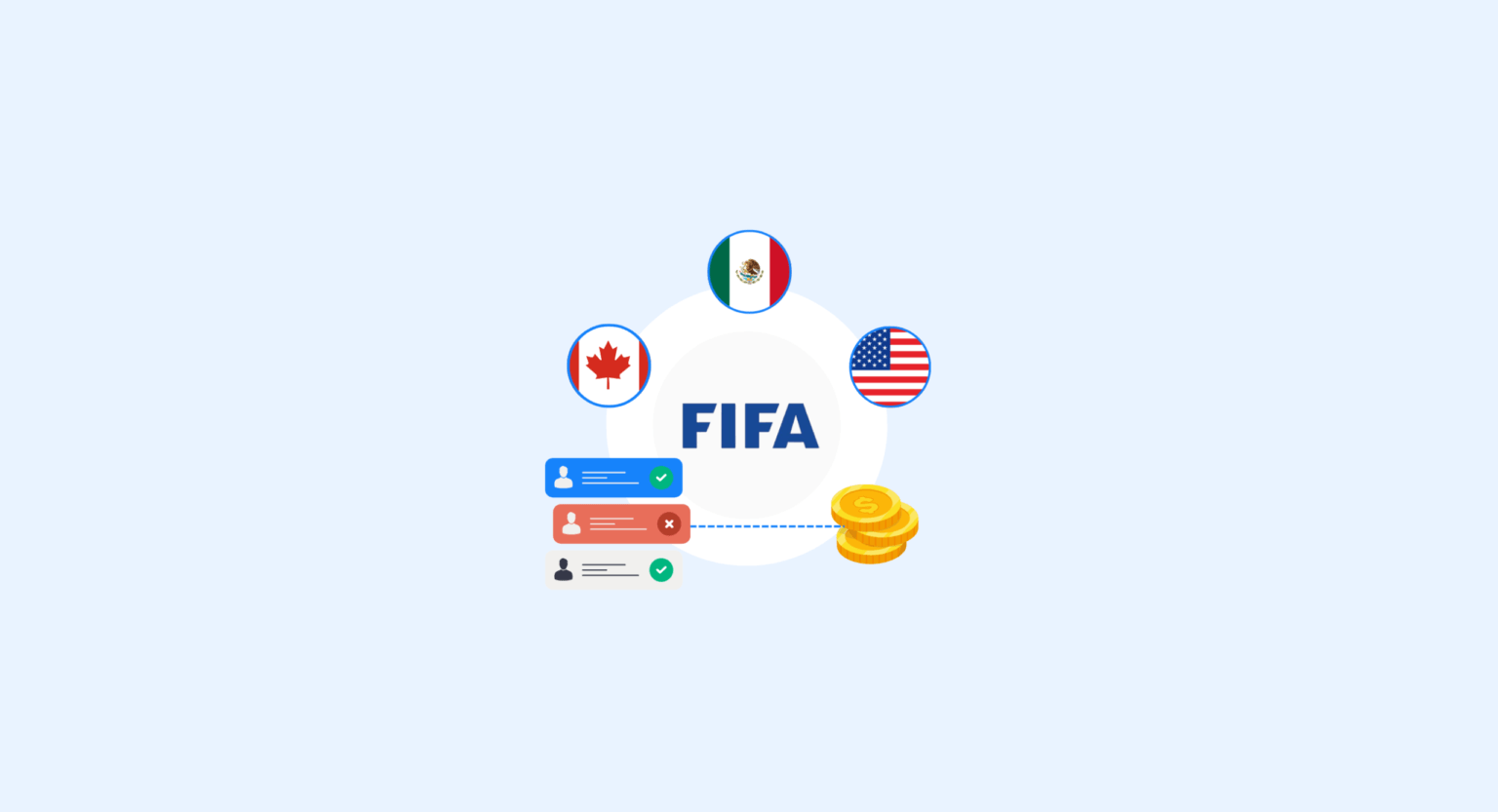
Background: For the first time in its history, the 2026 FIFA World Cup will be hosted across three countries. The matches will take place across the United States, Canada, and Mexico. The expanded format includes 48 teams increasing demand across ticketing, travel, and payments. Therefore, this leads to an increased risk of fraud.
Though at first, these types of scam seem straightforward, there are many layers. Maybe a customer will lose money or hand over sensitive information, but there is a chance it can go beyond the point of sale. Down the line, this fraudulent behavior could trickle down into financial institutions, fintechs, marketplaces, and payments providers. This valuable information is a gold mine for criminals looking to open new accounts, bypass Know Your Customer (KYC) checks, create fake identities, or support broader fraud campaigns.
Now, a simple consumer scam can become a larger compliance concern. Even though regulated firms may not interact with the fake websites themselves, they will see a correlation with new account openings with synthetic identities, account takeovers, or money mule activity popping up in their operations. You can learn more here: What is Synthetic Identity Fraud?
AML Risks Behind Fake Tickets and Stolen Data at FIFA World Cup 2026
The FBI scam warning about 2026 FIFA World Cup is unique because it is not tied to bank fines, regulatory settlements, or sanctions breaches. It is a public alert about websites pretending to be real pages, misleading fans, and collecting personal or financial information.
The Canadian authorities also issued warnings urging fans to watch out for World-Cup themed fraud. Yet for compliance teams, the real AML impact sits further down. It looks at what happens after the first victim is tricked and fraud money needs to be moved. Often, payments move through mule accounts, crypto wallets or newly opened account with synthetic identities. Therefore, these steps make money harder to trace.

These fraudulent activities create a practical challenge for compliance teams. For example, a basic onboarding check may say that a document is valid without looking into the device or biometric signals that shows impersonation. In another instance, a fraud team may see chargebacks, while an AML team sees broken up transaction alerts. The clear lesson is that AML and fraud controls must work together to build a clearer view of customer risk.
Why Event-Driven Fraud Matters
Huge tournaments such as the 2026 FIFA World Cup are create more fraud opportunities. Higher user volumes, increasing cross-border payments, and customer disputes become easier to hide behind. Normal fraud patterns are squeezed into a shorter period of time. It becomes increasingly harder for firms to know the difference between real customer urgency versus suspicious activity.
Key Facts: The peak time for event-related fraud is before the event happens. This is the time when fans are booking tickets, travel, accommodation, and hospitality under a time crunch.
Big events such as FIFA World Cup 2026 require control environments that adapt to different contexts or risk levels. Low-risk customers should not face unnecessary friction, but accounts with unusual signals should trigger enhanced checks.
The Compliance Lessons from FIFA World Cup 2026
The scams coming out of the 2026 FIFA World Cup are a classic example of how AML fraud can start outside of regulated firms and move into them. This demonstrates how early fraud detection is crucial for protecting customers and businesses. Firms that decide to treat fraud prevention and AML as separate controls are at real risk of missing the full fraud pattern. Combining various signals allow operations teams to find suspicious behavior before it is hard to trace.

Subscribe to ComplyCube’s Trust Edition newsletter, where we explore the top developments across identity verification and AML globally. Plus, we share valuable insights on compliance with the latest regulations.