TL;DR: Establishing an entity’s Ultimate Beneficial Ownership can be challenging, and demands Know Your Business (KYB) technologies to meet compliance standards. An Ultimate Beneficial Owner refers to the individual or group of people who is in control of and responsible for actions taken by another entity. This guide explores what UBO is and how to identify real ownership.
What is an Ultimate Beneficial Owner?
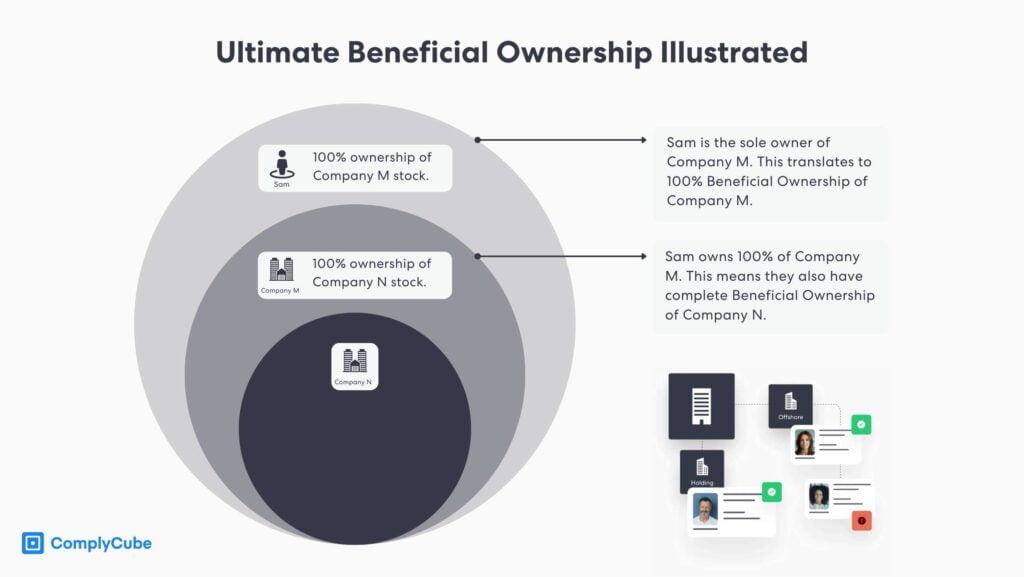
A UBO is the natural person or group of people who own and/or control another entity. Entities can range from another human being to a multi-billion dollar institution. While the beneficial owner might control a significant portion of responsibility, they might not be directly listed within a company’s official documents or an affiliate individual’s records.
The standard definition of Ultimate Beneficial Ownership is when 25% (or more) is controlled by one group or individual. Such a large stake grants the owner(s) unparalleled levels to exercise ultimate and effective control.
What is a UBO of a Company?
The beneficial owner of a company is the person or group that ultimately benefits from the business’s activities. This means they have the power to make significant decisions regarding the company’s operations, finances, and strategic direction.
Identifying the UBO is crucial for institutions establishing new business relationships. They must ensure that the operators of a partner company are compliant and operate legally. Not doing so could lead to non-compliance with financial and Anti-Money Laundering (AML) regulations or other corporate fines.
What is a Beneficial Owner of an Individual?
Beneficial ownership of an individual refers to someone who benefits from assets held by another person or entity. These cases often include individuals whose assets are held in trust funds or via custodial arrangements. In these cases, the UBO has the lawful right to obtain profits or other economic benefits from them, but the trustee holds legal ownership of the assets.
What is Know Your Business?
Know Your Business is the process used by institutions to identify the backgrounds of companies they might work with. This includes ascertaining the ownership structure (Ultimate Beneficial Ownership), financial and legal health, and compliance with laws such as AML regulations.
KYB solutions use advanced technologies to facilitate this process in a matter of minutes, reducing the time spent on due diligence and the cost of onboarding new businesses as well as enabling compliance with dynamic and potentially convoluted regulations.
The Corporate Transparency Act (CTA) in the US
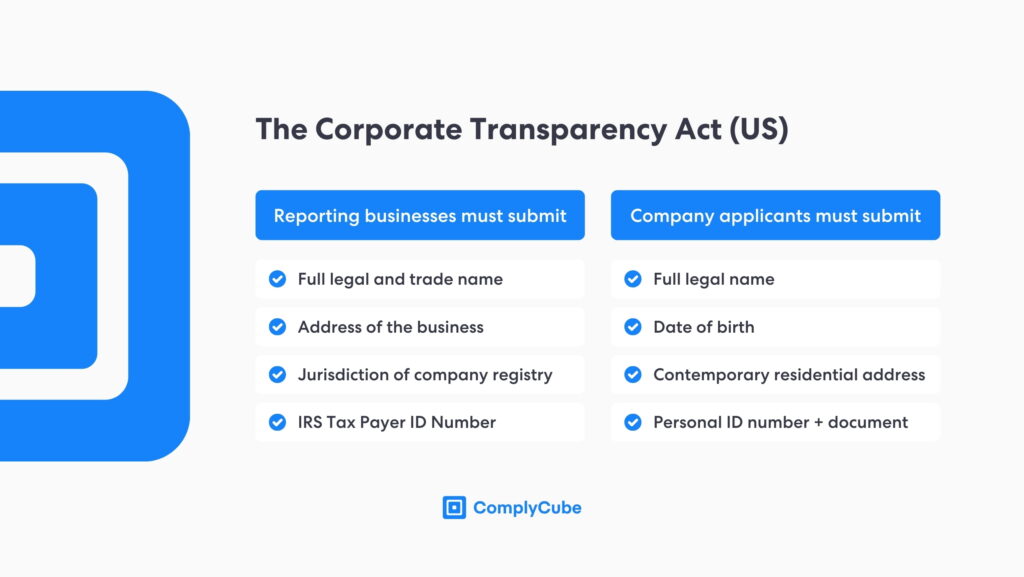
The Corporate Transparency Act, launched in 2021 but only taking effect on January 1, 2024, requires firms to submit particular information regarding beneficial owners—known as Beneficial Ownership Information Reports (BOI Reports). This information must be sent to the Financial Crimes Enforcement Network (FinCEN) as part of America’s AML Act of 2020 and its renewed mission to increase corporate and structural transparency.
The data a reporting company must submit:
- Full legal name and trade name
- Up-to-date address of the business’s place of trade/where the firm conducts business
- Jurisdiction of where the company is registered
- Inland Revenue Service (IRS) Tax Payer Identification Number (TIN)
The data each company applicant and the beneficial owner must submit:
- Full legal name
- Date of birth
- Up-to-date residential address
- Personal identification number and ID document
Challenges of Finding Ultimate Beneficial Ownership
Firms face many challenges when establishing an entity’s, institution’s, or individual’s UBO. These include layered ownership structures, data opacity, and regulatory discrepancies.
Complex Ownership Structures
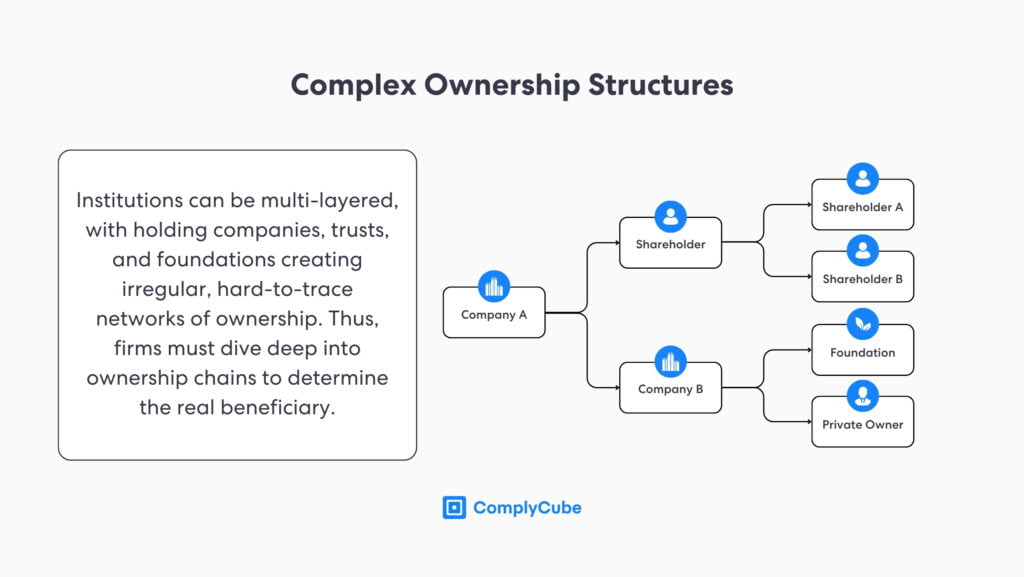
One of the significant challenges in identifying ultimate beneficial ownership (UBO) of an individual is navigating complex ownership structures. Many individuals and some institutions structure the ownership of their assets or companies in layered arrangements, using holding companies, trusts, or offshore entities to obscure the true ownership of assets or equity.
These structures can create an irregular network of ownership that makes it difficult to trace back to the ultimate owner. The use of intermediaries or nominees further complicates this process, as the legal title might not reflect the true owner of the assets. Institutions must sometimes dive far deeper than the surface-level ownership to determine the real beneficiary.
Lack of Transparency
Many regions have stringent privacy laws that protect the identity of beneficial owners by law, making it extremely difficult to obtain the required information. Typically, the lack of beneficial ownership transparency occurs in tax havens or secrecy jurisdictions that offer a high level of confidentiality, which can shield the identities of individuals seeking to conceal their ownership.
These protective laws, while legally justified, often purposefully hinder efforts to reveal the true beneficiaries of financial and corporate structures. This poses a significant challenge for regulators wishing to prevent financial crime and financial institutions, among other businesses, looking for safe partnerships.
Inconsistent Regulations
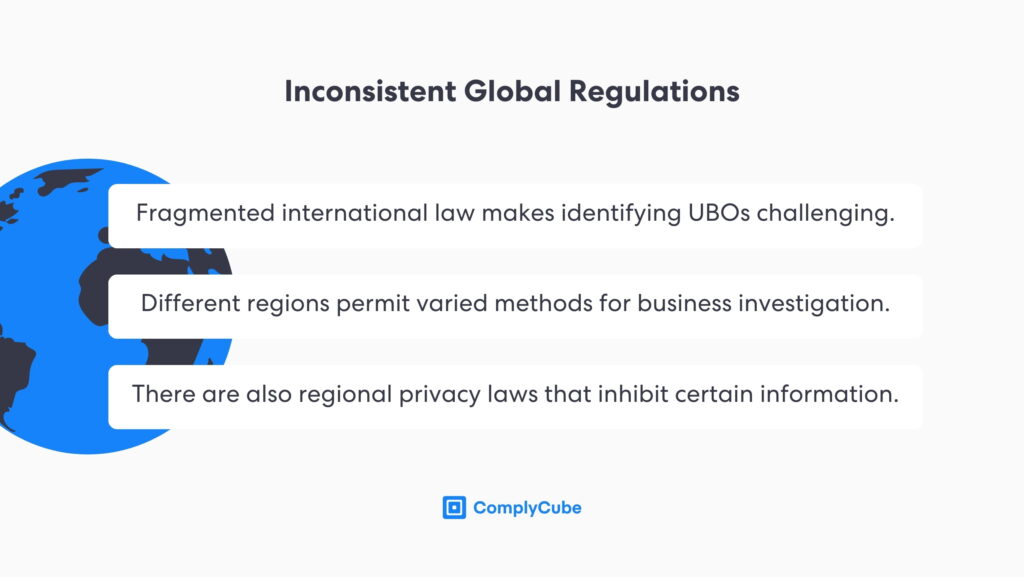
Jurisdictional inconsistency in regulation can prove another steep hurdle for firms. The lack of a global standard for identifying the Ultimate Beneficial Owners of legal entities allows different countries to define beneficial ownership differently. Fragmented regulations lead to disparate methods of UBO identification.
This divergence in regulation means businesses may have to employ different methods of identification in different regions where the firm operates, leading to high compliance costs to facilitate different UBO verification methods.
Use of Trusts and Foundations
Trusts and foundations can separate legal and beneficial ownership, adding to the complexity of identifying UBOs. Trustees hold the legal rights to the assets in question, but the beneficiaries enjoy the rewards.
Identifying the UBO can be challenging for various reasons, including trustee discretion, confidentiality agreements, and dynamic asset entitlements. Foundations obscure fund ownership by separating the control and benefits of the underlying assets.
Deliberate Concealment
Malicious individuals or firms knowingly contravening AML laws might choose to purposefully conceal an institution’s true nature and ownership. Shell companies, sophisticated financial instruments, or nominee shareholders are all viable methods for deliberately concealing the true ownership of large entities.
These evasive tactics are designed to obscure true ownership and the value of the ownership stake, making it difficult for authorities or other companies to identify the Ultimate Beneficial Ownership. Fraudulent activities, such as using false information to disguise the real owners, increase the complexity of the true identification of UBOs. Combatting these challenges, along with the others listed above, requires robust AML and KYC processes.
Technology and Resources
Identifying UBOs is, therefore, a resource-intensive exercise that requires sophisticated technologies to efficiently and affordably complete. Smaller companies with limited resources may struggle to implement robust systems for tracking and verifying UBOs. Technological barriers, such as outdated or incompatible IT systems, can hinder the efficient sharing and processing of beneficial ownership data.
The FATF recommends that firms invest in modern technologies and related resources to overcome these challenges. This will enable businesses and regulatory bodies to streamline processes, improve data accuracy, and ensure compliance with transparency requirements.
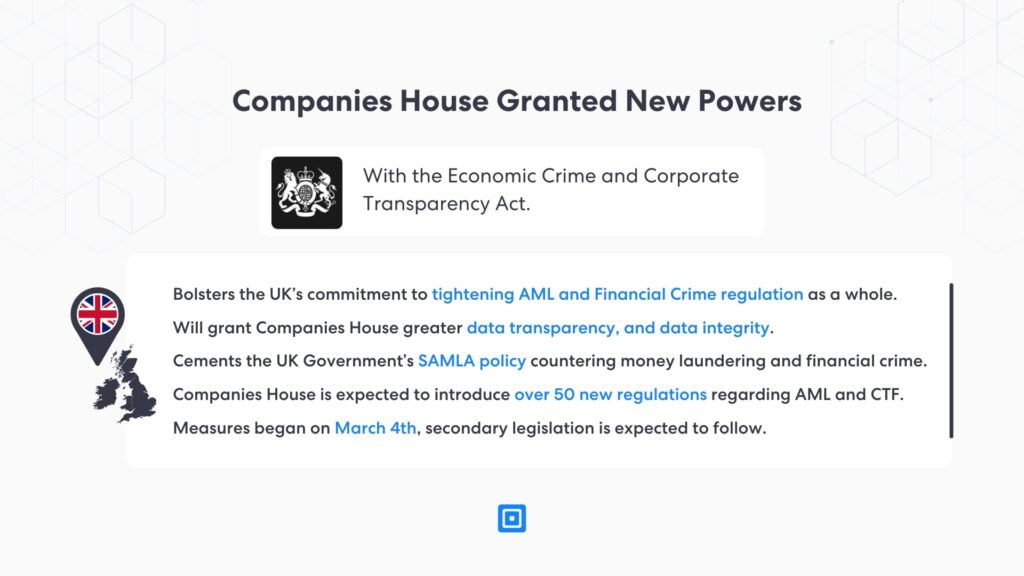
In its updated Recommendation 24, the Financial Action Task Force (FATF) provides guidelines on how firms should identify UBOs on a unified and global level. Furthermore, the UK released its Economic Crimes and Corporate Transparency Act in 2023/24, strengthening Companies House’s authority and setting a new global standard. The Act demonstrates the UK’s ambition to deliver the resources and create an environment to quell money laundering.
Case Study: Building Security and Agility While Maximizing Global Growth
The Complexity of Compliance in Global Jurisdictions
Bots, the leading trailblazer in global blockchain innovation, aimed to expand its operations worldwide. However, the large volume verification and cross-border operations presented a key challenge: ensuring complete adherence to AML and identity verification regulatory requirements in different countries.
The Need for Speed, Compliance, and Agile Operations
High-volume cross-border compliance often forces companies to choose between speed and security. Bots, however, sought to achieve both. The firm partnered with ComplyCube to sustain its rapid expansion. With automated no/low-code workflows, Bots was able to streamline AML screening, address checks, and biometric verification on one platform without heavy IT resources.
Solutions & Outcomes
Bots were able to onboard 98% of customers in under 30 seconds through automated AML and KYC checks.
The company scaled its operations to over 34 countries confidently, utilizing ready-made, customizable workflow templates.
ComplyCube was able to deliver layered verification tailored to sector- and country-specific risks, supporting both KYC and AML compliance.
The Role of Know Your Business Solutions
KYB solutions play a crucial role in establishing and maintaining compliance with international regulations such as Ultimate Beneficial Ownership identification. Know Your Business is designed to help firms navigate the complexities of identifying and verifying the beneficial owners of their partners, clients, and other entities with which they engage.
By leveraging KYB technologies, such as ComplyCube, companies can significantly streamline their due diligence processes, reduce risks associated with financial crimes and money laundering, and ensure adherence to local and international Anti-Money Laundering regulations.
Time to Adopt Compliance Technology
The integration of sophisticated technologies, such as Artificial Intelligence (AI) and Machine Learning (ML), is vital in providing a swift identification process. When this is coupled with a sleek User Interface (UI) and User Experience (UX), compliance processes are significantly streamlined in both time and cost spent on due diligence.
Key Takeaways
- A UBO can refer to either the person or a group of people that ultimately owns, controls, or is responsible for an entity.
- Verifying UBO is central to AML and KYC, as it confirms who someone or something is doing business with.
- Complex ownership structures can obscure the true UBO, demanding more comprehensive tracing and verification methods.
- Effective UBO checks support businesses in detecting suspicious or hidden entities, thus reducing fraud risks.
- Various jurisdictions hold their own UBO verification requirements, including filing and disclosure obligations.
ComplyCube’s KYB Solution
ComplyCube is a market-leading Know Your Customer (KYC) and KYB service provider. Their services are actively used around the world to navigate the complex legal and corporate structures used by firms to obfuscate identity and real ownership.
The global AML compliance firm sets new precedents in integration time. With a no-code, low-code, hosted solution, or full integration, partner firms have the option to start using ComplyCube’s hosted product in less than a day or integrate its AML solutions fully into their existing compliance tech stack.
Learn more about ComplyCube’s compliance offering by getting in touch with a KYB and AML specialist today.
Frequently Asked Questions
What is Ultimate Beneficial Ownership (UBO)?
UBO refers to a person or group of individuals who ultimately owns or controls another entity. One can be a UBO despite not being formally named as an official owner. This makes identifying a UBO challenging, as they can conceal their true self, especially in complex management structures.
Why do businesses need to identify Ultimate Beneficial Owner?
Verifying a UBO is a core KYC and AML requirement. It enables businesses to identify the real individuals or groups of people that have a large influence over a company’s activity. UBO verification ensures transparency in business relationships and uncovers potential misuse of corporate structures that can be used to conceal financial crime.
How to perform Ultimate Beneficial Ownership verification?
The typical flow of UBO verification involves robust KYC, including collecting certificates of registration, ID, and shareholder documents. It also requires tracing the ownership structure by identifying intermediary firms, trusts, or holding firms. Additionally, it involves AML screening of the identified UBO, including watchlist, sanctions screening, and ongoing monitoring.
Are Ultimate Beneficial Ownership verification rules the same everywhere?
No, the rules for UBO verification and disclosure differ across jurisdictions. For example, in the UK, companies must perform KYC on anyone with significant control (PSC) of more than 25% of shares or voting rights in the entity. In the U.S., FinCEN’s beneficial ownership rules require firms to report individuals with at least 25% of the company or exercise substantial control over it.
How does verifying Ultimate Beneficial Owner prevent fraud?
UBO verification is central to KYC and AML regulations. It prevents fraud and other financial crime by establishing higher transparency in corporate structures. For example, it unveils hidden controllers, stops fraudsters from establishing fake businesses, and prevents the funneling of illicit flows through complex structures.