TL;DR: KYC is a core component of AML compliance for finance, focused on verifying customer identity and preventing money laundering. AML in finance enables companies to meet regulatory obligations and reduce risk exposure across the customer lifecycle. This guide explores the key AML compliance finance sector requirements businesses need to know today.
What are KYC Checks?
Know Your Customer (KYC) checks are critical components of an organization’s security processes, enhancing Anti-Money Laundering (AML) due diligence efforts. KYC verification strategies include identity verification, which drastically reduces the risk of fraudsters committing financial crimes with fake customer identification. Additionally, KYC verification also makes establishing relationships with new customers easier and ensures financial institutions are well-aligned with their customers from day one.
To begin, KYC compliance requires a strong Customer Identification Program (CIP) to verify identity and mitigate risks effectively. Consequently, a comprehensive CIP program protects financial institutions and is a form of critical customer due diligence and financial transparency, helping to fight money laundering and other financial crimes.
Effective KYC implementation enables financial institutions to reduce:
- Terrorist financing by confirming identity through more than just document verification, limiting access to financial institutions and funding for illegal acts.
- Identity theft by verifying customer information and reporting suspicious transactions.
- Money laundering risks, by ensuring the financial system can identify threats to money laundering regulations but also monitoring activity closely enough to deter money laundering from occurring within the banking sector.
- Reputational harm from thefts and attacks, as account owners generally blame the bank or other financial institutions for the associated risk, which could impact the business relationship.
- Financial penalties are levied by government organisations for failure to comply with regulatory requirements, such as those imposed by the US Patriot Act or rules established by the Financial Industry Regulatory Authority.
- Legal action by customers and third parties or reports to the Financial Crimes Enforcement Network, often due to a lack of reasonable diligence that exposes customer data.
KYC aims to minimise the risk of bad actors from infiltrating the customer onboarding process. The sector most targeted by identity fraud is financial services. Synectics Solutions, the UK’s largest syndicated risk intelligence database, predicted in 2024 that ID fraud may account for 50% of all bank-reported fraud by 2025.
Similarly, the U.S Department of the Treasury’s Financial Crimes Enforcement Network (FinCEN) issued a notice that highlighted a “concerning increase in U.S passport cards being used to impersonate and defraud individuals at financial institutions across the country.” Businesses within financial services often have access to financial assets, making them a very lucrative target for fraudsters. You can learn more here: “Biometric Verification: Elevating Security in Banking.”
The Risk-Based Approach to AML
When it comes to AML, customer risk management is complex but essential. A robust and effective AML approach is essential to reducing costs while meeting regulatory requirements. However, such methods can be time-consuming and can drain customer experience expectations.
Risk Profiling
Risk profiling considers customer risk by scoring the customer based on several criteria. Moreover, the process focuses on a full assessment of each customer, transaction, and business relationship based on factors that have been identified by the organisation as potential risks.
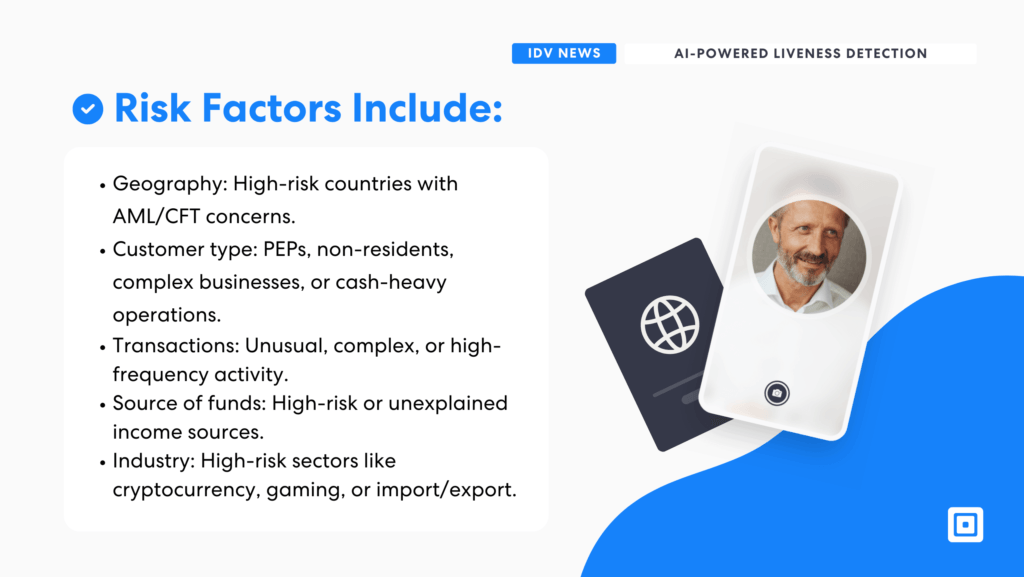
Some of the most common components of a risk-based analysis include:
- Geographical factors: High-risk countries or jurisdictions with well-recognized AML/CFT concerns, such as terrorism-heavy locations or areas where previous crime has occurred.
- Customer type: PEPs, non-resident customers, complex business structures, or cash-intensive operations can also factor into risk assessment.
- Transaction patterns: Unusual, complex, or high-frequency transactions could signal risks, such as a sudden shift in account usage or high transaction values not commonly associated with the account.
- Source of funds: Known high-risk sources or unexplained income streams, often those that are on the perceived watchlist.
- Industry or occupation: Certain sectors (e.g., cryptocurrency, gaming, or import/export) may carry higher risks and must be considered.
- Lighting and Depth Perception: AI models can also use light reflection and shadows to detect liveness. Human faces reflect light differently than a flat photo or video would.
The Consequences of Non-Compliance with AML Mandates
Businesses that fail to implement effective KYC strategies risk financial costs, including compliance-related fines. For instance, a single instance of fraud can cause reputational damage from adverse media mentions that may far exceed direct financial losses from compliance costs.
Some of the biggest fines handed out due to lack of AML compliance for finance include a £3B fine to TD Bank, a $35M fine to Nordea Bank, a $29M fine to Starling bank, and a $7.45M settlement for MGM Grand & The Cosmopolitan. Thus, implementing the right solutions early on avoids these catastrophic consequences.
Also notable is that KYC and AML is not a one-time process completed at onboarding. Continuous monitoring is necessary. It enables financial organisations to monitor a customer’s behaviour over the long term while also identifying new risks as they develop.
Case Study: Historic $80 Million Fine for AML Lapses
In March 2026, Canaccord Genuity LLC was penalized a record $80 million fine by the U.S. FinCEN. According to reports, Canaccord has violated the Bank Secrecy Act (BSA) due to persistent AML failures. Shockingly, the breaches had occurred for over a decade.
Operational AML Gaps
FinCEN reported that Canaccord had a weak AML infrastructure. For instance, the firm onboarded high-risk customers without enough due diligence, failed to submit 160 suspicious activity reports, and did not review red flags due to unavailable resources.
Outcomes
The Toronto-based investment management firm, Canaccord, was fined $80 million for AML breaches.
Despite prior warnings in 2025, the company’s remedial measures did not meet FinCEN’s expectations.
Canaccord’s violations led to reputational damage and operational losses, highlighting the importance of AML compliance for finance.
The Need for Strong AML Compliance for Finance
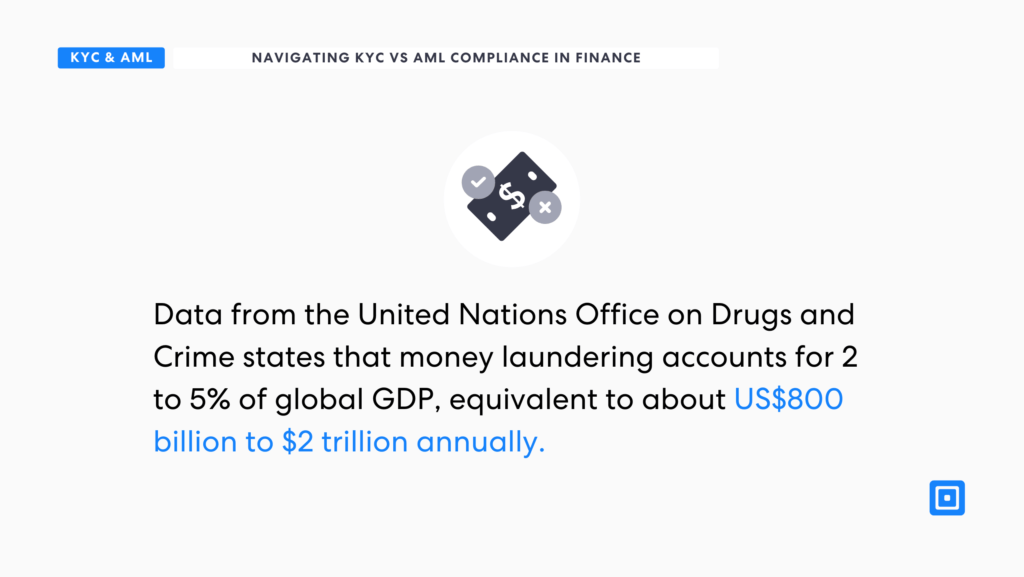
AML checks specifically target activities that could indicate a higher risk of money laundering. Data from the United Nations Office on Drugs and Crime states that money laundering accounts for 2 to 5% of global GDP, equivalent to about US$800 billion to $2 trillion annually. Financial institutions and other regulated agencies must take steps to detect and prevent such activities, including terrorist financing. AML checks are a critical component of meeting AML compliance finance sector requirements.
Money laundering accounts for 2 to 5% of global GDP, equivalent to about US$800 billion to $2 trillion annually.
Utilisation of AML checks is needed to ensure prospective customers are not a risk to an organisation. This risk-based approach helps identify information that may indicate potential red flags. These warnings can expose bad actors attempting to launder money or finance terrorism. Conducting ongoing monitoring is also critical to identify risks quickly. AML checks must include the following when it comes to customer requirements:
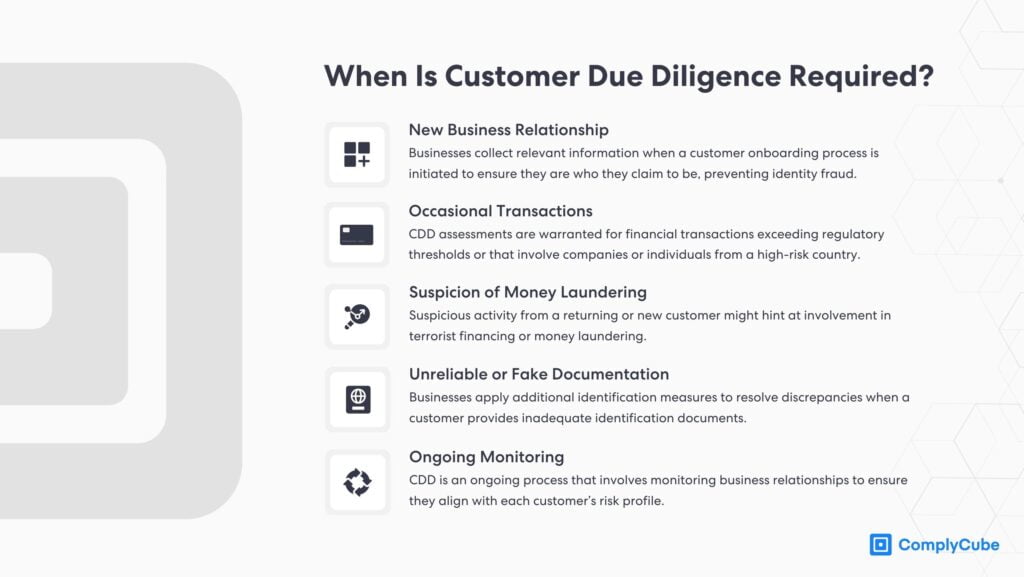
Customer Due Diligence (CDD)
This step verifies the prospective customer’s identity, financial behaviour, and risk profile. Standard CDD applies to all customers, while Enhanced Due Diligence (EDD) applies to high-risk customers. This includes transactions involving complex ownership structures, multi-jurisdictional customer relationships, customers from high-risk regions, and other interactions considered at higher risk. You can learn more here: Navigating the World of Enhanced Due Diligence.
Risk-Based Screening
AML checks ensure added due diligence on certain customers, transactions, or activities based on perceived risk. This may include customers or transactions in sanctioned countries. It also places heavier requirements on perceived higher-risk financial activities, including unusual, large, or complex transactions. Customer profile risks, such as occupations in high-risk industries, are also considered. All customers that possess a higher risk in any of these or other areas must work through a more elaborate AML process to ensure safety at all times.
What Kinds of Financial Institutions Need KYC and AML?
Any type of financial transaction benefits from an effective customer identification program to establish the authenticity and accuracy of any information provided. However, some organisations must meet stricter KYC and AML compliance requirements because they involve higher risks, especially within the financial industry.
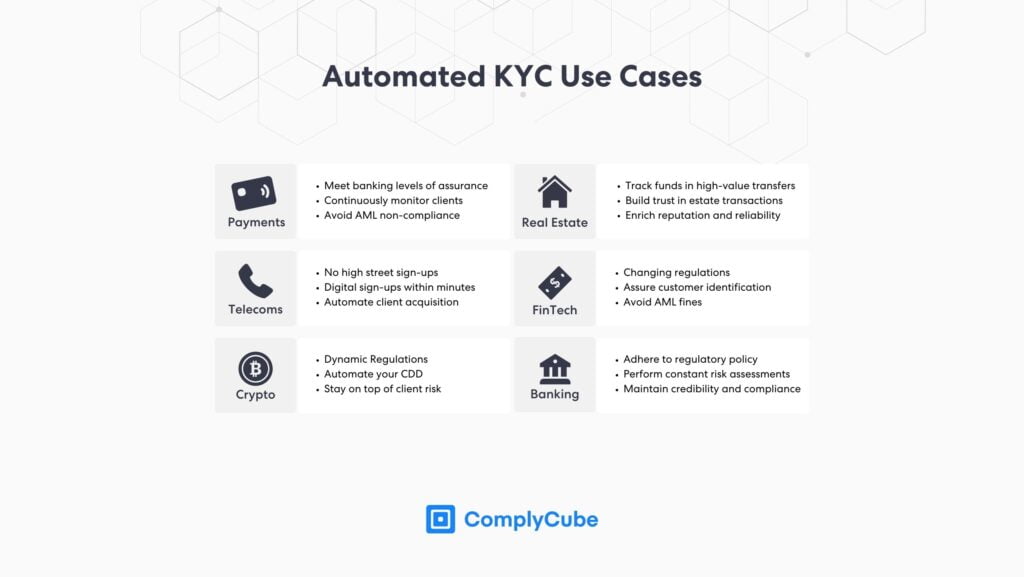
Meeting the requirements of global watchdogs working to monitor and minimise risks associated with wide-scale fraud is particularly important. Global watchdogs span through a wide range of industries, and some of the most important to know from a financial industry standpoint include organisations such as the Financial Action Task Force (FATF), a global watchdog of money laundering and terrorist financing. Sector specific watchdogs also exist, such as the Association of Chartered Certified Accountants (ACCA), which supervises the accounting industry. Let’s dive into different types of financial institutions and how they must meet the specific KYC and AML in finance requirements.
Retail Banks
Banks are the transactional heart of the financial industry, and all must employ KYC and AML checks. These handle personal accounts for everyday financial activities like savings, loans, and payments. They screen account holders to ensure their identities match the documentation and assess risk. When out-of-place transactions occur in customer accounts, automated tools alert the bank to investigate, potentially minimising risk before transactions are complete.
Banks are often targeted by identity fraud and used for illicit practices such as money laundering. Therefore, these organisations must verify the identity and financial integrity of new and existing customers by continuously monitoring transactions, suspicious activities, or criminal behaviour.
Investment Banks
These institutions perform market-based transactions on behalf of corporations or governments and must screen transactions to prevent market manipulation or insider trading. They must also work to pinpoint bad actors who may be laundering money through fake organisations. Monitoring global sanction lists can also facilitate ongoing oversight, anti-money laundering efforts, and better risk assessment.
Corporate Banks
They work with businesses and large corporations, and require verification of the legitimacy of prospective clients and partners. Assessing financial activities and credit risk is key for corporate banks. Additionally, ongoing monitoring can provide insight into fraudulent activity happening within the business. KYC documents and regulatory methods aid in identifying information that could expose these banks to wide-scale fraud.
Payment Service Providers (PSPs)
Companies like PayPal, Venmo, and Stripe facilitate digital payments and transfers. They must adhere to KYC and AML requirements to ensure secure payment processing and prevent misuse. They tend to operate on a global scale. The risks are higher, yet because consumers demand fast and effortless transactions, these organisations face some of the most challenging processes for achieving KYC and AML compliance. Key strategies they must maintain include:
- Transaction Monitoring: PSPs track payments in real-time to identify suspicious patterns. They must be able to put a stop to transactions that could be deemed fraudulent.
- Sanctions Screening: PSPs screen customer information against international sanctions lists to prevent unauthorised payments. However, ongoing monitoring for bad actors and an enhanced focus on key risks to changing global threats make these steps more challenging. For more on Sanctions Screening, read “What is Sanctions Screening?”
Insurance Providers
Insurance companies rely on KYC and AML checks to verify the legitimacy of customers’ funds and confirm the validity of claims. For example, insurance companies must spot numerous policy updates or changes against non-associated clients and beneficiaries. Some of the areas of focus here include:
- Premium Payments: Ensuring that premium payments are legitimate and traceable to the customer’s known source of income.
- Claims Payouts: Insurance firms must verify that payouts are going to the correct, verified individual and are not being processed for criminal purposes. Verification of policyholder identification and authentic claims is critical.
- Risk Profiling: AML checks help insurance companies assess financial risks associated with underwriting new policies. They can also be crucial in maintaining healthy accounts by ensuring a constant focus on changing customer behaviour and risk factors.
Investment Firms & Brokers
Investment firms and brokerage houses are tasked with ensuring that clients are legitimate and their trades and investment behaviours do not violate market laws. As a result, investment firms and brokers must adhere to some of the strictest standards and be high targets for threats. Therefore, to minimise risk, they must focus on these key areas:
- Client Identity Verification: Before allowing clients to trade on their platforms, investment firms ensure that they are legitimate and compliant with regulatory standards. This includes verifying the source of invested money and account beneficiaries.
- Trade Monitoring: Investment brokers monitor trades for evidence of market manipulation or insider trading. Identifying potential fraud quickly may minimise risks.
- Risk Analysis: Investment firms assess customers for financial risks, particularly if their accounts are linked to criminal activity or sanctions violations. This process must be continuous as conditions change.
Cryptocurrency Exchanges
Cryptocurrency exchanges like Binance, Coinbase, and others must conduct KYC and AML checks because cryptocurrency transactions are less transparent than traditional fiat currency transfers. You can learn more here: Crypto AML Compliance: Securing the Sector. Key focuses include:
- Sanctions List Screening: Screening customers against global and national sanctions lists to ensure compliance and then monitoring this over time to pinpoint suspicious restrictions.
- Customer Screening: Verifying the identity of cryptocurrency buyers and sellers to prevent financial crimes. As a target for criminal activity, cryptocurrency organisations must consistently monitor for any suspicious insights to support anti-money laundering initiatives.
Key Takeaways
- KYC is a core aspect of AML in finance, with a large focus on customer identity verification and due diligence.
- AML for finance refers to the processes and controls designed to detect and prevent money laundering and terrorist financing.
- Failure to meet AML compliance finance sector requirements results in heavy fines, reputational damage, and enforcement actions.
- Regulators expect financial institutions to apply a risk-based approach, where higher-risk customers require EDD and higher scrutiny.
- AML compliance finance sector requirements go beyond identity verification, including enhanced due diligence and ongoing monitoring.
Meet KYC and AML Compliance for Finance
KYC procedures that support streamlined verification of a customer’s identity can meet all due diligence requirements without slowing down digital processes. Mitigate compliance and fraud risks by implementing state-of-the-art KYC and AML checks. To safeguard your organization with advanced AML and KYC checks, reach out to ComplyCube’s expert compliance team.

Frequently Asked Questions
What is the difference between KYC and AML for finance firms?
Know Your Customer (KYC) is a subset of Anti-Money Laundering (AML) programs for financial institutions. Specifically, KYC focuses on verifying customer identity. On the other hand, AML in finance involves broader processes for preventing money laundering. The process includes transaction monitoring, ongoing monitoring, and risk management.
Why is AML compliance for finance important?
Anti-Money Laundering (AML) compliance supports financial institutions in protecting their customers and systems from suspicious or harmful activity such as fraud and financial crime. Additionally, they are required by regulators to effectively identify and tackle money laundering and terrorism financing.
How does a risk-based approach work for AML in finance?
A risk-based approach assesses customers or entities according to their risk level. High-risk individuals must undergo stringent checks, including sanctions and politically exposed person screening. This approach enables financial institutions to focus their resources where risks are highest, while allowing low-risk users to onboard more swiftly.
What are AML compliance finance sector requirements?
The key components of AML in finance include customer due diligence (CDD), sanctions and watchlist checks, PEP verification, adverse media screening, and suspicious activity reporting. It also involves ongoing monitoring to ensure any changes to a customer’s risk level are notified to prevent suspicious behavior.
Is KYC enough for AML in finance?
No. KYC forms a subset of AML compliance for finance. Full compliance goes beyond identity verification to include ongoing monitoring and suspicious activity reporting. As a result, this creates a stronger defense, preventing any gaps for fraudsters to exploit.