TL;DR: Sanctions check are critical to AML and CFT compliance. It helps firms identify restricted individuals, entities, and transactions and reduce financial crime risk. This guide explains how sanctions screening works and the role of sanctions screening solutions in effective compliance.
Why is Sanctions Screening Important?
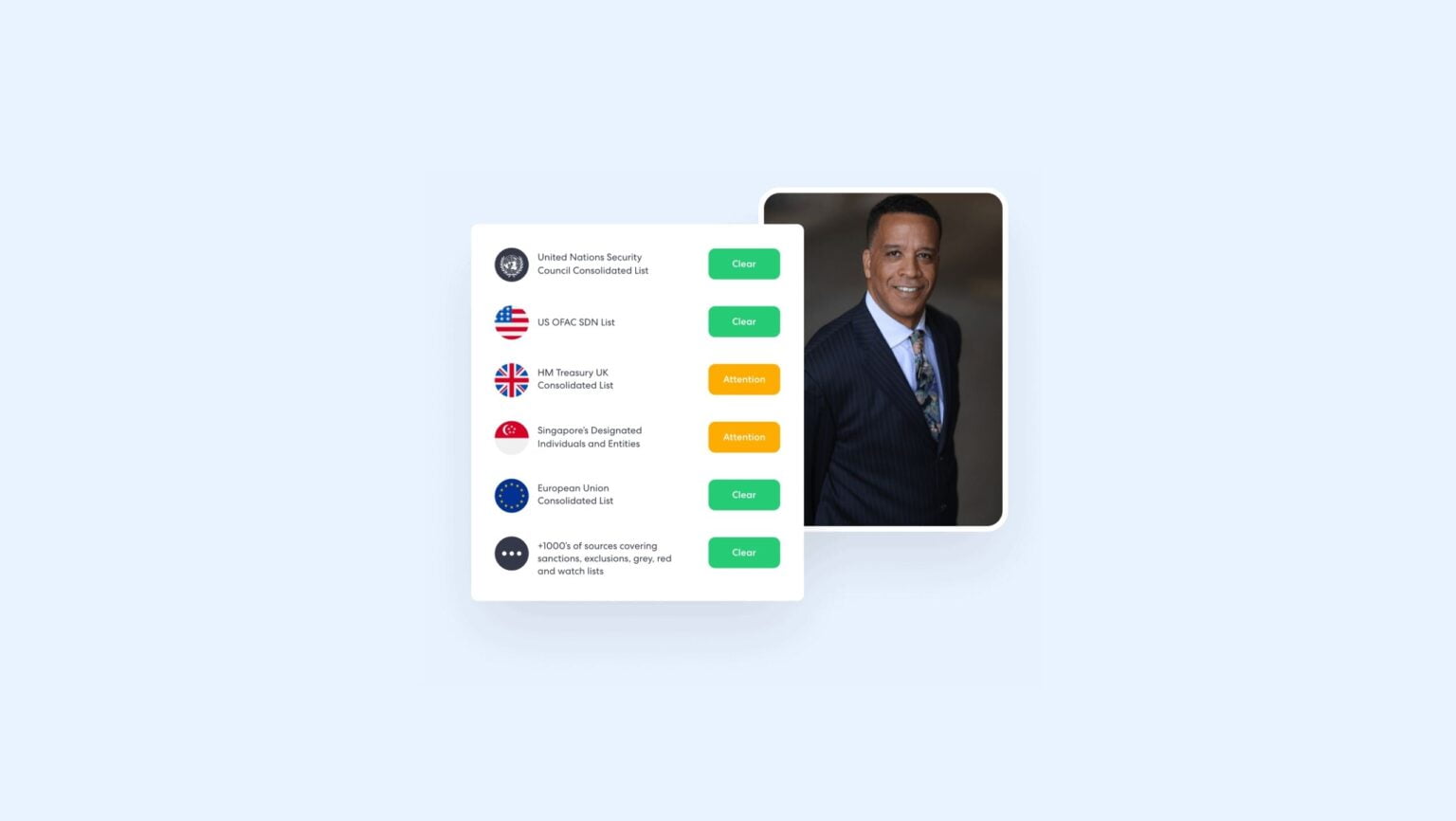
Sanctions screening is crucial for financial institutions to comply with regulations and prevent money laundering. With a sanctions check, companies can screen customers and entities against global sanctions lists before onboarding on their platform. An effective sanctions check automates this entire process, supporting real-time AML screening and lower false positives.
Advancements in technology, such as robotic process automation and AI, further streamline compliance operations, minimizing gaps caused by manual screening. As the sanctions landscape is ever-changing, understanding operational and regulatory implications is paramount.
What are Sanctions?
Countries or regulatory bodies enforce sanctions to impose restrictions on certain activities or relations with specific regions, entities, or individuals. Typically, these sanctions are enforced to address threats to national security or international peace, human rights abuses, and illicit activity. Sanctions can take various forms, such as financial restrictions, trade embargoes, and travel bans.
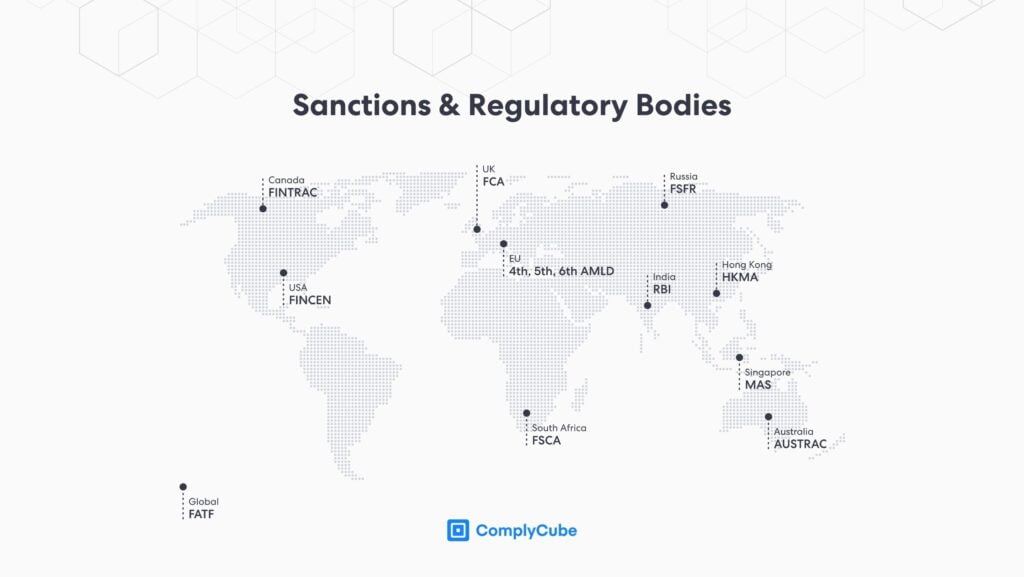
Some of the most prominent governing and sanctioning bodies include:
- United Nations (UN): The sanctions apply to all UN nation-states, encompassing a wide range of restrictions and measures.
- Office of Foreign Assets Control (OFAC): OFAC’s sanctions extend to all US citizens, individuals, and institutions conducting business within or connected to the United States and those engaged in transactions using US currency.
- European Union External Action Service (EU EEAS): The EU EEAS sanctions affect all EU citizens and legal entities established within any of the member states.
- His Majesty’s Treasury (HMT): This body oversees the United Kingdom sanctions list, which is applicable to individuals and legal entities working or conducting activities within the territory and under UK law. The Office for Financial Sanctions Implementation (OFSI) enforces these sanctions.
What is a Sanctions List?
A sanctions list is a publicly available document issued by national or international authorities, such as those mentioned above. Authorities update sanctions lists regularly and include relevant details of individuals, entities, territories, or countries that are subject to economic or legal restrictions.
As such, individuals or parties identified on these sanctions lists may be denied access to financial systems, restricted from trade, or subject to other limitations as part of punitive or preventive measures.
Types of Sanctions
Sanctions compliance is not merely a legal obligation. Economic sanctions and trade restrictions play a crucial role in maintaining a secure and trustworthy business environment. Moreover, they prevent the facilitation of illegal activities such as terrorism financing, money laundering, and other financial crimes.
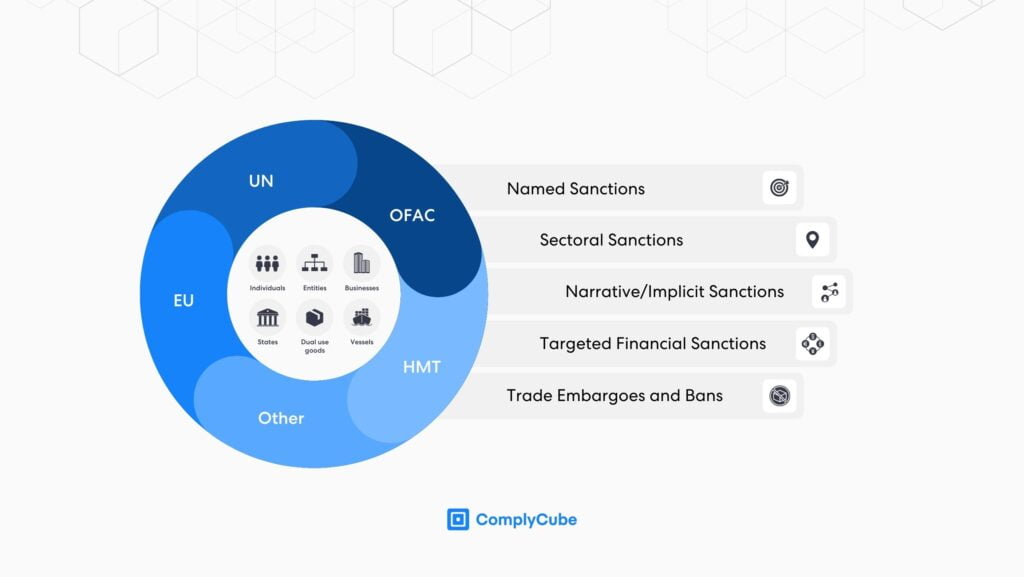
Restrictions can be applied on different levels:
- Explicit sanctions name the subject directly, be it an individual, entity, or country.
- Narrative or implicit sanctions don’t specifically name an individual or an entity. Instead, the narrative implicitly covers them due to their connections to a named sanctioned body or sector.
From an economic perspective, sanctions can materialize into:
- Comprehensive sanctions: imposing restrictions on all transactions with a specific country. Some examples include Iran, Cuba, and Sudan.
- Targeted sanctions: limiting transactions with specific individuals, entities, or individuals listed on the Specially Designated Nationals and Blocked Persons (SDN) list maintained by OFAC. Russia is a prime example.
- Sectoral sanctions: designed to hinder the future development of specific sectors within an economy by prohibiting a specific subset of financial transactions related to those sectors.
Understanding Sanction Screening Solutions
Sanctions screening is a critical component of an effective AML/CTF program. It involves checking an organization’s existing and potential customers, partners, and transactions against global sanctions lists to identify financial risks and ensure compliance with international regulations.
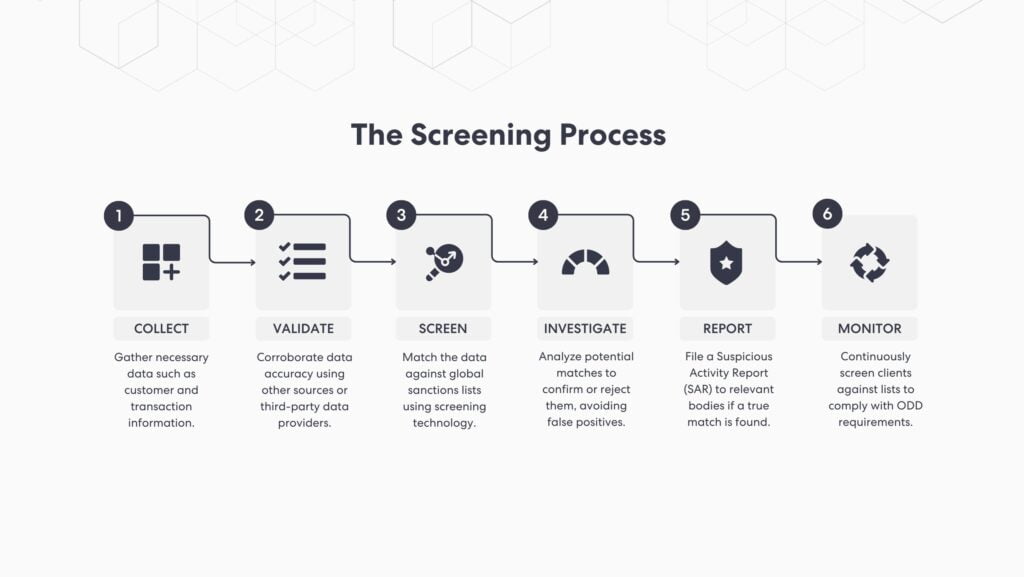
The process typically involves six key steps utilizing advanced screening technology methods:
Step 1: Collect
The first step involves collecting necessary data that will be checked against a sanctions list. This typically includes information about customers, potential business partners, and transactions. The data collected may include names, addresses, dates of birth, nationality, and other important details to ensure data accuracy.
Step 2: Validate
Once the data is collected, data validation is crucial to corroborate the information and ensure its accuracy. This step often involves cross-checking the data against other sources, such as ID documents, company registers, or third-party data providers. The goal here is to ensure the integrity of the data before it is used in the sanctions screening process.
Step 3: Screening Solution
After the data has been collected and corroborated, it’s time for the actual screening process. Using sanctions screening technology, the collected data is matched against global sanctions lists, which include individuals, organizations, or countries that are embargoed or sanctioned by regulatory bodies.
Step 4: Investigate
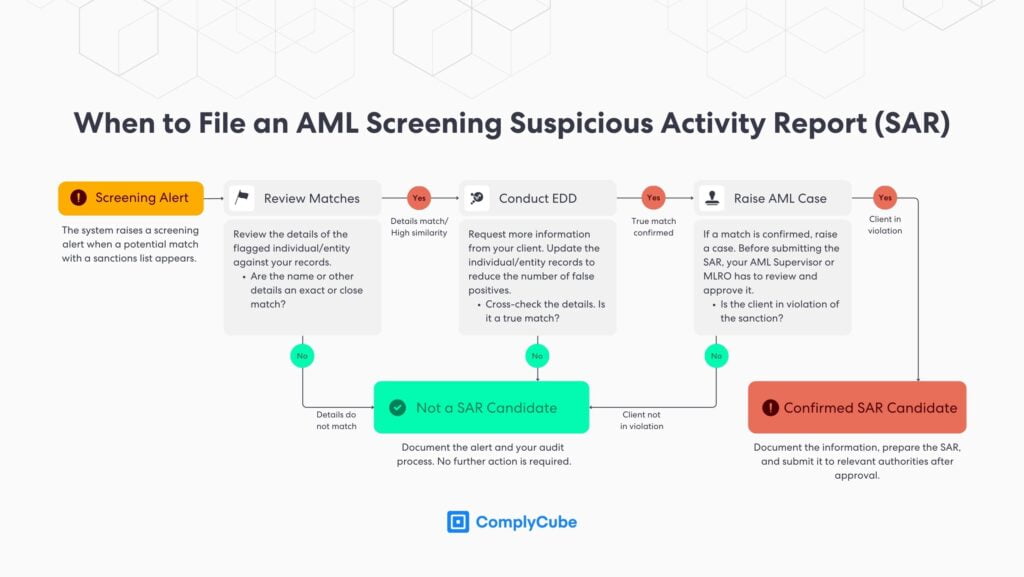
If a potential match is identified during the sanctions screening process, it triggers an investigation process. The analysis aims to confirm or reject the potential matches upon enriching the client data and cross-checking the details. This step confirms whether the alerts were false positives or true matches.
Step 5: Report
Reporting is the final and optional step in the sanctions screening process, which institutions activate only when they find a true match. The institution must adhere to reporting requirements and file the Suspicious Activity Report (SAR) to the relevant authority following the proper protocols, as failing to report a match can lead to severe penalties.
Step 6: Monitor
An essential, often overlooked step in the process is continuous monitoring. Regulations and sanctions lists are dynamic. Thus, continuous monitoring must be done in real-time or periodically to ascertain compliance with ongoing due diligence obligations.
When are Sanctions Checks Performed?
Organizations should perform sanctions screening at several key stages to maintain compliance, including ongoing monitoring. The initial screening has to take place when onboarding a new client or partner. Before engaging in business transactions, financial institutions must verify the identities of their clients or partners against relevant sanctions lists. This step ensures that sanctions rules do not bar the entity or person from engaging in certain activities.
However, performing sanctions check and risk assessments only at the start of a business relationship is insufficient. It should happen regularly throughout the customer relationship lifecycle. This is because sanctions statuses can change over time. A customer who was not a sanctioned party during onboarding or initial risk assessment might become one later.
Case Study: Company Sanctioned Over Russian Oligarch Ties
Rusal, the major aluminium producer, was added to the U.S. OFAC list due to its association with Russian oligarch Oleg Deripaska. The abrupt addition had a huge effect on global aluminium markets.
Importance of Ongoing Monitoring
Firms in ongoing or future contracts with Rusal had to immediately halt all trading activities to comply with the new sanctions and avoid potential fines, highlighting the importance of ongoing monitoring.
Outcome
- Rusal was later delisted when its founder, Oleg, consented to forfeit control.
- The case showed how ownership and control changes can affect sanctions exposure.
- It reaffirmed the importance of continuous monitoring for compliance as sanctions evolve.
Identifying Politically Exposed Persons (PEPs) and Their Role in a Sanctions Check
Politically exposed persons (PEPs) are high-risk individuals who hold a prominent public role or have a close association with such individuals. Due to their position and influence, PEPs pose a higher risk of involvement in bribery, corruption, money laundering, and other financial crimes.
Identifying and conducting enhanced due diligence on a politically exposed person is critical to an effective sanctions screening process. Organizations should have robust PEP screening controls in place to mitigate associated risks. These controls should include regularly checking customer data against PEPs lists and transactional screening to identify suspicious activities.
You can learn more here: What is a Politically Exposed Person (PEP)?
Case Study: Isabel dos Santos and PwC Controversy
Isabel dos Santos is a Politically Exposed Person (PEP) as she was the daughter of Angola’s former president. She faced scrutiny when leaked documents suggested she exploited family connections and public funds to build her $2 billion fortune.
PWC’s Conflict of Interest
During investigations, PwC had been auditing Sonangol’s books, Angola’s state-owned oil company. The firm’s dual role as an advisor on a significant restructure for Sonangol presents a potential conflict of interest. PWC’s auditing and advisory work occurred while Isabel was chair of Sonangol.
Outcome
- Isabel was relieved from her role shortly after her father’s retirement.
- Sonangol’s new management terminated PwC’s contract and replaced it with KPMG.
- This case highlights the risks and potential complications firms can face when dealing with PEPs.
The Impact of Adverse Media on Sanctions Screening
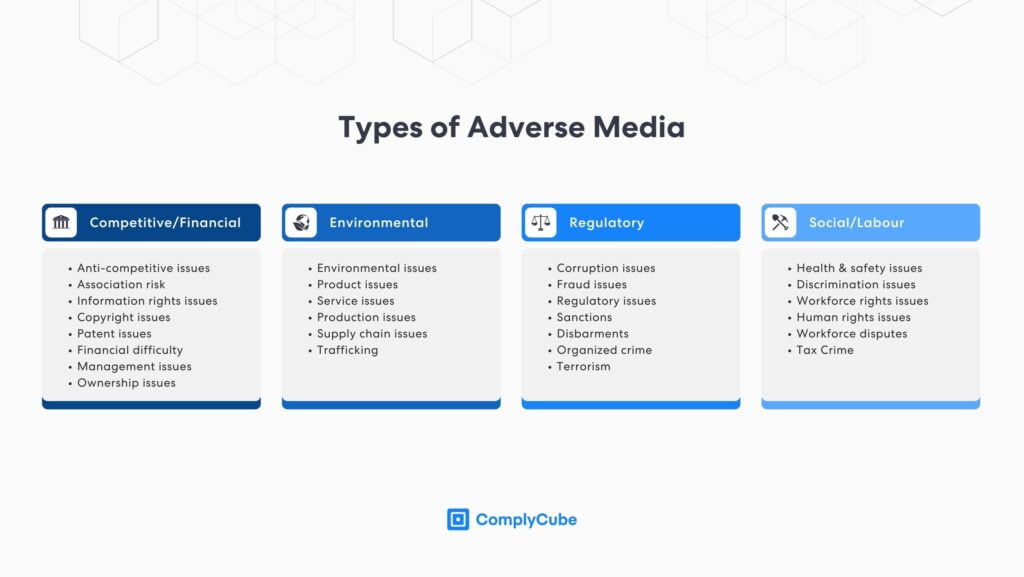
Adverse media, also known as negative news, refers to information from media sources indicating potential sanctions risks linked to certain customers or business partners. It is a crucial component of an effective sanctions screening program, offering early warning signs of non-compliance. For instance, news about a customer’s involvement in illegal activities, association with sanctioned parties, or political or business status changes can indicate probable threats.
Organizations should perform adverse media screening regularly and at various stages of the customer relationship lifecycle. Furthermore, businesses should leverage advanced technologies such as artificial intelligence and natural language processing to automate and enhance this process.
Suspicious Activity Reports (SARs)
Suspicious Activity Reports (SARs) are crucial in sanctions check, providing financial institutions with a means to report potential illicit activities. When transactions raise suspicions of violations, institutions file SARs with competent authorities. These reports facilitate investigations by law enforcement agencies, enabling them to take necessary actions.
According to Financial Crimes Enforcement Network (FinCEN), a total of 3.8 million Suspicious Activity Reports (SARs) were filed.
SARs contribute to the collective fight against money laundering, helping protect the integrity of the financial system. Thus, with SARs, financial institutions avoid enforcement actions and assist regulatory organizations and law enforcement agencies in their mission by detecting and reporting suspicious activities.
Consequences of a Sanctions Breach
Failure to comply with AML regulations and sanctions check requirements can result in severe penalties, including punitive fines, criminal proceedings, and damaged reputation. For instance, breaches of financial sanctions in the UK are punishable by up to 7 years in prison. Similarly, the US OFAC considers sanctions violations a threat to national security and foreign relations. Offenders can face up to several million-dollar fines and 30 years in jail.
The consequences of a sanctions breach can seriously damage an institution’s reputation, credibility, and performance. Becoming a sanctioned entity can be even more damaging, as it significantly hinders, if not halts, an institution’s ability to conduct global business and access international markets and capital. In some instances, these consequences led to a sanctioned institution’s complete inability to continue operations and, ultimately, its demise.
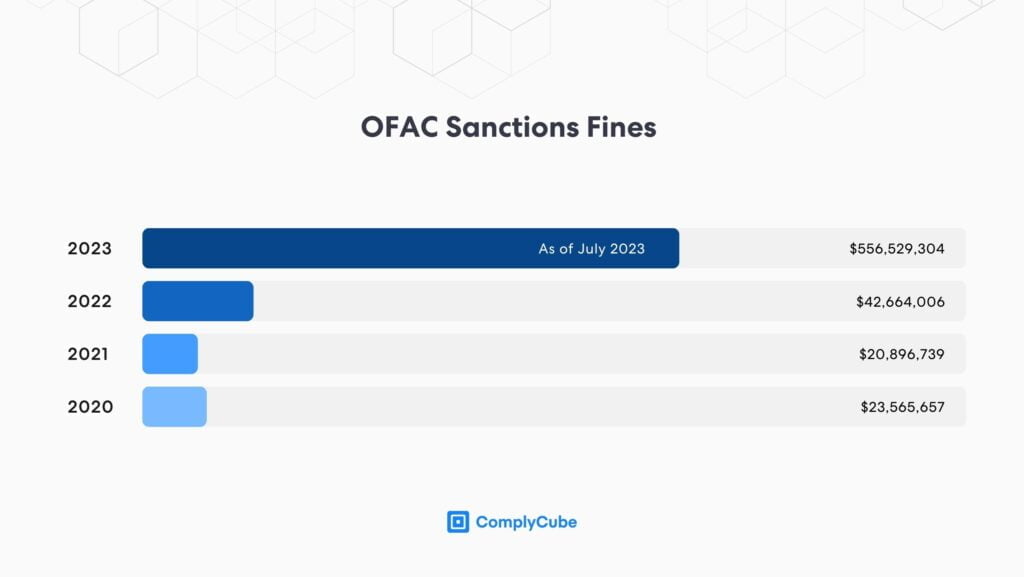
Several firms were heavily fined for OFAC breaches, in some cases exceeding $200 million. These include Interactive Brokers, Exodus Movement, and more.
In summary, sanctions breaches constitute serious offenses and thus have a severe impact. Therefore, institutions must efficiently screen customers against relevant sanctions lists. However, as authorities constantly update sanction lists, organizations must ensure that sanctions screening processes keep up with changes while avoiding inefficiencies and reducing false positives.
What are the Challenges Facing Sanctions Screening Solutions?
Sanction Screening has never faced as many screening challenges as it does today due to several factors, including:
- Sanction lists are evolving rapidly in nature (e.g., narrative sanctions) and breadth (e.g., US technology export controls).
- Increase in the complexity of restrictive and punitive sanction measures and screening regulations.
- Sanction Screening has to account for association risk, which may not be immediately apparent. For instance, the Patriot Act forbids US corporations from supplying ‘financial assistance’ to organizations accused of terrorism.
- Multiple sanctioning bodies have different standards and agendas that do not align, leading to inconsistent economic sanctions.
In the EU itself, there are over 40 different sanctions regimes in place, with some mandated under the United Nations.
Choosing the Right AML/KYC Sanctions Screening Partner
Despite the inherent challenges of Customer Screening, the right AML/KYC partner can help you implement a robust and cost-effective solution, as outlined below.
Single Customer View
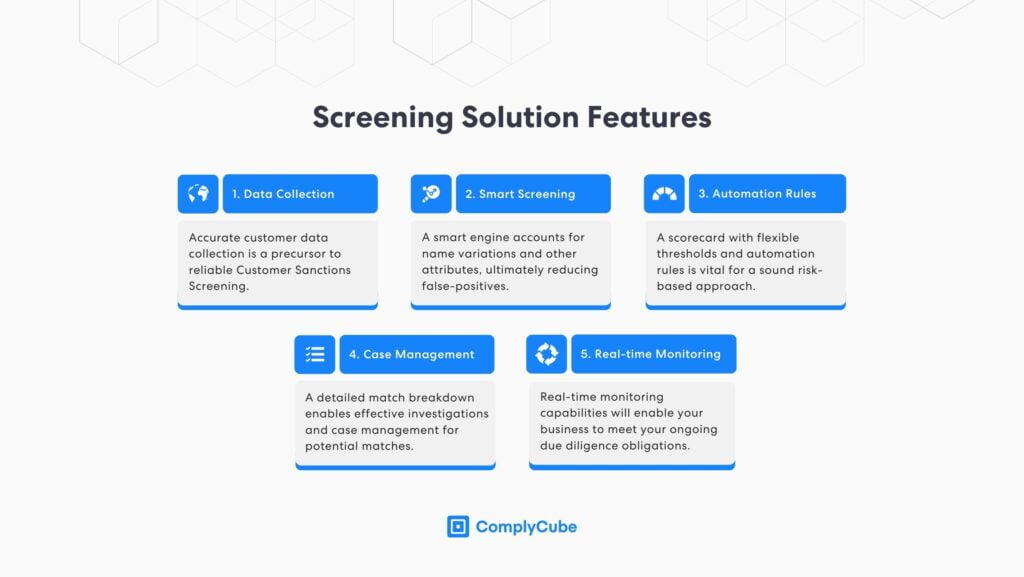
Sanctions screening is only as effective as the input data that organizations use to screen the entity or individual at hand. Therefore, firms should leverage a solution that will help streamline data collection processes and provide you with a single customer view that is aggregated, consistent, and holistic through data aggregation.
Comprehensive Data Coverage
Screening activities should build on thoroughly studied and regularly revised global risk information that includes comprehensive data coverage of the current PEP and sanctions lists, unfavourable media, and compliance reports from around the world.
Smart Screening
Numerous vendors market fuzzy name matching as a silver bullet for state-of-the-art sanctions screening. However, organizations should not solely rely on fuzzy name matching. It does indeed account for misspellings and minor variations.
However, it does not deal well with phonetic similarity, transliterations, linguistic variations, non-Latin scripts, patronymics, honorifics, titles, or out-of-order names, to name a few of the aspects that a reliable screening engine needs to take into account.
You can learn more here: Stay Compliant with The Best Sanctions Screening Software
Risk-based Approach
Risk-based approach (RBA) is a comprehensive sanctions screening solution should manage several sanctions lists and allow custom thresholds and inclusion/exclusion rules to enable AML officers to adapt the screening capability to the organization’s risk perception and policies.
You can learn more here: What is a Risk-Based Approach (RBA)?
Case Management
AML case management, combined with monitoring and alerts, enable analysts to investigate suspicious activity and effectively mitigate financial crime risk. A robust Case Management solution provides a fully integrated experience with rich contextualized data, such as a detailed match breakdown. This helps investigators organize and manage investigations and easily discount false positives, all while creating a permanent audit trail for regulatory review.
Ongoing Due Diligence
Companies may Many AML/KYC vendors check customers in bulk via running batches. However, that is a cumbersome and reactive process unsuitable for the modern age. Instead, mature KYC providers will offer ongoing monitoring to support the shift from a legacy tick-the-box approach to real-time, ongoing, and proactive customer due diligence.
Key Takeaways
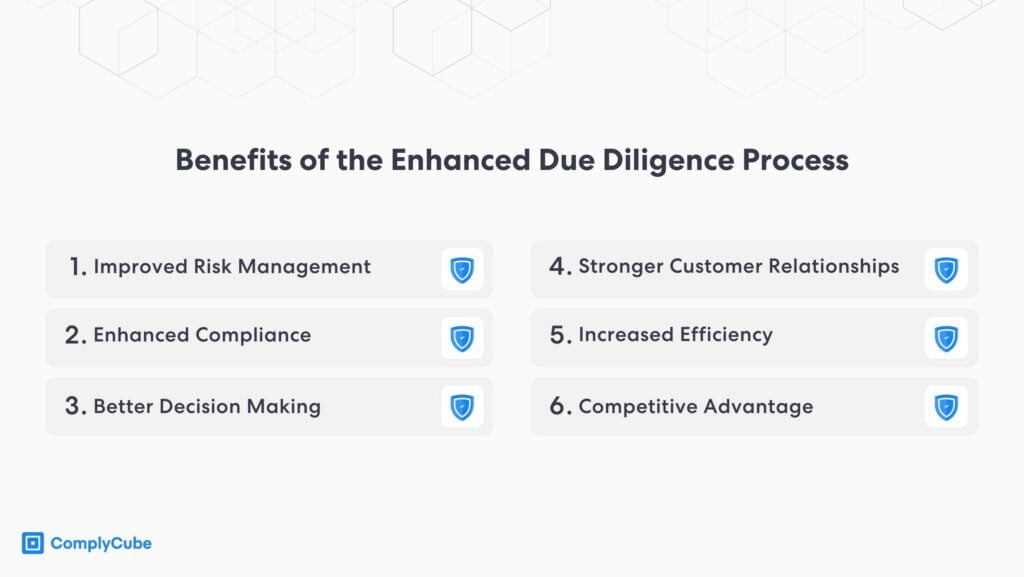
- Sanctions screening ensures firms meet global AML and KYC regulation standards, helping prevent terrorist financing and other financial crimes.
- Failure to perform sanctions checks results in fines and reputational damage, which, if severe, can lead to termination of business operations.
- Combining PEP, adverse media checks, and sanctions screening gives companies a fuller overview of an individual or entity’s total risk exposure.
- Ongoing monitoring enables firms to continuously verify an individual against evolving sanctions list beyond the initial onboarding stage.
- The sanctions screening process includes collecting and validating data, then matching it against global sanctions lists to detect restricted parties.
Sanctions Screening Software for Financial Institutions
At its core, sanctions screening has emerged as a non-negotiable requirement globally. This process is critical to ensure that entities like banks and other financial institutions do not engage in business transactions with individuals, organizations, or countries that are on global sanctions lists.
In particular, industry professionals cannot overstate the importance of sanctions screening within the financial industry, as it is a crucial measure to mitigate the risk of engaging with sanctioned entities and to prevent money laundering.
As OFAC’s enforcement penalties hit new records year after year, the cost of non-compliance has never been higher. As such, financial services companies should continually refine their sanctions screening processes and stay ahead of evolving global sanctions landscapes to effectively navigate this complex regulatory environment.
Implementing a Strong Sanctions Screening Program
Sanctions screening is indispensable in maintaining a compliant and secure financial environment. Businesses can prevent transactions with sanctioned parties by vigilantly cross-checking customer data against sanctions lists provided by regulatory bodies such as the UN and the EU. This proactive stance strengthens AML efforts and contributes to the broader global initiative to prevent financial crime.
The world of sanctions and Anti-money Laundering compliance is continually evolving, and maintaining an up-to-date sanctions list at the heart of your screening processes is essential to navigating this complex landscape effectively. Choosing the right AML/KYC and sanctions screening partner, such as ComplyCube, can also provide significant benefits.
Explore our global PEP and Sanctions screening solution to learn more about our platform!
Frequently Asked Questions
What is sanctions screening?
Sanctions screening is the process of checking a customer or entity against official sanctions list published by authorities, including the OFAC, UN, and the EU. It enables an organization to identify sanctioned individuals or businesses in order to comply with regulations.
Why is sanctions screening important?
Sanctions screening is a vital component of Know Your Customer (KYC) and Anti-Money Laundering (AML) processes. It enables a company to comply with regulations by avoiding doing business with sanctioned individuals or entities.
Why do businesses use sanctions screening solutions?
Businesses use sanctions screening solutions to verify and avoid doing business with sanctioned regimes. Sanctions software or solutions offer companies a more automated, accurate, and quicker way to identify a sanctioned person or entity.
When must a business perform a sanctions check?
A sanction check must be performed during Know Your Customer (KYC) and Anti-Money Laundering (AML) program. It typically occurs during customer onboarding, when forming new business relationships, and throughout ongoing monitoring to ensure continuous adherence with regulations.
How does ComplyCube’s sanctions screening solution work?
ComplyCube enables real-time screening against global sanctions lists. The platform continuously updates its sanctions list and combines it with PEP screening and adverse media checks for multi-layered compliance. Additionally, it uses adaptive AI to detect both fuzzy and exact matches, reducing false positives significantly.