On 17 August 2026, Dutch prosecutors sold almost €2.2M ($2.5M) in seized crypto. They seized these assets from the previously bankrupt Dutch crypto platform Knaken. They converted the assets into cash for their bankruptcy estate. The latest development comes about one month after Knaken declared bankruptcy. It led to a renewed focus on crypto enforcement in the Netherlands.
The sale shifts attention away from the collapse of Knaken Crypto. It raises the question of how much value customers can recover when a crypto platform fails massively. This is especially relevant under the EU’s Markets in Crypto-Assets Regulation (MiCA), which places greater emphasis on safeguarding customer assets and ensuring crypto firms can wind down in an orderly way.
From MiCA Deadline to Crypto Enforcement
The Netherlands’ MiCA transition period for previously registered crypto providers ended back in June 2025. In that time, Knaken did not get the right authorization and eventually stopped its regular crypto activities while trying to wind down.
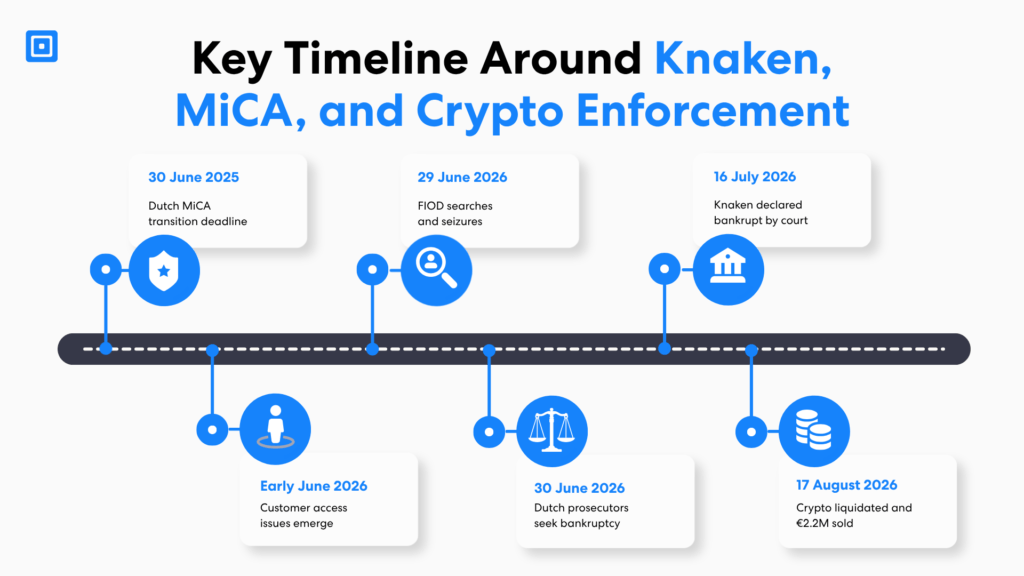
However, nearly a year later, the situation escalated as the Fiscal Information and Investigation Service (FIOD) seized their assets, after which the prosecutors petitioned for bankruptcy. In nearly two weeks, the Rotterdam District Court declared Knaken bankrupt. Now, the remaining seized crypto has been sold for €2.2 million. This crypto enforcement timeline shows that the point at which a firm leaves the market is just as important as the point at which it enters.
Why the Knaken Crypto Sale Matters Under MiCA
MiCA regulates market entry and strengthens how authorized crypto-asset service providers (CASPs) protect customer assets. Its requirements include safeguarding clients’ ownership rights. It prevents providers from using customer crypto-assets for their own accounts and requires credible wind-down arrangements.
The sale in August makes these safeguards more real. Once insolvency begins, asset segregation, custody records, and legal ownership can determine if customer can recover their assets right away. Otherwise, it must compete with other creditors for what is left over in the crypto enforcement. Then, the key issue becomes whether customer assets are structured in the right way, where ownership and recovery are clear before the business failed.
A Wider Test for Crypto Enforcement
For regulators, crypto enforcement cannot stop at deciding which firms are permitted to operate. This means failed authorizations, wind-downs, and insolvencies can create their own period of customer risk and require close supervision.
For CASPs, the lesson is that authorization is part of the compliance lifecycle. Firms need to have controls in place that are effective even when conditions are deteriorating. This includes having clear asset ownership, thorough safeguarding, and an exit process that allows customers to withdraw or transfer their holdings.
As MiCA becomes embedded across all of Europe, cases such as the Knaken enforcement is an important measure of its effectiveness. It will demonstrate whether its framework and regulations raise standards for active crypto firms. More importantly, it will show if those standards translate better outcomes for customers when a provider fails.

Find out more AML news in ComplyCube’s CryptoCubed newsletter. We explore the latest in developments across identity verification and AML globally.