👋 Welcome back! June’s crypto headlines cover the latest regulatory developments worldwide. We explore the recent Binance MiCA license challenges, the new FinCEN stablecoin rule, targeted U.S. attacks on Southeast Asian crime networks, Hong Kong’s AI cyber warning, and lastly, ASIC’s High Court win against Block Earner.
For compliance officers, this month focuses on more than enforcement actions. It focuses on building resilient Anti-Money Laundering (AML) and fraud controls that adapt to evolving regulations and crypto-related risks.
Binance MiCA License Withdrawal Forces EU Exit
European Union, June 29, 2026, 🇪🇺: From July 1st onwards, Binance will suspend its crypto services in multiple EU markets after withdrawing its Markets in Crypto-Assets (MiCA) license registration in Greece.

Under MiCA regulations, cryptocurrency and Virtual Asset Service Providers (VASPs) have until 30th June to obtain authorization to operate in the EU. Regulators expect these businesses to evidence strong AML governance, risk control, and customer protection as part of the license review.
Binance is one of the largest crypto exchanges by volume, and as such, authorities demand better documentation and mature AML controls. In another case, the firm faced scrutiny in France over regulatory and operational concerns, which can make its path to entry into the EU regime much harder.
For businesses in the crypto space, planning for regulator-specific timing during MiCA registration is key. It ensures firms do not need to resubmit applications for different question sets. Binance has said it will now focus on obtaining authorization from another EU member state rather than completing the Greek process.
Spain’s market watchdog will grant no extensions or waivers to crypto firms that fail to secure licenses under the EU’s MiCA regime.
However, EU regulators are enforcing tighter MiCA oversight, with larger scrutiny on firms that are “license shopping,” i.e., applying for a license in multiple member states to pursue the easiest approval route. Countries such as Spain have reinforced this message, with its chair, Carlos San Basilio, stating, “Spain’s market watchdog will grant no extensions or waivers to crypto firms that fail to secure licenses under the EU’s MiCA regime.” Will Binance win this battle to operate in the EU?
For more information, click here.
FinCEN Stablecoin Rule Puts Issuers under Heightened Oversight
United States, June 18, 2026, 🇺🇸: The Financial Crimes Enforcement Network (FinCEN) and other U.S. federal regulators have proposed a new rule, requiring payment stablecoin issuers to enforce the Customer Identification Program (CIP) under the GENIUS Act.
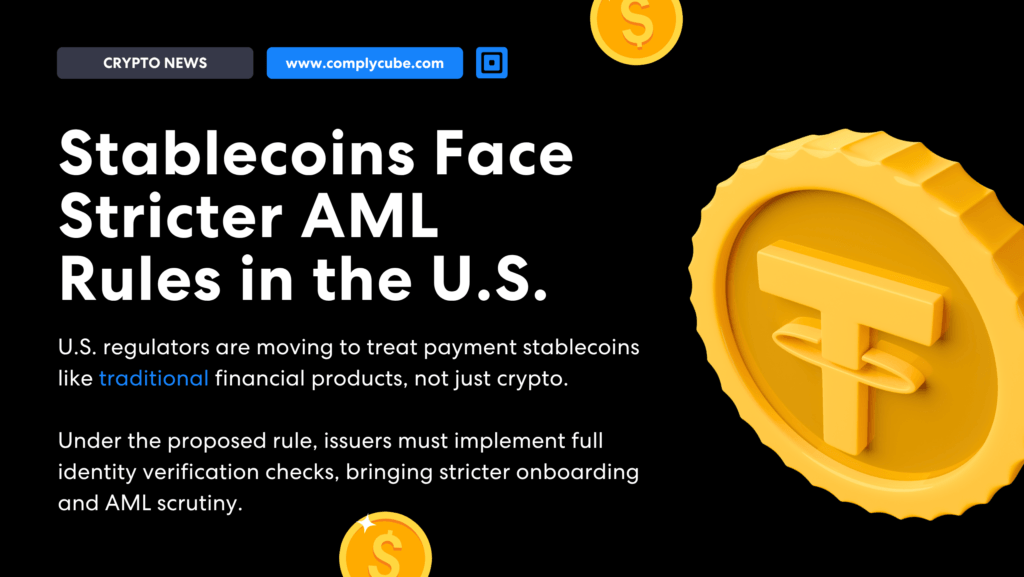
A stablecoin is a form of crypto designed to maintain a fixed value rather than experience drastic price swings, unlike Bitcoin. However, authorities increasingly consider them medium- to high-risk as they are commonly used in trading and cross-border payments.
Under this proposed rule, stablecoin issuers must identify customers before account opening or redemption. As such, regulators now bring these firms closer to heightened, bank-style onboarding. AML compliance for stablecoins is seen as a financial activity, rather than a crypto product.
For more information, click here.
Southeast Asian Transnational Criminal Organization Dismantled by U.S.
United States, June 23, 2026, 🇺🇸: U.S. authorities have sanctioned 9 individuals and 26 entities linked to the notorious Southeast Asian, Prince Group Transnational Criminal Organization, connected to large-scale fraud in the country.
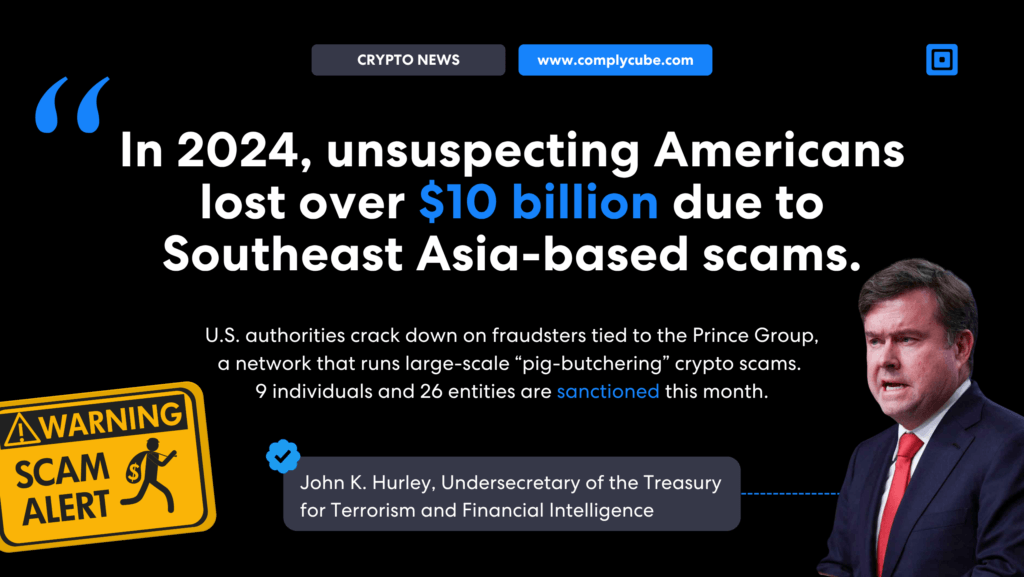
The Prince Group runs online pig-butchering scams that lure victims into investing in cryptocurrency. The organization is treated as a regional, cross-border threat, with countries such as the UK, South Korea, and Japan swiftly arresting and sanctioning associated individuals.
Scam centers in Southeast Asia steal billions of dollars from American victims each year.
The case highlights just how strong modern criminal groups are in using corporate structures, financial intermediaries, and cross-border offshore entities to industrialize scam activity. This scam now forms a major global AML challenge.
Businesses across regulated markets, particularly crypto firms, play a strong role in strengthening compliance controls to identify and report these groups. Authorities are pushing towards enforcement actions on firms that fail to identify and report scam typologies.
For more information, click here.
Hong Kong Expects Crypto Firms to Prepare for AI Cyberattacks
Hong Kong, June 2, 2026, 🇭🇰: Hong Kong’s Securities and Futures Commission (SFC) and Hong Kong Monetary Authority (HKMA) warn Licensed Corporations (LCs) and Virtual Asset Trading Platforms (VATPs) to harden their defenses ahead of AI-enabled cyberattacks.
The proliferation of AI-enabled tools may lower the technical barrier for threat actors to execute malicious activities, such as phishing, social engineering, and deepfake impersonation.
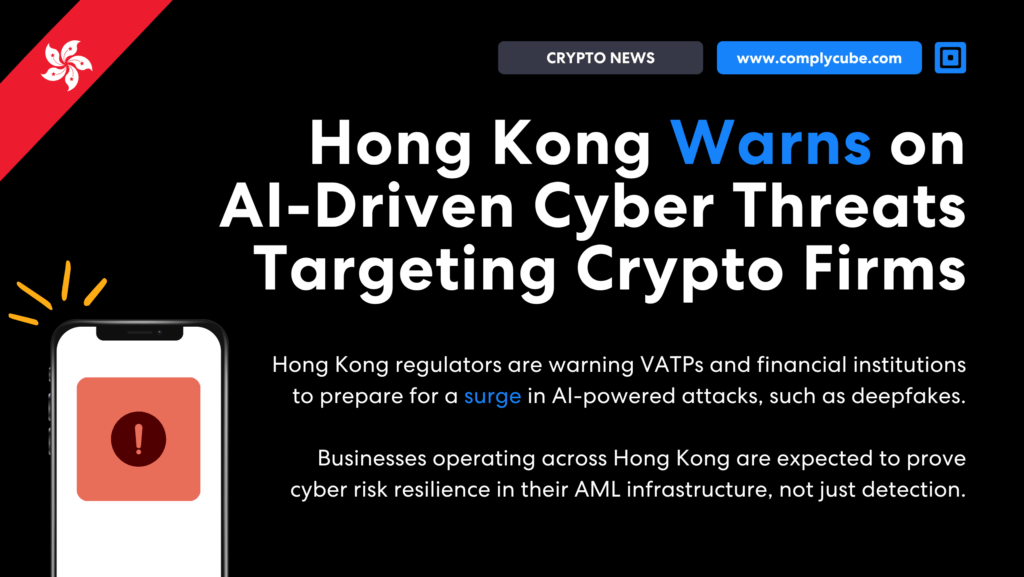
In 2025, Hong Kong saw a steep 27% rise in cyberattacks. Due to their speed, remote nature, and high transaction volumes, virtual asset platforms remain attractive targets for these AI-assisted attacks. The SFC now signals heavy supervision on how firms are resisting destructive attacks, not just detecting them. VASPs alike must treat AI-enabled cyber risk as a governance issue.
For more information, click here.
ASIC Wins High Court Battle Over Block Earner’s Crypto Product
Australia, June 17, 2026, 🇦🇺: The Australian Securities and Investments Commission (ASIC) got a High Court win after judges found Block Earner’s fixed-yield “Earner” product was a financial product, suggesting its initial civil penalty of A$350,000 (USD $240K) is back in consideration.
Block Earner is an Australian blockchain-powered fintech company. In 2024, ASIC imposed a civil penalty on Block Earner after deeming its fixed-yield “Earner” product as a financial product requiring an Australian Financial Services License. Following this, the Federal Court relieved Block Earner of the penalty, and ASIC appealed the decision.

Typically, regulators treat crypto yield products as a legal gray area because they are seen as software or digital tokens, rather than regulated securities. However, the recent callback by the High Court shows that regulators are moving away from product labels and instead, look at its behavior. In this case, authorities viewed the Earner product as resembling an investment, derivative, or managed-return activity, even if marketed as an innovative digital asset service.
For businesses in the blockchain and crypto sector, this case highlights a critical shift: regulators are moving beyond product design, focusing scrutiny on products and services based on their risk to investors, consumers, and the wider ecosystem. Investigations are still ongoing.
For more information, click here.
Time for Some Light-Hearted Creative Criticism?
So you’ve made it to the end of our newsletter. It’s time to enjoy a little satire, worthy reader, you’ve earned it.
🔥THE CRYPTO CUBED POEM: JUNE🔥
The market rushed where rules were thin,
But June drew lines and pulled them in.
Europe locked the doors on MiCA license games,
While stablecoin issuers face bank-like claims.
Hong Kong watched AI sharpen fraud,
And ASIC judged the yield product flawed.
Across the map, sophisticated scammers fell,
As compliance rose to ring the bell.
Stay tuned for our July newsletter, and have a great month!