TL;DR: Automated document verification strengthens document verification by helping firms confirm digital identity faster and more securely. This connects digital identity verification with KYC compliance software, NFC ID checks, and scalable onboarding.
What is Automated Document Verification?
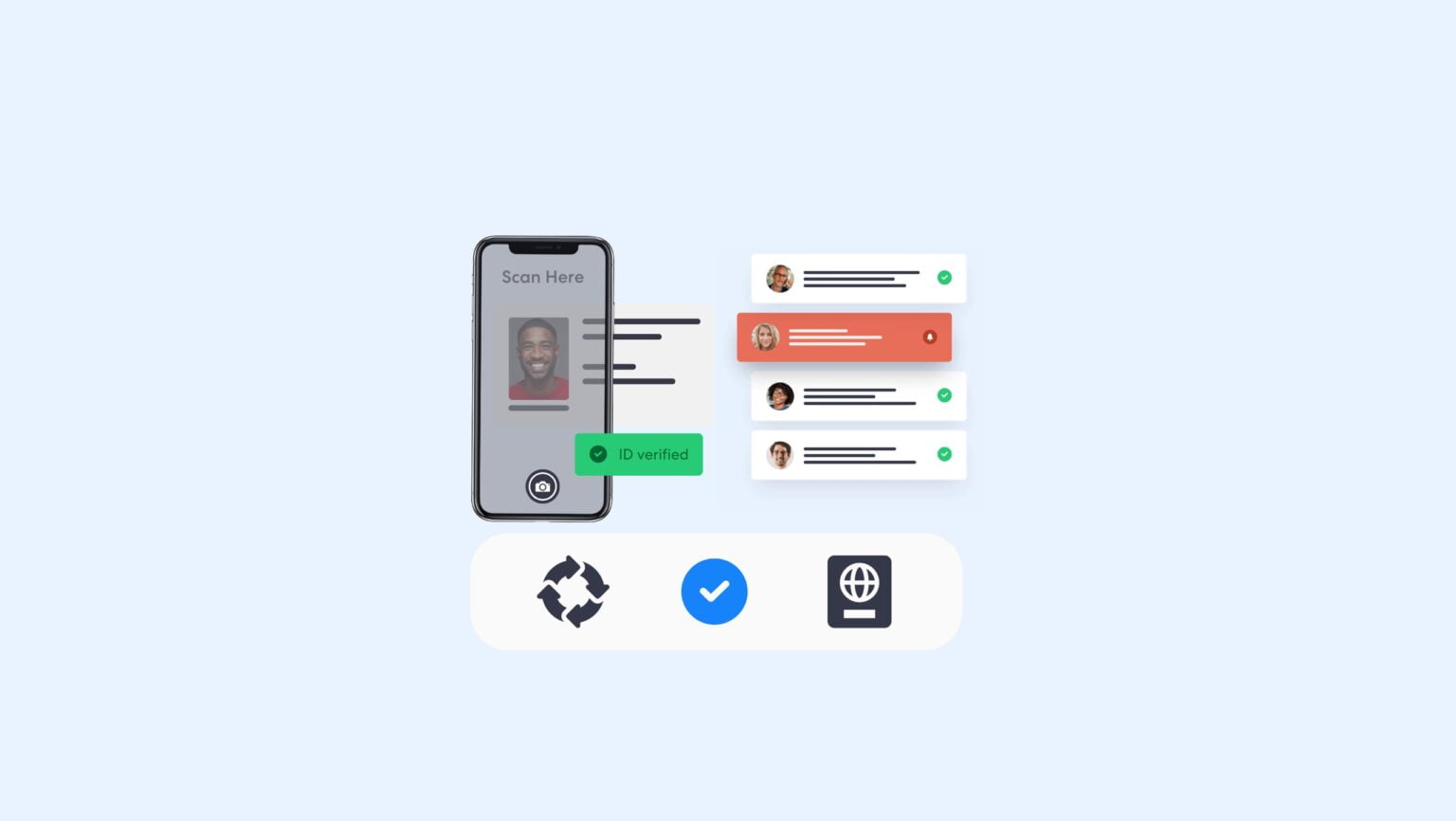
Automated document verification authenticates new users. It ensures that clients are who they say they are by validating their identity documents. Traditionally, this is a human job, but this is no longer feasible in the modern day:
- Training costs
- Human error
- Poor scalability
Moreover, advanced technologies, such as AI, increasingly streamline corporate processes. AI-powered document verification is far superior to its more traditional counterpart. Modern businesses face an ever-expanding client base, which demands a higher throughput of new users.
Likewise, such a development requires a process that can handle large quantities of data without compromising the quality of the verification. ComplyCube’s document authentication process is capable of handling an unlimited number of new users with extremely reliable results. You can learn more here: What is Document Verification?
NFC ID Verification
Near-field communication (NFC) is short-range wireless technology. For example, retail payments, ticket verification, and the Know Your Customer (KYC) process commonly use Near Field Communication (NFC). Most bank cards, modern passports, and NFC-enabled ID cards contain NFC chips that store trusted data for secure contactless verification.
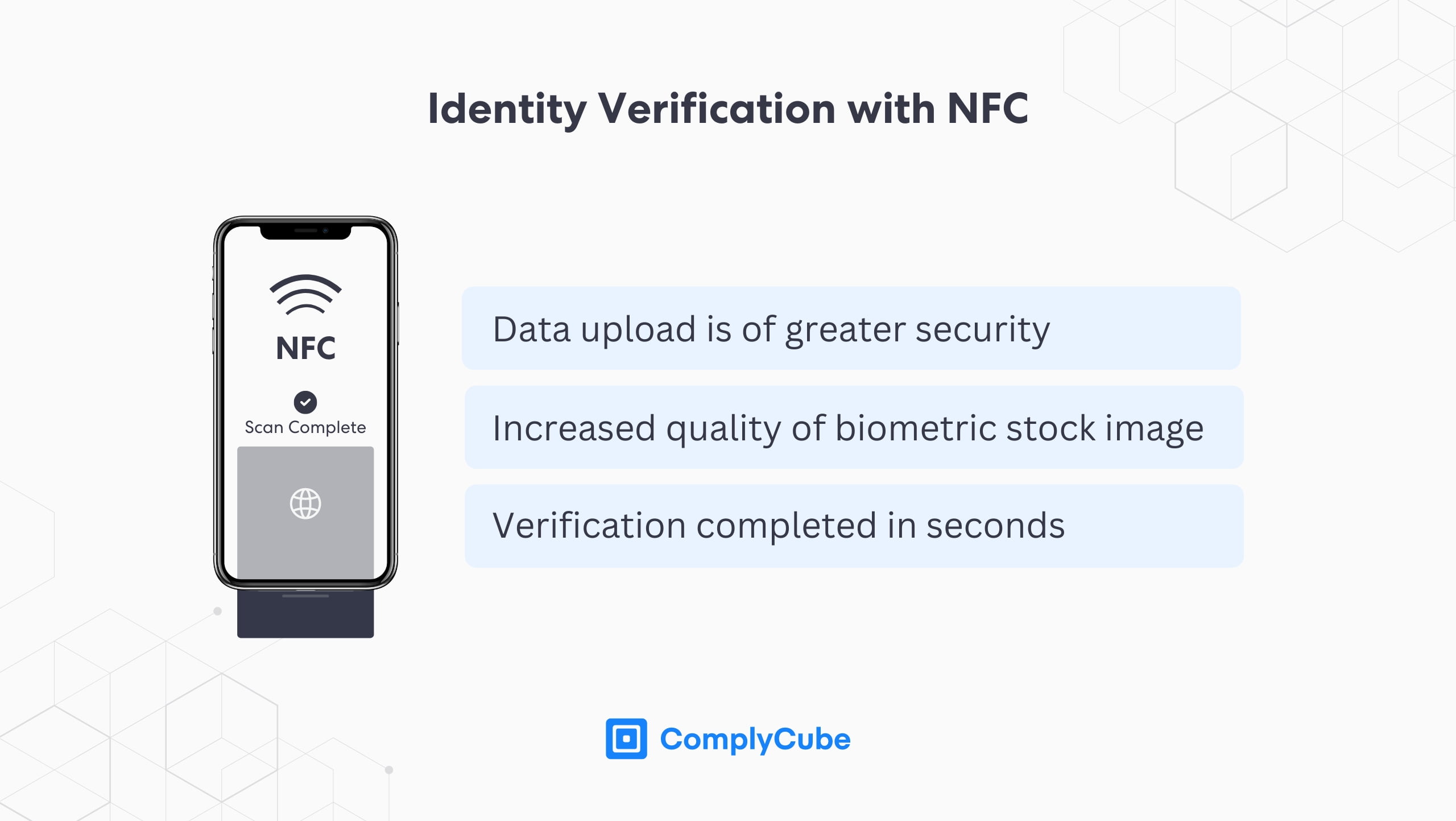
In document authentication, NFC ID verification produces an enhanced result because the data transfer is more precise. This, in turn, creates a stronger matching performance if a firm makes use of biometric verification due to the higher resolution image from the document.
Case Study: EU Digital Identity Wallet Rollout
In 2026, the European Union are preparing to launch EU Digital Identity Wallets by the end of the year. The wallet framework lets citizens, residents, and businesses identify themselves securely. It stores digital documents, and share verified attributes across public and private services.
Major Cross-Border Identity Opportunity Revealed
In particular, the EU wallet programme shows how digital identity moves from isolated document checks to reusable, consent-based identity credentials. For regulated firms, this combines document verification, biometric assurance, NFC ID, and policy-based KYC orchestration in one compliant journey.
Outcomes
EU Member States are expected to provide at least one wallet by the end of 2026.
Wallets will support secure access to public and private digital services.
- The rollout strengthens the case for interoperable digital identity verification.
Financial Services
Traditional financial (TradFi) services, such as banks, wealth management, accounting firms, and many others, must adhere to the tightest regulations. These services define the bridge between illicit finance and the security of the financial system and must, therefore, have some of the most robust safeguards in place.
The Financial Action Task Force (FATF) dictates much of the global financial regulation and enforces it via its 40 Recommendations. It acts as the focal point of many different regulators, combining national policies on an international stage.
As a result, the adoption of technology-backed compliance tools is an increasingly prevalent topic and is something that is being discussed across the globe under many regulatory bodies, including:
- The Department of the Treasury (DoT, US)
- The Securities and Futures Commission (SFC, Hong Kong)
- European Banking Authority (EBA, European Union)
These regulators endorse automated document verification. In the financial services industry, it can significantly streamline new client onboarding processes while actively increasing the reliability of the verification.
After all, the reliability of automated verification is driving this global trend by reducing human error and limiting opportunities for manipulation. Regulations first designed for financial services are now extending into other industries that rely on Know Your Customer (KYC) checks.
Cryptocurrency
The crypto scene is one of the fastest-growing industries by value, volumes, and users. Scalable IDV and KYC solutions are fundamental to remaining competitive. Automated document verification is becoming the bread and butter of crypto onboarding processes.
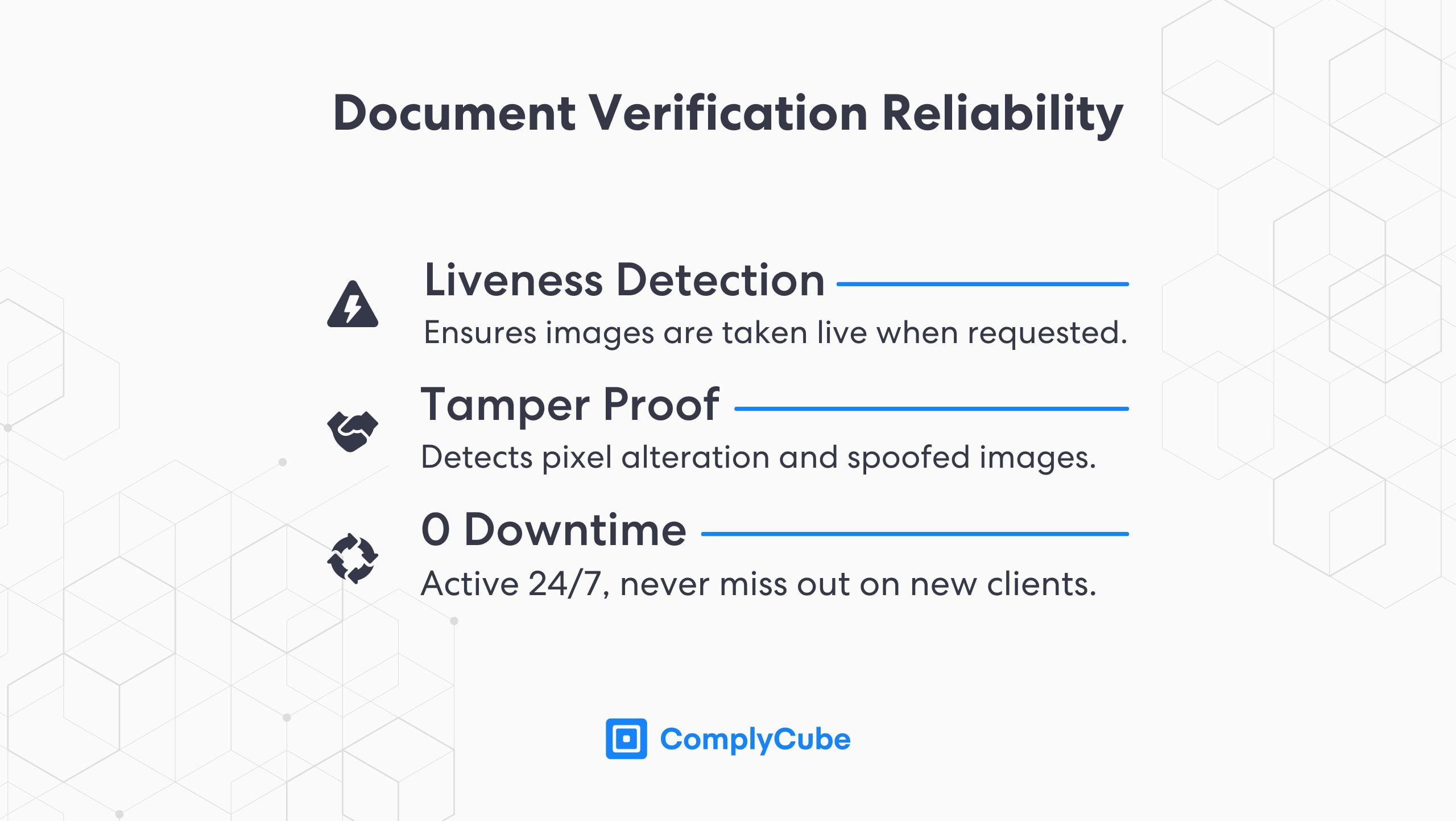
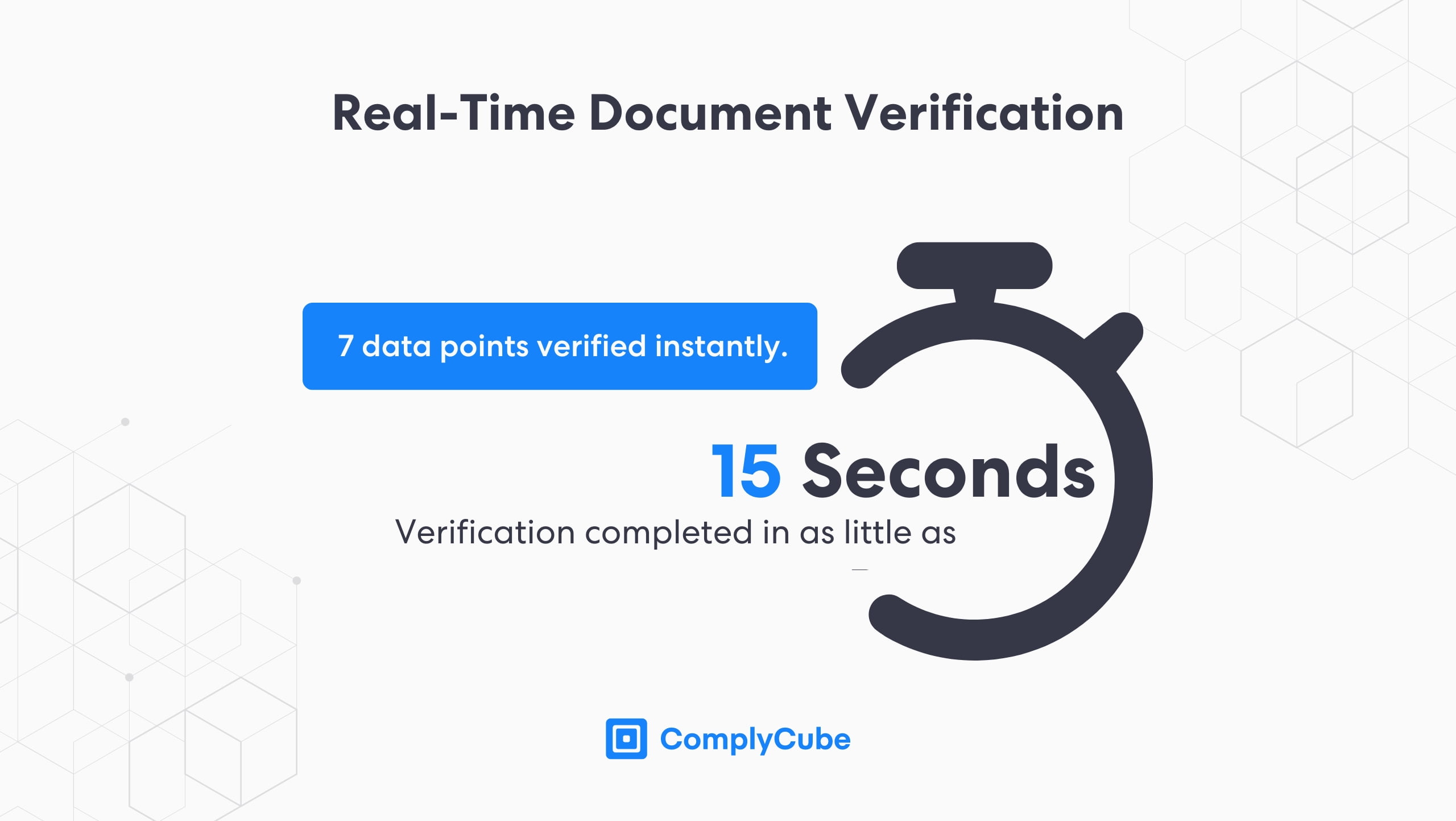
- Completed in <15 seconds
- 13,000+ documents accepted
- Tamper proof
The blockchain sector experienced dynamic regulatory shifts in 2024, which are likely to continue into 2025 and beyond. Virtual Asset Service Providers (VASPs), such as crypto exchanges, are taking on financial responsibilities that increasingly mirror those of Traditional Finance (TradFi) institutions.
The new rules will cover most of the crypto sector, forcing all crypto-asset service providers (CASPs) to conduct due diligence on their customers.
This increasing regulation demands flexible and precise KYC procedures. Advanced document verification, particularly NFC ID verification, is an affordable way of meeting these obligations while remaining competitive.
Telecoms
The telecommunications sector which encompasses the internet, mobile, and communication services, is subject to stringent regulations. These regulations protect against fraud, misuse of services, and privacy. Some of the core regulators include:
- The Office of Communications (Ofcom, UK)
- The Federal Communications Commission (FCC, US)
- The European Telecommunications Standards Institute (ETS, EU)
Generally speaking, phone retail has moved entirely online. Consequently, many new firms are disrupting the industry by providing a 100% digital service. A core reason behind their success is the ability to verify new clients from anywhere, remotely.
Benefits of Automated Identity Verification:
- Reduced operational costs
- Increased sales exposure (24/7 accessibility)
Document verification, which would typically be followed by biometric verification, permits new client authentication anywhere in the world. Crucially, this process can be automated, meaning that new contract sales can be executed around the clock without the need for a sales team.
Social Media
In 2023, more than 38% of cases where money was lost to fraud began on social media. Such a statistic is driven by the anonymity that social media permits at scale. Anyone can create a new account, usually in seconds and with very limited personal information requested, and conduct malicious behavior.
Currently, this is a relatively unregulated market. KYC on most social media platforms is unheard of. Dating apps have been some of the first social sites to implement IDV measures. For example, they primarily use age verification procedures via document and sometimes selfie verification.
On the whole, over the next few years, communications regulators are likely to endorse tighter regulations around Identity Verification. This is in an effort to safeguard the industry against bad actors. Adopting KYC solutions, such as automated document verification, will place platforms ahead of the rest of the industry. For more information about Social Media IDV and KYC services, read The Catfishing Crisis.
Key Takeaways
Automated document verification speeds up onboarding to reduce manual errors.
NFC ID checks add stronger assurance by reading trusted chip data.
Digital identity verification verifies ID documents and the person presenting it.
KYC software blends document checks, biometrics, and screening together.
Global document coverage helps firms onboard users across markets without weakening compliance.
ComplyCube’s Automated Document Verification Solutions
To sum up, ComplyCube, a leader in digital Identity Verification and Know Your Customer solutions, provides IDV services to firms worldwide. Their proprietary suite of services is empowering trust in identity online.
If your firm needs to verify client credentials, contact a ComplyCube specialist today. With industry-leading flexibility of packages and customizability of solutions, the company can meet the demands of any firm looking for onboarding solutions.
Frequently Asked Questions
What is automated document verification?
Automated document verification is the process of using technology to check whether an identity document is valid, authentic, and linked to the person presenting it. It replaces slow manual reviews with faster checks that can include Optical Character Recognition (OCR), fraud detection, biometric matching, and NFC ID authentication.
How does document verification support digital identity verification?
Document verification supports digital identity verification by confirming that a user’s identity document is genuine and belongs to them. When combined with biometric verification and liveness detection, it helps firms confirm both the document and the real person behind the account, reducing impersonation and onboarding fraud.
Why is NFC ID useful for identity checks?
NFC ID is useful because it reads trusted data directly from the chip inside eligible passports and ID cards. This can provide higher assurance than image-only checks, as chip data is harder to tamper with and can improve the quality of matching when biometric verification is used during onboarding.
Which industries use automated document verification?
Automated document verification is used across financial services, crypto, telecoms, payments, marketplaces, social platforms, and other regulated or fraud-exposed sectors. These industries use it to verify users remotely, reduce onboarding friction, meet Know Your Customer (KYC) requirements, and strengthen fraud prevention controls.
How does ComplyCube support automated document verification?
ComplyCube supports automated document verification through a unified compliance platform covering Identity Verification (IDV), biometric checks, NFC ID, AML screening, fraud detection, workflow automation, and case management. Its platform supports global document coverage, APIs, SDKs, hosted flows, and no-code orchestration for scalable onboarding.