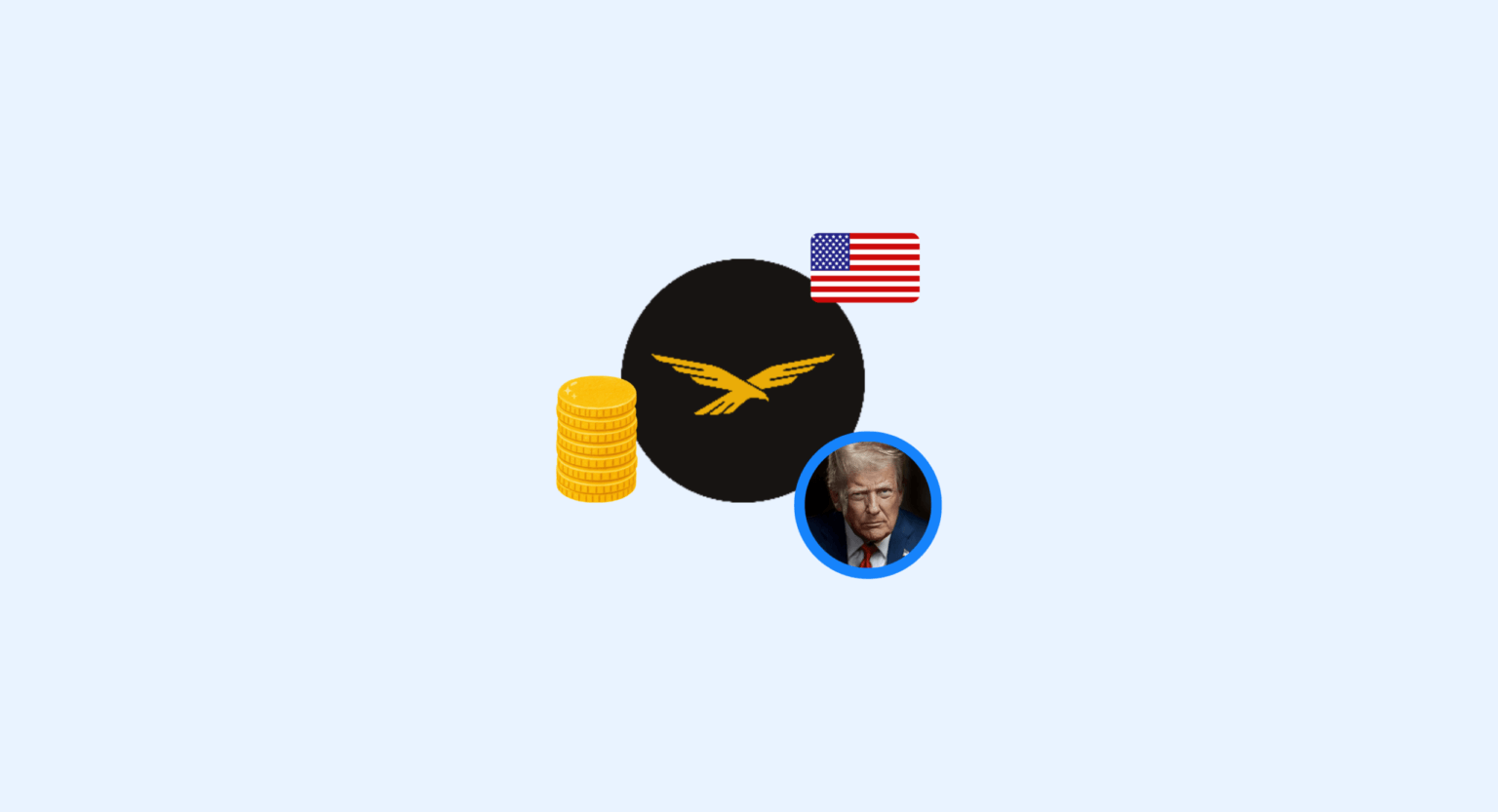
World Liberty Financial, the Trump family-linked crypto venture, is facing renewed scrutiny over a $100 million WLFI investment. This case puts crypto source of funds back into focus, bringing wider questions about source of funds checks necessary for high-value digital asset transactions.
In June 2025, UAE-based crypto fund, Aqua 1, purchased $100 million worth of World Liberty Financial governance tokens. This deal positioned Aqua 1 as a major WLFI investor and came as World Liberty Financial was preparing to expand the role of its governance tokens.
Recent reports from August 2026 have linked Guren “Bobby” Zhou, the businessman behind Aqua 1 associated with the WLFI investment, to an active money-laundering investigation in the UK. Zhou has not been charged with a criminal offense. This story raises an enduring question for the wider crypto market. How much can firms really understand about the money behind a crypto transaction from blockchain activity alone?
Why the $100M WLFI Deal is Back in the Spotlight
Zhou was reportedly arrested in Britain in 2021 and remains under investigation for suspected money laundering. He has not been charged with a criminal offence. The renewed attention is significant because of World Liberty Financial’s association with President Donald Trump and his family. President Trump’s 2026 financial disclosures also showed substantial crypto-related income linked to World Liberty Financial, while previous reporting has detailed the Trump family’s economic interest in the venture.
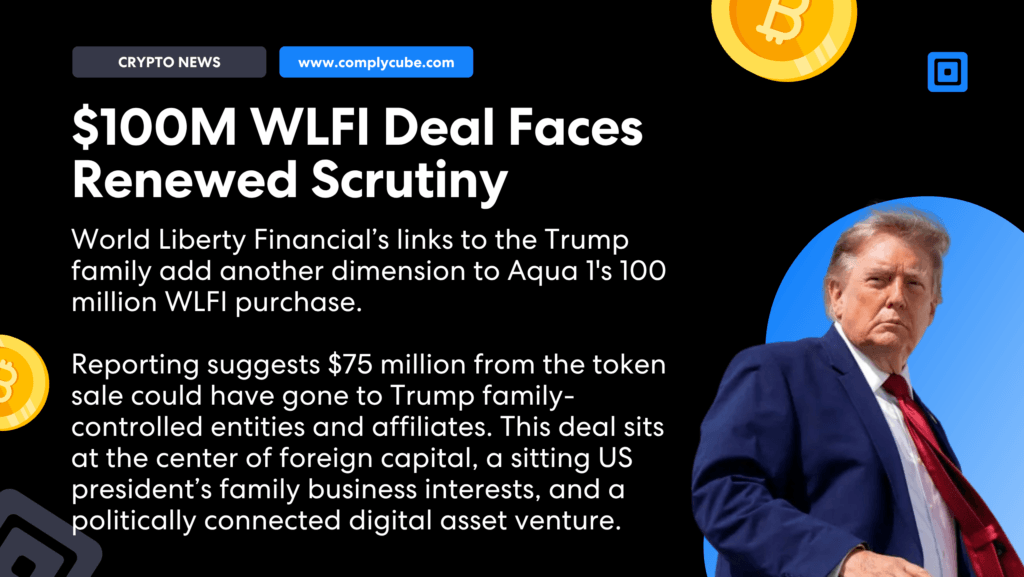
Political connections can place large foreign investments under significant public scrutiny. From a compliance perspective, crypto firms need to understand more than the transaction itself: they need to know the people and entities involved, who ultimately controls them, and where the capital originated.
What BlockChain Data Can Tell You About Crypto Source of Funds
Public blockchains can reveal where digital assets moved, which addresses were involved, and if funds have interacted with known high-risk wallets or services. That level of transparency is incredibly important for crypto transaction monitoring. However, it cannot necessarily establish:
- Who owns or controls an investment vehicle
- How an investor gained the capital being deployed in a transaction
- Whether the transaction is consistent with their expected financial profile
- If corporate structures hide details around ultimate beneficial ownership
- If off-chain intelligence has changed the customer’s risk profile
This is how crypto source of funds checks become critical in breaking down money laundering suspicions. Knowing that $100 million moved from one wallet to another is not the same as learning how those funds showed up in the first place.
Knowing the Wallet is Not The Same As Knowing the Customer
In the past, crypto compliance has placed huge value on wallet screening and transaction analysis. These controls are essential as they can help firms find sanctioned addresses, any exposure to illicit services, unusual transaction patterns, and other block-chain based risk signals. However, wallet intelligence only answers part of the equation.
Thorough customer due diligence requires firms to understand the individual or organization behind the wallet. This incorporates Know Your Customer (KYC), Know Your Business (KYB), and beneficial ownership checks. Firms can also look at sanctions and PEP screening, adverse media, and enhanced due diligence where risk requires it.
Crypto firms need to understand who the customer is, who controls the entity, and where the money came from. Is the transaction consistent with their profile? Has anything changed since onboarding? As crypto firms handle increasingly large institutional and cross-border transactions, answering these questions together is becoming more important.
Crypto Source of Funds vs. Source of Wealth
There are some key differences between determining the source of funds versus the source of wealth in crypto. Source of funds refers to the origin of the money being used for a particular transaction, where source of wealth takes on a much broader view. This looks to establish how an individual gained their wealth over time.
This distinction is important because blockchain analytics may establish the immediate transactional history of an asset without answering either question thoroughly. For example, a crypto asset may have moved through several wallets before reaching an investment platform. Though the trail can be valuable, it does not explain the underlying economic activity. As a result, crypto source of funds assessments need firms to connect on-chain activity with off-chain identity, business, and financial information.
From Wallet Risk to Financial Crime Risk
The lesson from the World Liberty Financial story is that wallet analytics are not enough on their own. Crypto compliance in 2026 increasingly requires firms to link transactions with the economic actors behind them. It means bringing together identity verification, business verification, and more with source of funds. For compliance platforms such as ComplyCube, this reflects a broader shift towards treating KYC and AML as part of a continuous customer lifecycle rather than a single checkpoint at onboarding.
The objective is to assess if the wallet, customer, ownership structure, and the crypto source of funds all make sense together. As digital assets become more deeply integrated into institutional and cross-border finance, that distinction is likely to be more important. Blockchain transparency can show where assets move, but effective financial crime controls help firms understand who is moving them and where the money ultimately comes from.

Find out more Crypto news in ComplyCube’s CryptoCubed newsletter. We explore the latest in developments across identity verification and AML globally.