TL;DR: At the very centre of sanctions compliance is UK sanctions list screening. For firms or financial institutions reviewing UK sanctions compliance software, this is the only up-to-date sanctions data source. UK sanctions screening software helps organizations stay ahead of severe reputational damage and financial penalties.
What Is UK Sanctions List Screening?
Many organizations lean on global sanctions lists and the UK sanctions list screening to check on customers, businesses, and transactions. Sanctions listings are made under specific legal criteria, often tied to national security, foreign policy, international obligations, or similar concerns. Sanctions cover complicity in human rights violations, assisting in the development of weapons of mass destruction, or large-scale money laundering that breaches any applicable laws, for example. According to GOV.UK, the UK sanctions list is the one and only source for current UK sanctions designations.
As much as this process sounds simple, it is not just a name search. Firms must cross-reference any aliases, addresses, and document data. These pieces of information, known as secondary identifiers, support compliance teams in spotting real risk of sanctions evasion, reducing false positives. This is one of the many reasons that sanctions screening must sit under a wider compliance workflow rather than a separate manual check.
UK Sanctions List Screening and Regulated Firms
The scale of UK sanctions risk deserves board-member-level attention. According to the Office of Financial Sanctions Implementation (OFSI) Annual Sanctions Review from 2024-2025, there were almost £37 billion in frozen assets across all sanctions regimes on all international lists. This is up from £24.4 billion in the previous year. Additionally, £28.7 billion in Russian assets were frozen under UK sanctions. This shows the significant amounts at stake for regulatory compliance teams.
Oftentimes, sanctions risk hides behind relationships. For example, a customer may pass at the onboarding stage, but a connected company, shareholder, director or ultimate beneficial owner (UBO) may create exposure later on with new designations. This indicates how sanctions screening links to other compliance processes such as Know Your Customer (KYC), Know Your Business (KYB), and Anti-Money Laundering (AML).
More importantly, this impacts multiple key sectors such as fintechs, insurers, and accountants to name a few. Weak compliance controls can lead to a higher false positive rate. This results in more sanctions violations, operational inefficiencies, and reputational risks.
OFSI Closure Changed Financial Sanctions Screening
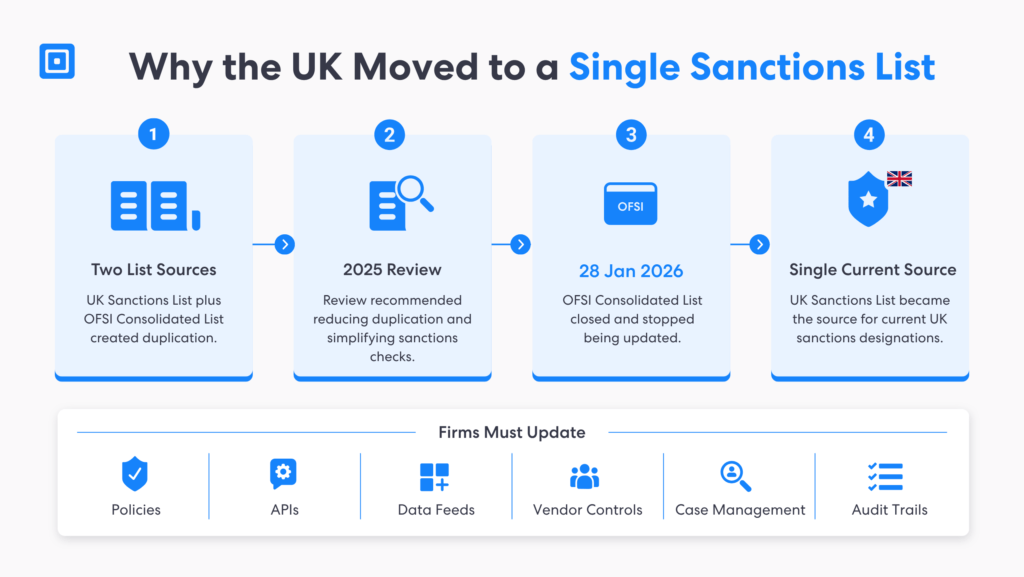
On 28 January 2026, there was a huge change in how firms conducted their financial sanctions screening. The previous model involving the OFSI consolidated list no longer applied. According to the UK government, the consolidated list was officially closed and the UK sanctions list became the only source for current UK sanctions designations. Every single policy, data feed, and vendor controls that firms had in place needed to be reviewed for any mentions of OFSI sanctions screening of individuals and entities.
Still, many compliance teams missed this big announcement about the regulations. As a result, several platforms, playbooks, and sanctions screening software vendors did not change their verbiage along with it. With these types of rapid updates, firms may be under the impression that they are doing a good job screening correctly when, in truth, old feeds, outdated logic, or manual checks still sit in the background.
Effective UK Sanctions List Screening Processes
It is important for firms to collect the right information on a client before the sanctions screening begins. A strong process requires thorough data intake of details such as full names, aliases, dates of birth, and more. This helps improve the overall sanctions screening process, providing outcomes that are correct and lowering any remediation time.
However, the most important point is not to panic the moment a potential match on a sanctioned individual comes through. Compliance teams must pause, assess, and avoid rushing to a conclusion. It is necessary to compare a match alert against any secondary identifiers, ownership data, customer records, and risk history. Moreover, if the match case remains unclear after some preliminary investigation, the client should move down a much more defined risk escalation path.
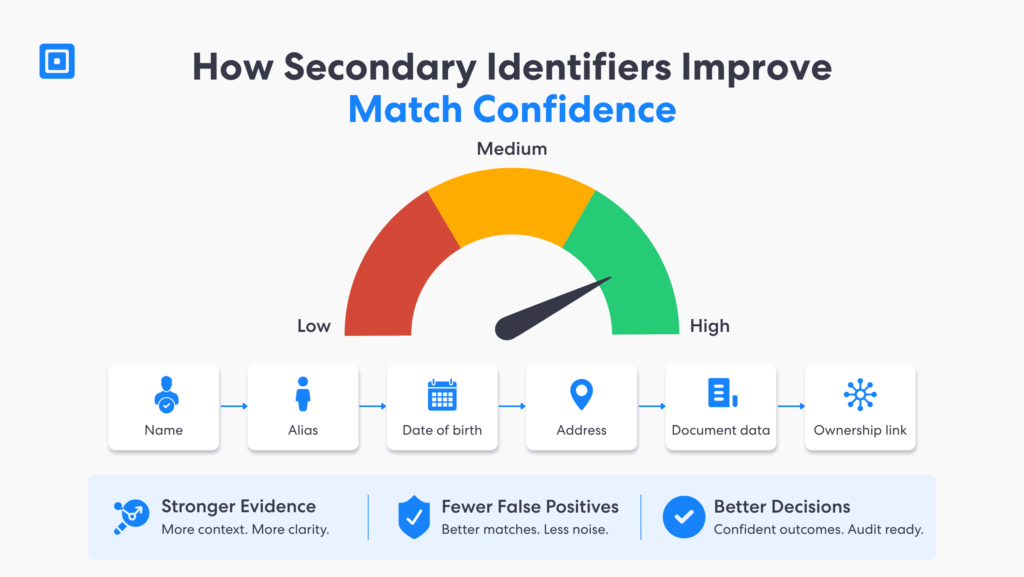
In order to have a strong process, firms must collect the right information before the search begins. Full names, aliases, and dates of birth help improve overall sanctions screening outcomes and lower remediation time.
Sanctions screening works when firms can prove what they screened.
According to Harry Varatharasan, Chief Product Officer, “They also must be able to point to when they screened it, and why they made each decision. Each decision must create an audit trail.” Firms can ensure compliance with any risk policies and defend their decisions during audit periods, board reviews, or any sanctions enforcement.
What Firms Should Do After a Sanctions Match
A sanctions breach is a serious issue and can happen to anyone. If any firm knows or suspects a breach, it is important to follow a structured risk escalation process with the necessary reporting obligations. According to Financial Conduct Authority (FCA) guidance around sanctions, firms must report any suspected breaches to the OFSI. The closure of the consolidated list never removed the obligation to report. Any specific cases dealing with a designated person or frozen assets must be reported to the FCA as well.
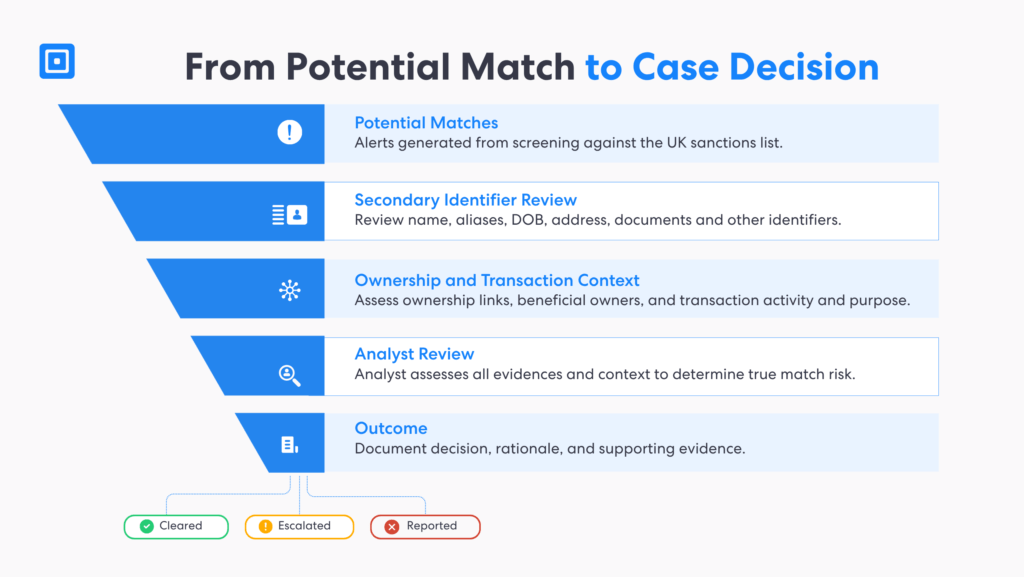
One thing all strong global sanctions compliance processes have in common is effective case management. They are responsible for capturing the alert’s source, match reason, time stamps, evidence, and outcomes. Real-time screening must also show whether the case triggered any Enhanced Due Diligence (EDD) processes. This record within an effective sanctions screening software helps compliance teams improve match rules over time. You can learn more here: What is Sanctions Screening?
Ongoing Monitoring and Transaction Screening
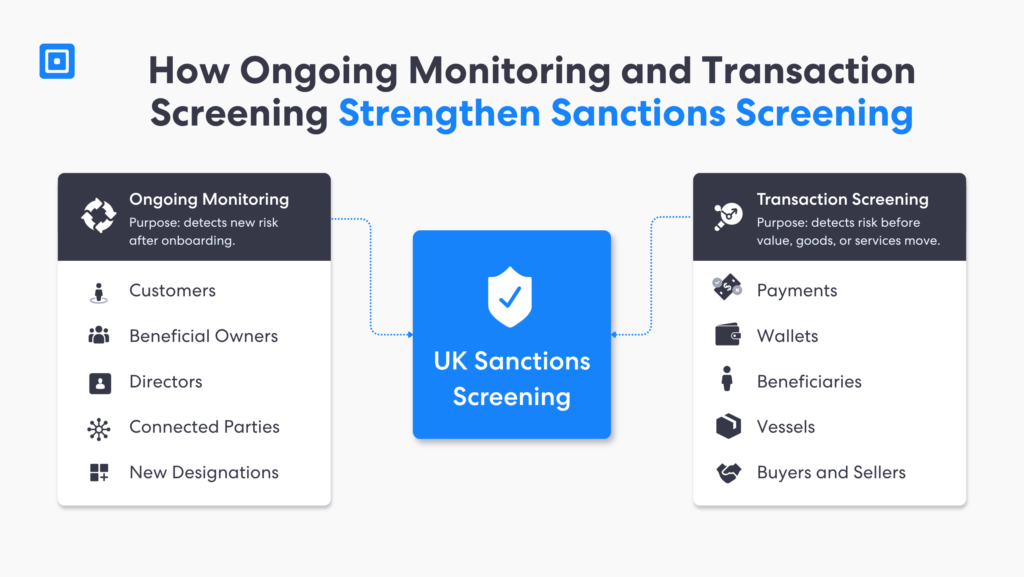
Oftentimes, a customer may be fine today, but they may be designated tomorrow. That’s why an important aspect of an effective UK sanctions list screening protocol is ongoing monitoring. Monitoring helps firms catch risk past the onboarding stage as information changes. Similarly, another important feature to have in a sanctions screening software is transaction screening. It helps firms catch hold of any risk before value, goods, or services move. These types of events need diligent screening workflows that do not rely on a manual calendar date.
Generally, false positives create a great deal of pressure across both controls. Too many weak alerts slow onboarding time, delay payments, and make real risks harder to spot. Machine learning or artificial intelligence can help score alerts, rank cases, and learn from analyst decisions. Regardless, human review should remain central to the UK sanctions screening process.
Case Study: Deutsche Bank AG London Bank’s Sanctions Breach
In May 2026, the Deutsche Bank AG London Branch (DBLB) received a penalty of £165,000 for breaching the Russia financial sanctions regime. Between June and July of 2022, DBLB processed two payments to an entity owned by a designated person according to the UK sanctions list.
Major Sanctions Control Failures Revealed
This Deutsche Bank AG London Branch case marks the second OFSI monetary penalty case resolved through settlement. It also reinforces a very important lesson about risk appetite. Compliance teams must find restricted activity, escalate concerns, and keep thorough evidence explaining a clear decision pathway.
Outcomes
The Deutsche Bank AG received a £165,000 penalty.
Control evidence is just as important as sanctions detection.
- OFSI used this Deutsche Bank case to showcase compliance lessons for other firms.
Building an Effective Screening Compliance Program
Finally, the key to building the best sanctions screening software is ensuring it links to the rest of the key features within a compliance stack. UK sanctions list screening must feed into onboarding, KYC, AML, and fraud prevention. When these compliance functions operate in silos within separate systems, teams can lose very important context.
A connected process also improves overall customer experience. Low-risk users can move through lower-friction flows, while higher-risk users receive proportional checks. Compliance teams can reduce unnecessary manual work without weakening oversight.
Key Takeaways
UK sanctions list screening is the only source for UK-sanctioned entities and persons.
The OFSI consolidated list closure created a process review for UK firms.
Firms must get the full picture of their sanctions screening match before arriving at a decision.
Ongoing monitoring and transaction screening support firms in finding new risks.
Connected workflows across various compliance products help improve audit trails, case management, and compliance decisions.
Global Sanctions Compliance with ComplyCube
In summary, firms need a platform that helps them turn UK sanctions list screening information into an evidence-ready compliance workflow. ComplyCube provides a system that nestles sanctions screening with Identity Verification (IDV), ongoing monitoring, and case management all in one place.
ComplyCube also supports flexible deployment with APIs, SDKs, and hosted flows. Compliance teams can now adjust risk rules, escalation paths, and policy logic without long development cycles. Skip third-party risk management by exploring our global PEP and sanctions screening solution. Learn how to update your UK sanctions list screening post OFSI consolidated list closure. Talk to the ComplyCube team about how to meet the FCA’s regulatory expectations on sanctions screening.

Frequently Asked Questions
What is UK sanctions list screening?
UK sanctions list screening checks customers, businesses, and transactions against the UK sanctions list. Firms use it to find designated individuals, sanctioned entities, and ownership links. Thorough screening prioritizes secondary identifiers, ownership data, adverse media, audit trails, and ongoing monitoring.
What replaced the OFSI Consolidated List?
The OFSI consolidated list was close in 28 January 2026 leaving the UK sanctions list as the current and only source of UK sanctions designations. As a result, firms are required to update any policies, data feeds, APIs, and sanctions screening to reflect the single-list model.
What should UK sanctions screening software include?
UK sanctions screening software must include current sanctions data, frequent updates, adverse media, and watchlist screening. It also needs to support any secondary identifiers, ownership screening, and audit trails. The best types of sanctions screening systems balance out automation with real human review.
Why do firms need both ongoing monitoring and transaction screening?
Ongoing monitoring and transaction screening is a necessary part of detecting sanctions exposure after onboarding. This way, teams can determine any sanctions risk before value, goods, or services move. Ongoing monitoring covers people and connected parties, whereas transaction screening focuses on payments and other transaction details.
How can ComplyCube help with UK sanctions list screening?
ComplyCube helps firms connect UK sanctions list screening with IDV, PEP screening, and ongoing monitoring amongst many other compliance solutions. Its APIs, SDKs, and hosted flows help compliance teams build strong risk-based controls into onboarding and operational workflows. Firms must move from isolated checks to connected sanctions compliance.