Kurz gesagt: An effective Anti-Money Laundering (AML) program links seven essential controls. This guide explains how compliance teams can apply risk-based AML program controls and meet relevant AML compliance program requirements to show their effectiveness.
Why AML Compliance Programs Still Fail in 2026
An AML program involves multiple teams with appropriate personnel across customer onboarding, risk management, and internal audit. Each has specific responsibilities, but massive gaps emerge when important findings about suspicious transactions or money laundering activities are not properly communicated, or corrective actions lack clear ownership.
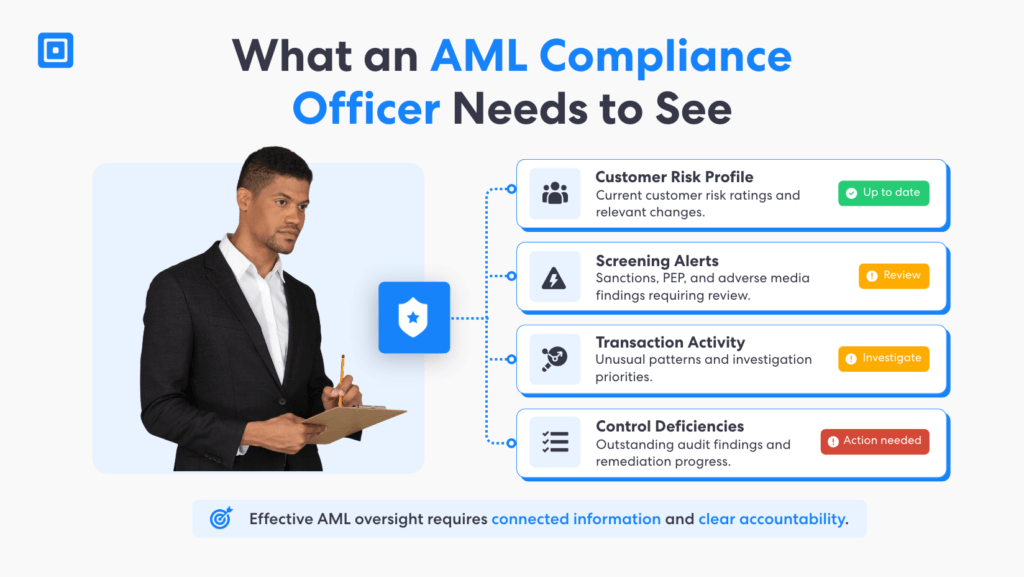
Maintaining accountability is still a practical challenge in 2026 for many financial institutions. For instance, a risk assessment would identify a higher-risk customer segment, but would not ask for more identity checks. Meanwhile, an unresolved monitoring alert may sit between departments without a designated investigator conducting ongoing customer due diligence or compliance checks.
These kinds of gaps in programs show that AML compliance requires financial institutions to have coordinated controls, clearly defined responsibilities, and clear escalation procedures. Seven essential program controls give a framework for linking these activities. It helps AML compliance officers prevent money laundering and maintain oversight.
What is an AML Program?
Typically, an AML program has a framework of policies built around a risk-based approach. They have internal controls to assist financial institutions in meeting regulatory expectations to an appropriate level. The most effective AML programs help to safeguard against the misuse of financial systems.
AML programs protect against illicit activities that are against federal law, including money laundering and terrorist financing. They prioritize detecting suspicious activity surrounding illicit funds while meeting written policies and applicable AML laws or legal obligations.
Der Task Force Finanzielle Maßnahmen (FATF) sets the international standard for dealing with illicit activities and ongoing compliance. In addition, national laws determine the specific controls and customer obligations that regulated organizations need to implement to meet AML program requirements.
7 Essential Controls for an Effective AML Compliance Program
An effective AML program connects governance, customer checks, and ongoing oversight. The seven controls below provide a practical framework for managing financial crime risks. Their implementation should reflect the institution’s activities, customer relationships, risk exposure, and applicable legal requirements.
1. AML Compliance Governance and the Role of the Compliance Officer
Strong governance will help financial institutions gain accountability for AML compliance. Under the applicable U.S. Bank Secrecy Act (BSA) requirements, banks are responsible for maintaining a written, board-approved AML program.
Covered institutions need to establish the compliance oversight roles needed by their respective regulatory frameworks. A designated compliance officer coordinates program oversight, as they must possess expert knowledge. They also conduct internal audits and compliance analysis, while senior management ensures that a program has adequate sources and clear escalation procedures.
Institutions need to maintain procedures that assign control ownership, monitor compliance, and address deficiencies. Approved policies, documented control ownership, and escalation records, as well as management reports, provide the necessary evidence of accountability.
2. Conducting Risk Assessments in an AML Program
Ein Enterprise-Wide Risk Assessment (EWRA) identifies and evaluates any money laundering or terrorist financing risks across an institution’s operations. The goal here for an AML program is to examine any exposure across customers, locations, and products. Risk assessments also look at services and business lines.
These assessments help institutions evaluate inherent and residual risks. Findings should determine when customer checks intensify, monitoring rules change, or additional safeguards become necessary. You can learn more here: What Is AML Risk in Compliance?
3. Beneficial Ownership and Customer Due Diligence Controls
Ongoing Customer Due Diligence (CDD) supports customer verification, business relationship assessment, as well as the verification of beneficial ownership information where necessary. For covered U.S. banks and investment firms, a Kundenidentifikationsprogramm (CIP) uses the appropriate risk-based procedures to establish a reasonable belief that an institution knows a customer’s real identity.

Zusätzlich, Erweiterte Due Diligence (EDD) introduces more checks for relationships that need greater scrutiny. Identity records, beneficial owner findings, and documented EDD decision-making provide evidence that customer controls are reflective of assessed risks and relevant changes.
4. AML Compliance Screening and Ongoing Monitoring
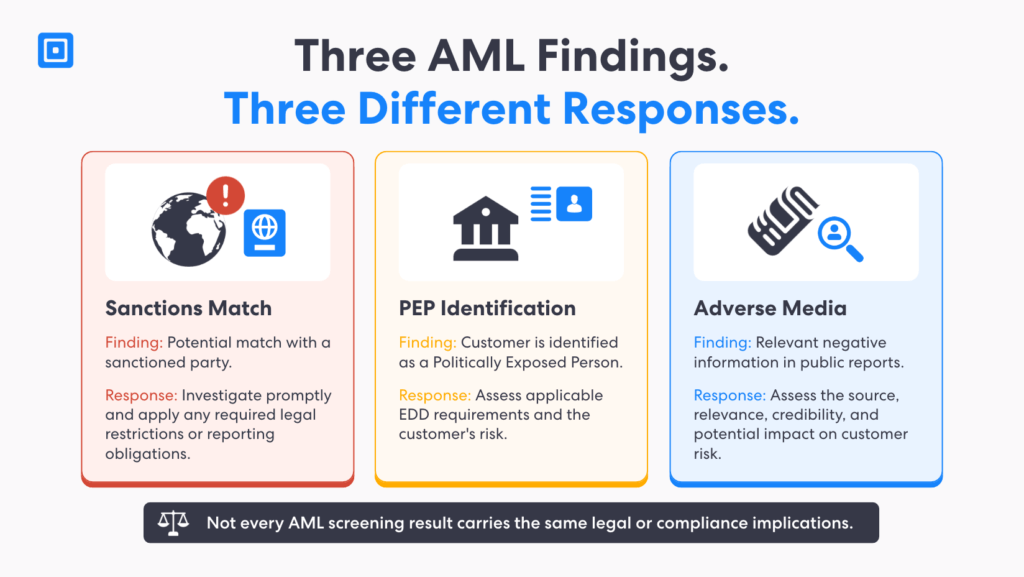
Sanctions screening finds potential legal restrictions, while Politisch exponierte Person (PEP) and adverse media checks identify information that requires further risk assessment. Moreover, ongoing monitoring helps find changes after onboarding is complete. Therefore, effective screening requires current watchlists, reliable matching, and prompt investigation with documented decisions.
5. Transaction Monitoring and BSA AML Compliance
Transaction monitoring systems find unusual activity, which includes rapid fund movements, unexpected transfers, and inconsistent transactions with a known customer’s profile. Here, applicable BSA/AML requirements oblige covered institutions to investigate and report suspicious activity when relevant reporting criteria are met.
Covered U.S. institutions submit Suspicious Activity Reports (SARs) to the Netzwerk zur Bekämpfung von Finanzkriminalität (FinCEN). In the UK, relevant disclosures are submitted to the National Crime Agency (NCA). The effectiveness of monitoring is completely dependent on reliable data, timely investigations, and well-documented decisions with proper escalation procedures.
6. Employee Training and AML Compliance Programs
Thorough employee training allows staff to recognize suspicious activity, making them better able to fulfill their responsibilities. Customer-facing teams need to understand verification, while investigators need expertise in reporting and escalation.
Training needs to be indicative of current-day regulatory requirements, financial crime risks, and each employee’s individual responsibilities. Most importantly, role-specific assessments and training records are able to demonstrate employee competence and the presence of consistent implementation.
7. Independent Testing of Anti-Money Laundering Programs
Independent testing plays a huge part in assessing whether AML controls are actually meeting applicable requirements and are operating effectively. Reviews may examine governance, due diligence, and screening. They also look at transaction monitoring and supporting records. Testing needs to be sufficiently independent from the activities assessed to ensure objective AML program evaluation.
Additionally, the testing frequency is based on institutional risk and applicable regulatory requirements. For instance, the Federal Financial Institutions Examination Council (FFIEC) does not recommend universal annual testing for U.S. banks. However, other bodies may recommend independent testing yearly. Findings must remain open until corrective actions have been validated and any underlying deficiency has been fully resolved.
Case Study: Bank of America’s 2026 AML Penalty
In October 2026, Bank of America (BoA) received a $1.2 billion penalty from the Financial Crimes Enforcement Network (FinCEN) and an additional $11.6 million sanctions settlement. Regulators found major issues despite earlier intervention, exposing the bank’s AML program.
Comprehensive Corrective Measures for BoA AML Program
The Office of the Comptroller of the Currency (OCC) ordered separate assessments, reviews of previously unreported suspicious activity, and improvements to internal controls. These corrective measures targeted weaknesses in monitoring, reporting, and governance.
Ergebnisse
- The bank had to conduct historical reviews to identify any unreported suspicious activity.
- Carried out independent assessments to find any weaknesses.
- BoA looked at priority risks linked to the U.S. southwest border, Iran, and Russia.
U.S. vs. UK: AML Regulations and Bank Secrecy Act Requirements
AML regulations vary by region and regulated activity. In the U.S., the BSA establishes requirements for covered banks, money services businesses, and other financial institutions. FinCEN administers relevant regulations, while authorities such as the Federal Reserve are responsible for supervising applicable banking operations.
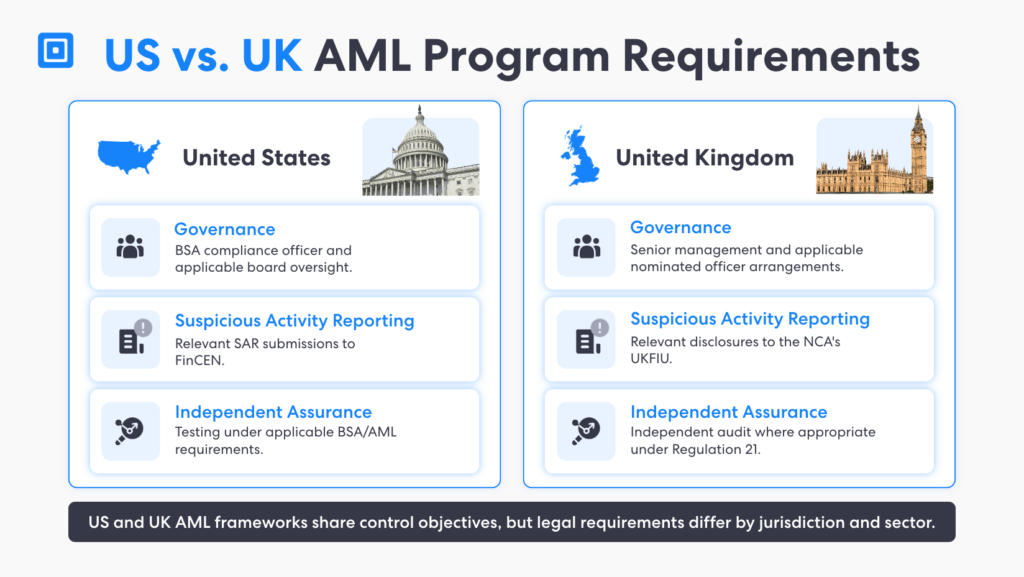
For foreign banks in the UK, they look to the Money Laundering Regulations 2017. It requires businesses, including specific accounting services providers, to implement the right risk assessments, customer checks, and internal controls. Unlike U.S. banking rules, the UK’s independent audit requirements apply where appropriate based on the size and nature of the business.
How to Measure AML Program Effectiveness
An effective AML program needs strong evidence of controls operating as fully intended. Therefore, compliance teams must assess whether screening will cover relevant customers, transaction alerts will receive timely investigation, and risk assessments will influence operational decisions. Steve Smart, Lead for Fighting Financial Crime at the Financial Conduct Authority (FCA), stated:
They must demonstrate they can manage the money laundering risks they face.
He also added, ” Where they cannot satisfy us, we will intervene.” Additionally, training assessments can demonstrate staff competence, while independent testing must confirm whether identified deficiencies have been fully corrected as per recommendations. These indicators help financial institutions evaluate control performance instead of relying on completed procedures alone.
Die wichtigsten Erkenntnisse
Clear ownership and escalation processes help determine accountability.
Risk assessment findings help guide CDD, beneficial ownership, and monitoring checks.
Screening and transaction monitoring find risks that require investigation.
Employee competence and independent testing show whether controls work effectively.
An AML program must reflect applicable regulatory alignment based on jurisdiction.
Building a Risk-Based AML Program with ComplyCube
The most effective AML compliance programs lean on interconnected controls, accountable leadership, and strong evidence of consistent implementation. Linking risk-based safeguards with documented decisions and thorough oversight helps institutions maintain consistent AML controls.
ComplyCube’s Policy Assurance supports configurable compliance workflows, helping organizations align customer verification and screening with the necessary policies. Sprechen Sie mit unseren Compliance-Experten to enhance your CDD workflows for your risk-based AML program.

Häufig gestellte Fragen
What are the seven essential AML program controls?
The seven controls for an effective compliance program are governance, risk assessment, customer due diligence, sanctions screening, transaction monitoring, training, and independent testing. They help financial institutions find financial crime risks, investigate suspicious activity, and meet regulatory obligations.
What does the Bank Secrecy Act require for AML programs?
The Bank Secrecy Act requires covered U.S. financial institutions to have AML programs appropriate to their activities. For banks, core requirements include written internal controls, board approval, and a designated compliance officer. They also need employee training, independent testing, and any applicable customer identification or due diligence obligations.
How does beneficial ownership support AML compliance?
Beneficial ownership checks identify individuals who ultimately own or control any legal entity customers. Under any applicable CDD requirements, this information fully supports ownership transparency, customer risk assessments, and identifying potential terrorist financing or money laundering risks.
How often must AML programs be independently tested?
AML independent testing frequency is dependent on any given institution’s regulatory framework, risk profile, and business activities. For example, U.S. banking guidance supports risk-based testing without fixed intervals, while FINRA Rule 3310 normally requires annual testing for member firms, with a two-year interval permitted for certain eligible firms.
How does ComplyCube support AML compliance programs?
ComplyCube supports AML programs with identity verification, CDD, and beneficial ownership checks.It also provide sanctions screening, PEP screening, and adverse media checks. With its configurable workflow automation, risk scoring, and thorough audit trails, institutions will be better able to apply risk-based customer controls and document compliance decisions.