
TL;DR: An ongoing monitoring process, also known as continuous monitoring, is needed for any AML monitoring strategy. Ongoing monitoring ensures businesses keep real-time oversight of customer risk profiles throughly automated. These tools find changes in behaviour, sanctions status, or exposure.
What is Ongoing Monitoring?
Ongoing monitoring or AML monitoring is the last stage in the Know Your Customer process. Following successful CIP and CDD procedures, continuous monitoring ensures that the data businesses have on their clients’ potential risk exposure is up-to-date. This is necessary as customer circumstances can change fast at any given moment. This includes quick changes in financial health, legal issues, political or personal altercations, and much more.
Institutions that review their clients on an ongoing basis have a far stronger idea of the risks their clients might expose their business to. This allows them to make a more decisive repair act if required. As a result, ongoing AML monitoring is foundational to a business’s AML compliance strategy, specifically in the financial industry.
Global updates in AML and KYC regulation suggest that continuous monitoring will become more integral to safeguarding the financial industry. The finance industry has embraced digitalization in many ways. It has opened up new methods for money launderers to game the financial system.
The cryptocurrency market has enabled such a vehicle to bypass existing AML legislation which has forced global regulators to tighten their policies. The EU has agreed to introduce tougher due diligence measures on Crypto Asset Service Providers (CASPS), where ongoing monitoring of users’ profiles and transactions will become common practice.
What are Ongoing Monitoring Processes?
There are multiple ongoing monitoring processes and strategies that a business can use. However, manually reviewing user KYC documents to do these checks would take up a vast amount of time. This time could be far more efficiently used elsewhere.
This has led to a rise in KYC verification services that bear the burden of customer compliance to allow businesses to focus on growth, efficiency, and revenue drivers. Continuous monitoring is basically the continued due diligence of users.
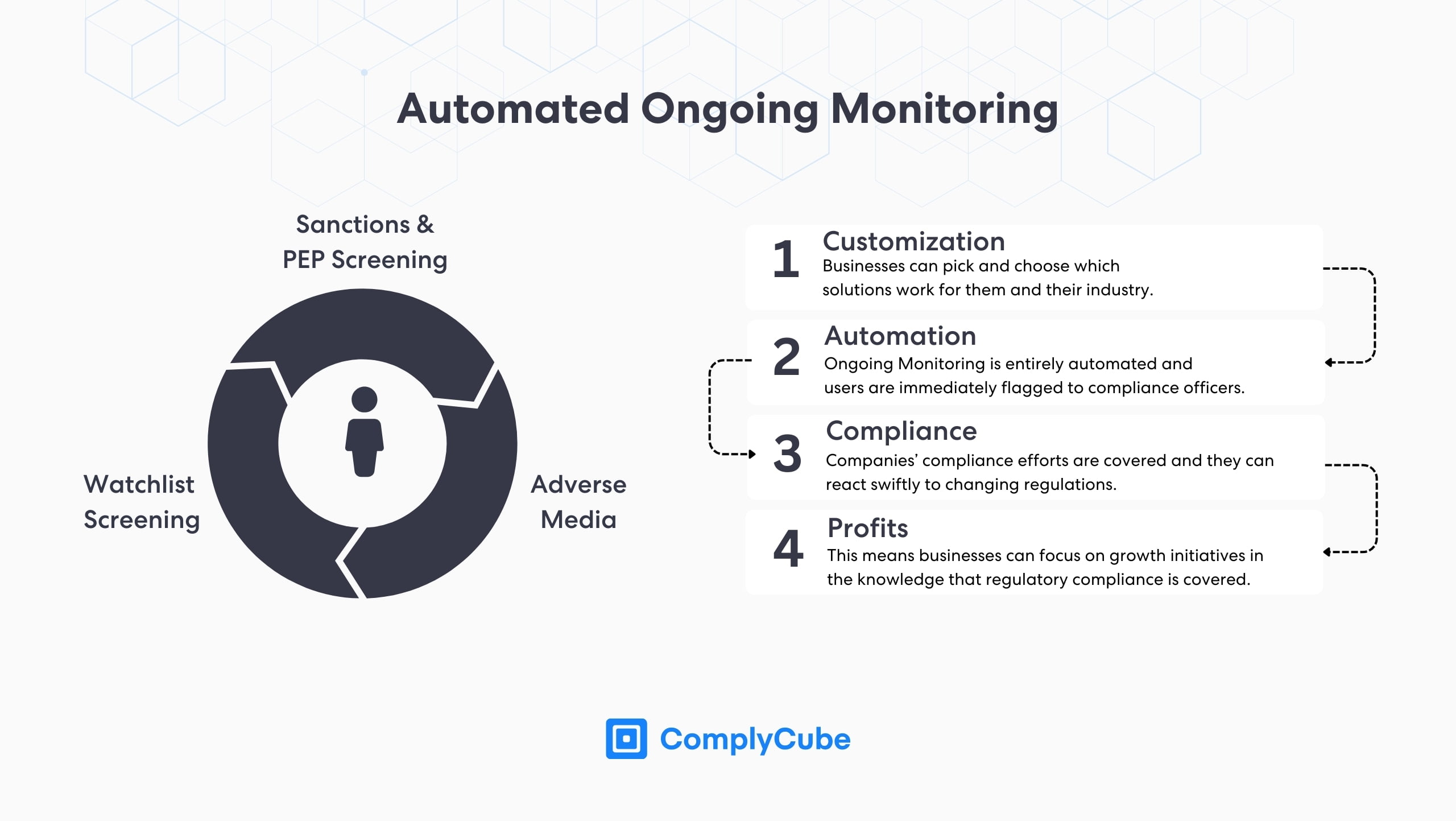
KYC providers offer clients fully automated workflows powered by state-of-the-art AI technologies. These customizable and automated services envelop wider customer due diligence and continuous monitoring processes. This includes services such as sanctions and politically exposed person screening, adverse media coverage, international watchlist screening as well as many others.
Sanctions and PEP Screening
As mentioned earlier, individuals that hold a position of authority, such as a political office, are a much greater risk to the financial system. This potential risk and wrongdoing could be due to their own corruption or blackmail. Regardless of this threat’s origins, it still needs stringent forewarning to institutions engaged in a relationship with them.
PEP Screening is a great risk assessment tool in the KYC and ongoing monitoring process; however, it naturally does not apply to every client. A much broader portion of clients will not have exposure to political or aristocratic influences, and therefore, PEP screening is just one of many continuous monitoring tools.
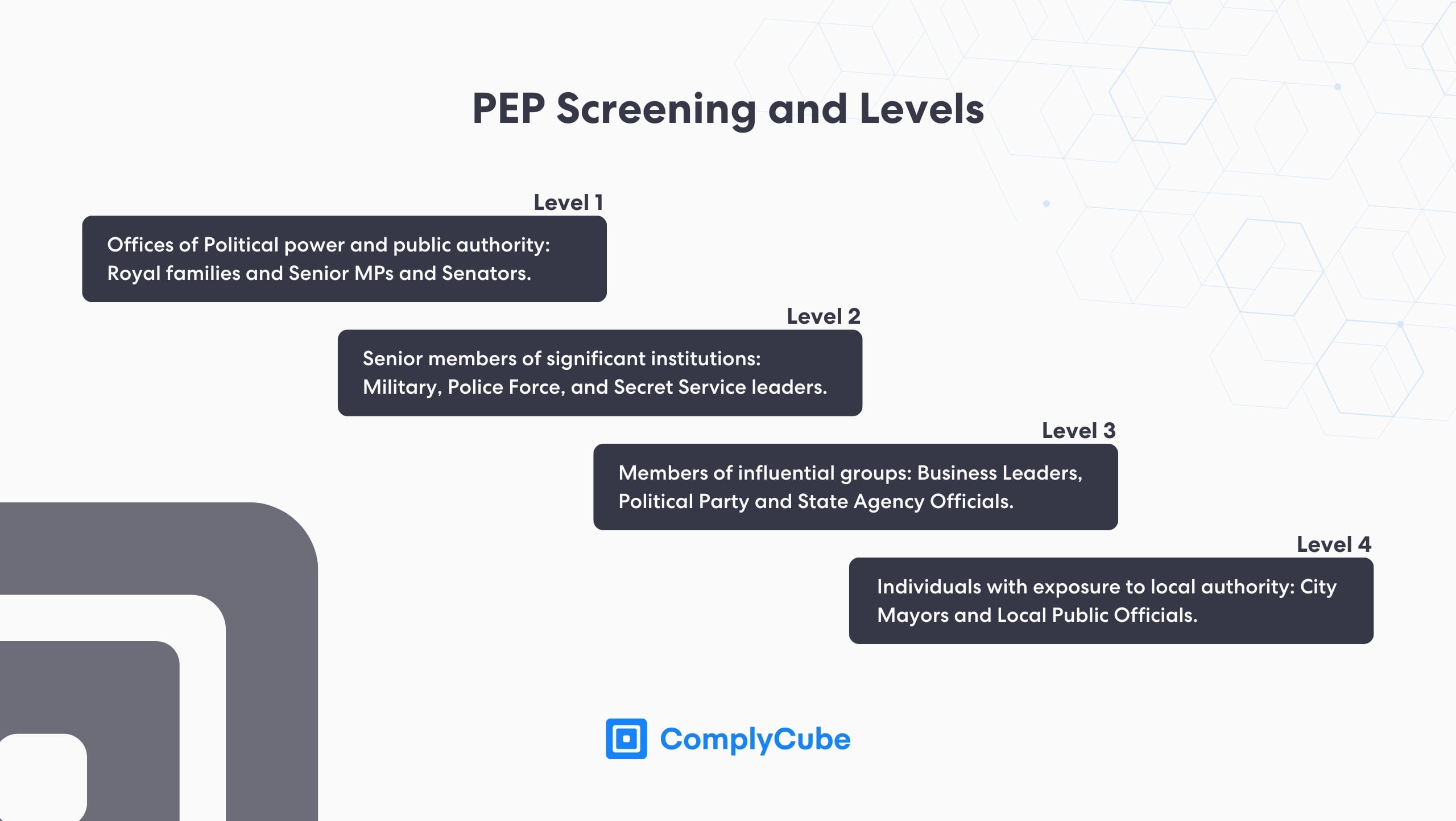
ComplyCube’s PEP Screening databases classify users across four levels of political exposure to determine their risk profile. Clients with lower PEP levels face higher risk. For instance, leading U.S. Senators wield far greater influence over national infrastructure than local civil servants. Thereby, giving them greater exposure and potential capacity for financial corruption.
Watchlist Screening
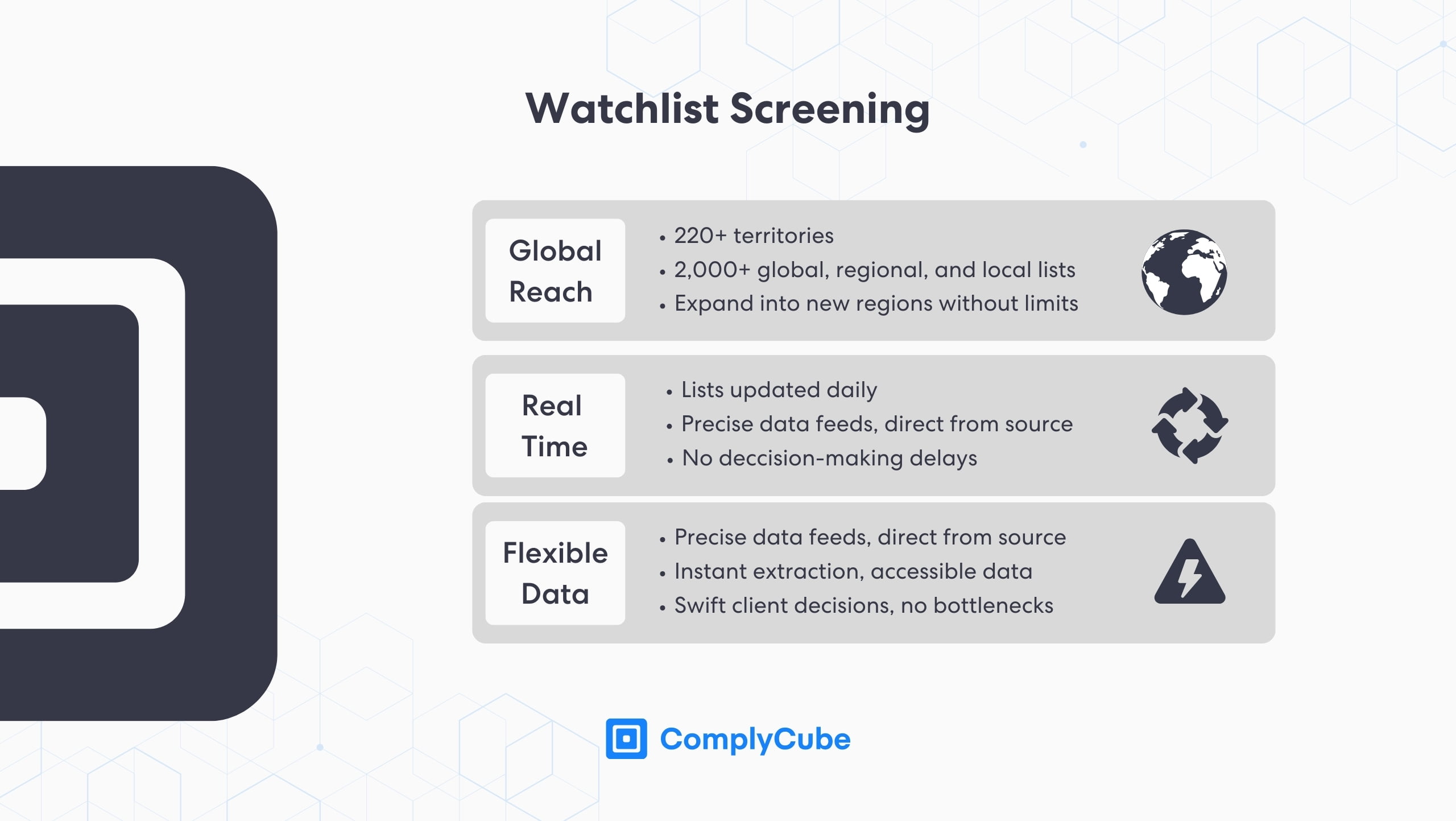
Combining automation with a broad range of international and local watchlists provides an all-encompassing solution to background checking. Once a company has the required information about a new user, it can generate an incredibly accurate understanding of whether that individual poses a potential risk.
Watchlist Screening is typically updated around the clock, with new profiles and data integrated every day, providing a comprehensive service. This ensures businesses that employ these services are in a dominant position when it comes to compliance and AML monitoring requirements.
Adverse Media
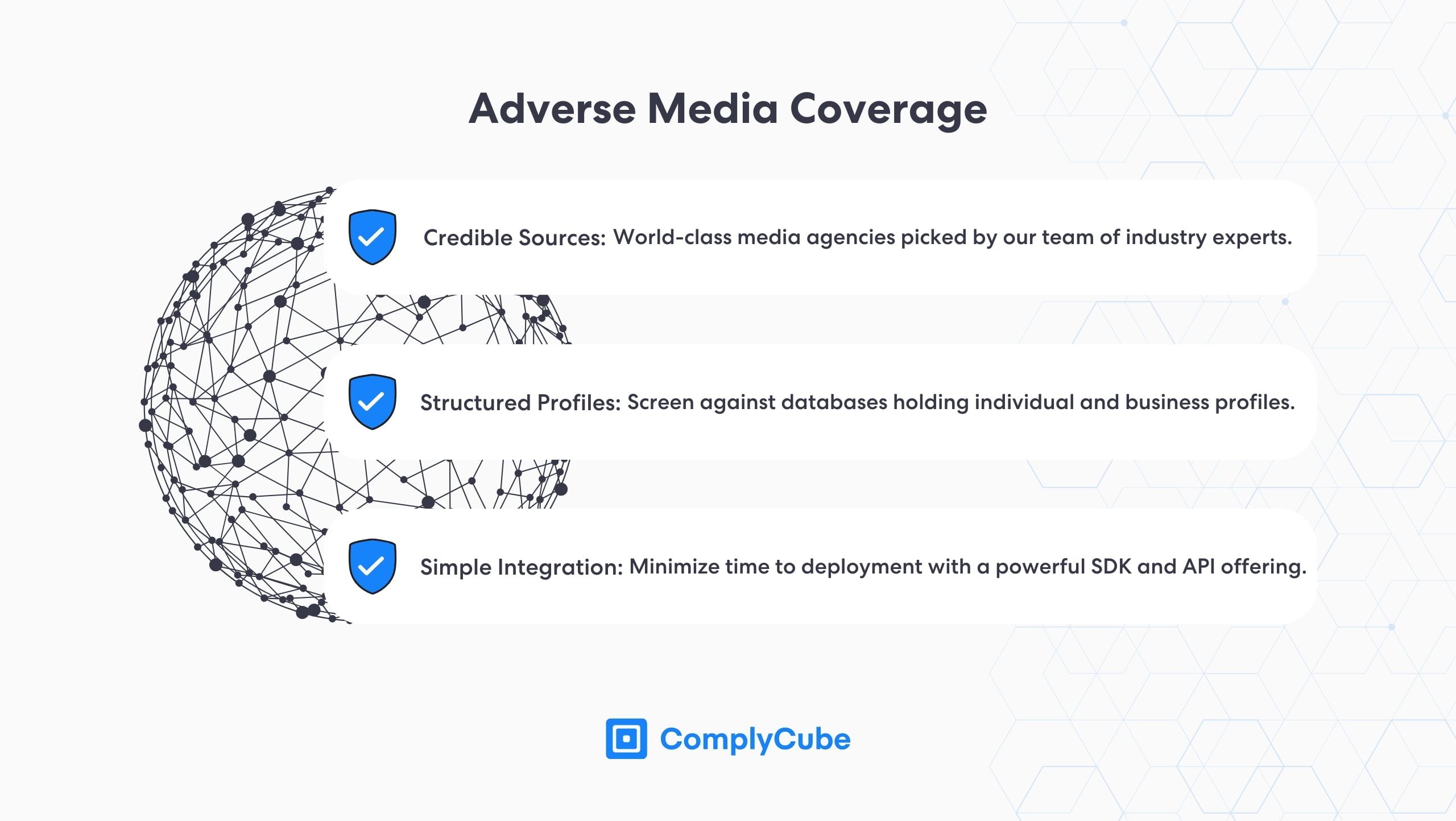
With this in mind, integrating media databases into risk profiling is a cornerstone of contemporary screening efforts. Leading ongoing monitoring processes rely on partnerships with thousands of media outlets to compile a comprehensive Adverse Media solution. As a result, this infrastructure empowers companies to conduct real-time screening of clients for negative press coverage in a wide array of malicious activities.
However, conducting Adverse Media checks manually would require an overwhelming amount of time and resources. The process would be completed sufficiently with an automated and AI-powered solution. This gives way to the surge in machine learning technologies that continue to shift the regulatory compliance industry.
Case Study: Block, Inc. and Missed Opportunities in Ongoing Monitoring
Problem
In 2025, Block, Inc. (owner of Cash App) was fined by US regulators for critical lapses in its Anti-Money Laundering (AML) compliance programme. The firm’s rapid international expansion outpaced its internal controls, particularly in relation to transaction monitoring and continuous due diligence. Investigations found that Block failed to implement effective ongoing monitoring, resulting in large volumes of unchecked activity that may have facilitated money laundering and other financial crimes.
Solution
Had Block deployed ComplyCube’s unified compliance platform, it would have implemented an intelligent ongoing monitoring system from the outset. This system would continuously screen customers in real time against global sanctions lists, Politically Exposed Person (PEP) databases, and thousands of adverse media sources. Using ComplyCube’s dynamic risk scoring and behavioural alerting features, Block’s compliance team would have been equipped to proactively identify and remediate threats before they escalated into regulatory breaches.
Outcome
With ComplyCube’s platform in place, Block’s ongoing monitoring process could have achieved:
- Faster detection of suspicious transactions and changes in customer risk
- Substantial reduction in false positives, enabling efficient use of compliance resources
- Automated risk alerts for real-time decision-making and escalation
- Comprehensive audit trails supporting defensible compliance actions
- Potential avoidance or reduction of penalties through demonstrable proactive controls
KYC and AML: What is the Difference?
For the most part, while these processes are linked, there are integral nuances that separate them. However, both strategies help fortify a business’s efforts in countering terrorism financing, monitoring suspicious activity, and adhering to regulatory requirements. Both rely on ongoing monitoring.
Know Your Customer (KYC)
Know Your Customer is the overarching process that underpins ongoing monitoring, Anti-Money Laundering (AML), and many other Identity Verification (IDV) processes that equip businesses with the tools to identify their customers.
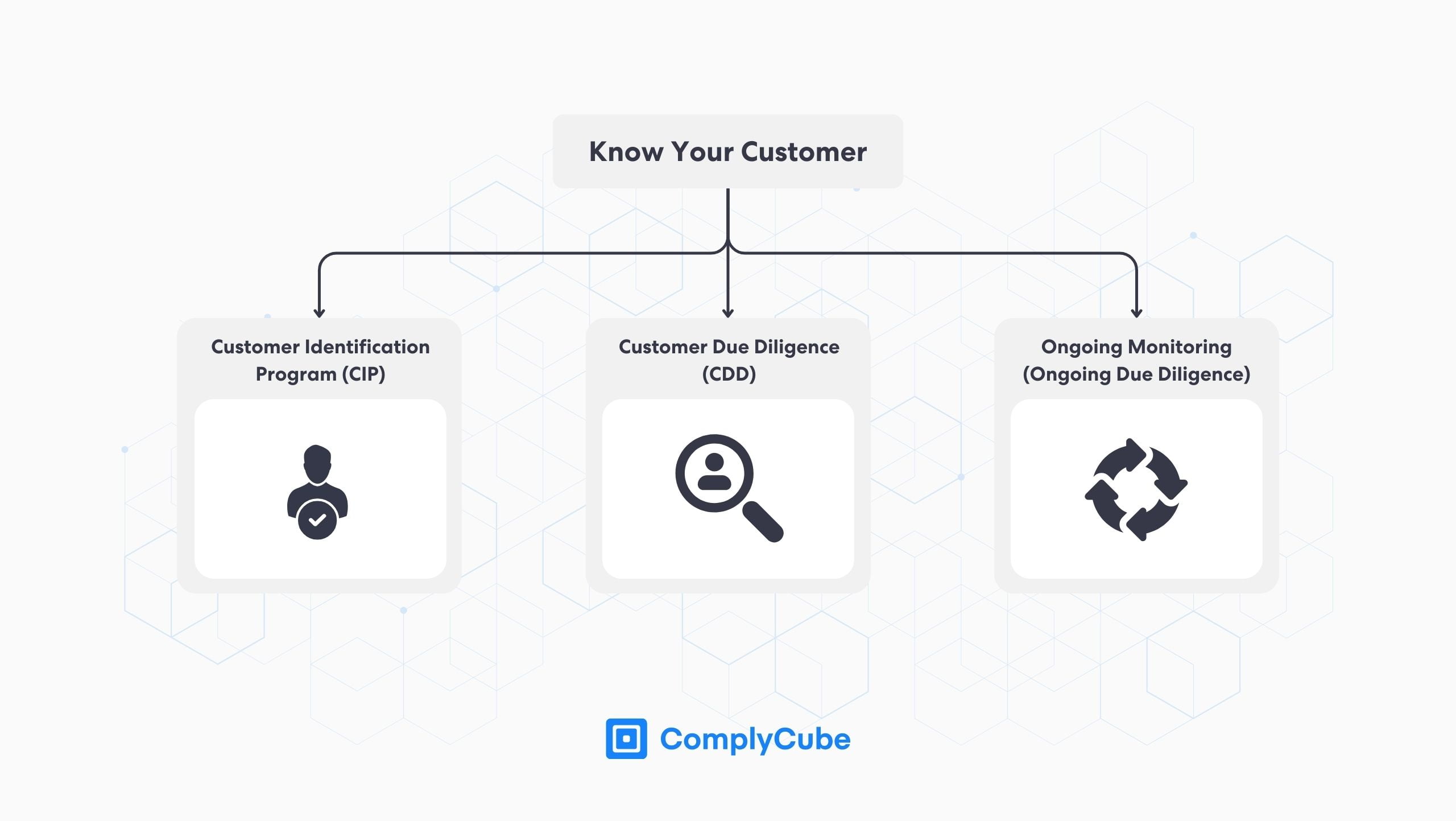
KYC is an extensive and dynamic process that institutions must carry out when establishing a new customer or business relationship. KYC consists of 3 essential procedures:
- Customer Identification Program (CIP)
- Customer Due Diligence (CDD)
- Ongoing monitoring
This means that KYC is not just a ‘one and done’ function. It is a process that requires fine-tuning and repeating over a user’s relationship with a business. For more detailed information on KYC Verification, read Global KYC Verification Process in 3 steps.
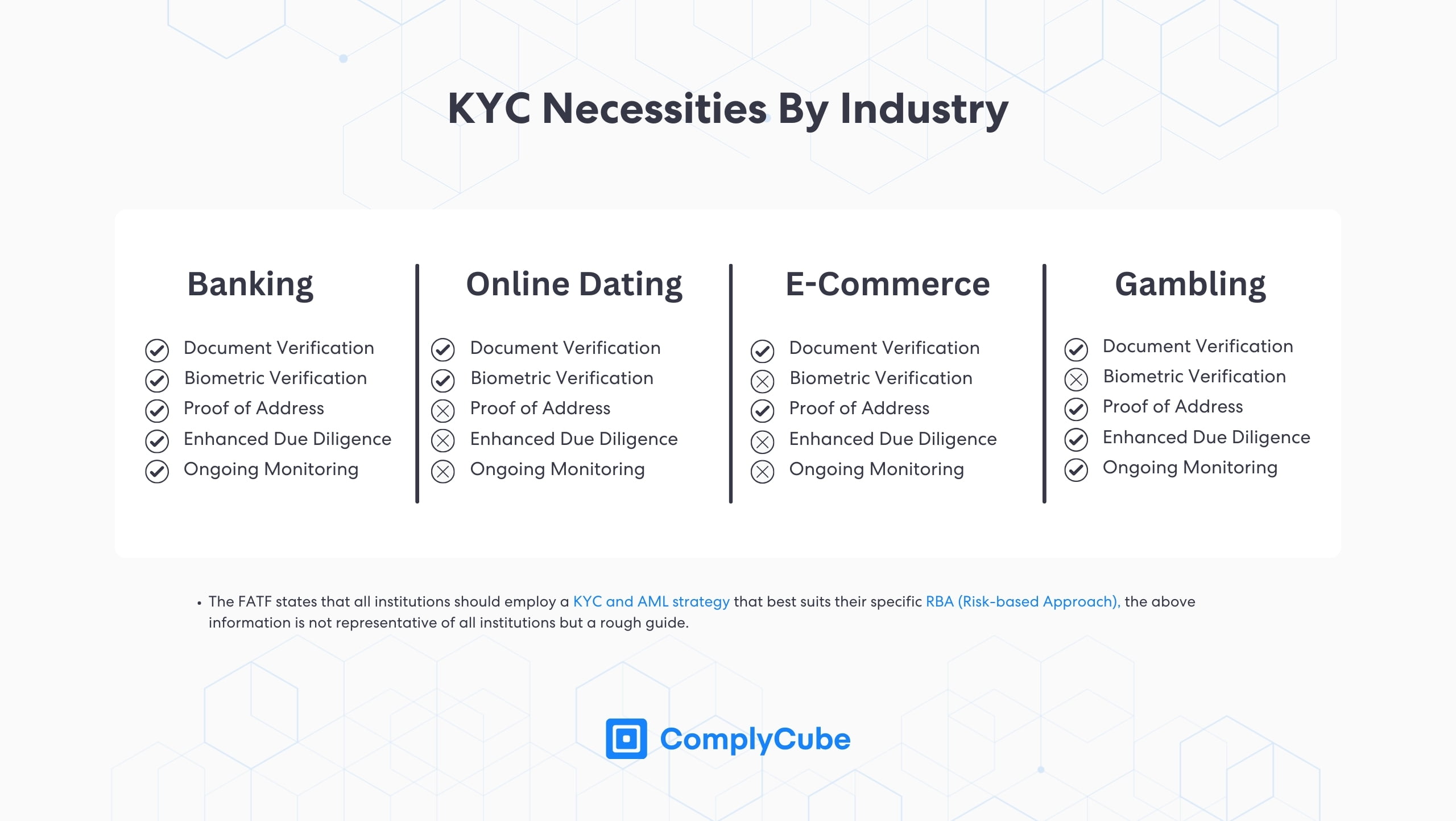
However, not all institutions must follow the same KYC procedure, and processes can differ vastly from one company to the next. This is because the regulatory requirements companies must meet from one sector to another are also vastly different. For example:
- A bank must comprehensively identify potential risks its clients might bring. Risk assessments in the banking industry are the most laborious because banks have direct access to the financial system. This makes them the most likely target for money laundering and other financial crimes and thus have the tightest AML regulations.
- An E-commerce site selling stationary would not have the same arduous regulatory requirements as the potential risks associated with the company’s operation are far less severe. For this reason, the company’s KYC strategy would likely be limited to a more basic procedure as the same level of identity assurance and customer information is not required.
This is known as a Risk-Based Approach (RBA). Financial Crimes Enforcement Network (FinCEN) recognizes that every industry, and every institution, has its own unique set of operational risks. For this reason, there is no one-size-fits-all methodology for Know Your Customer verification.
Anti-Money Laundering (AML)
On the other hand, Anti-Money Laundering is a term that encompasses the policies in place to monitor, deter, and ultimately prevent any activity relating to money laundering. This involves ongoing AML monitoring as well as multiple other strategies.
Continuous AML monitoring is fundamental in preventing financial crime, as an individual’s circumstances are always subject to change. These changes could include:
- A new job or position that brings certain authorities or exposure to financial ecosystems.
- Blackmail of any kind which makes someone do things they would never usually do.
- A sudden loss of financial status renders an individual desperate for money.
To avoid non-compliance and reputational damage in their field, businesses must perform continuous AML monitoring as a perpetual risk management tool in their Anti-Money Laundering strategy. For more information on automated AML monitoring and KYC processes, read The Importance of Automated KYC Verification.
How do KYC Solutions Improve Ongoing Monitoring?
KYC solutions, or eKYC services, are becoming an industry standard for continuous monitoring and related AML pain points. Typically, these providers automate an entire workflow that is adapted and customized to a client’s bespoke requirements.
Automation, flexibility, and customization make ongoing monitoring and other KYC processes highly streamlined. ComplyCube provides these solutions from the comfort of an all-in-one, user-friendly platform for compliance officers to work with.
The company’s KYC and AML portal is one of its largest value propositions and serves as the hub for its suite of IDV and due diligence procedures. All customer data is readily available and sorted into risk profiles, the thresholds of which are also customizable to increase operational efficiency based on specific corporate RBAs. This makes the job of adhering to tough regulations, such as the FATF AML/CTF Standards, far easier to accomplish.
Key Takeaways
- Ongoing AML monitoring is an essential, non-negotiable part of KYC and AML strategies.
- Automated tools significantly improve detection of suspicious activity and changes in risk.
- Risk-based approaches ensure appropriate monitoring intensity per sector and customer type
- Watchlist, sanctions, PEP, and adverse media screenings form the core of continuous due diligence.
- ComplyCube’s unified platform simplifies continuous compliance across geographies and sectors.
How to Choose a KYC Provider for Ongoing Monitoring
In summary, automated ongoing monitoring processes helps businesses improve operational efficiency, reduce false positives, and cut costs. With the help of state-of-the-art artificial intelligence, eKYC providers bridge the gap between regulation and operation.
If your business needs to conduct ongoing monitoring process as a part of its KYC strategy, then it might be time to start investigating KYC services. ComplyCube provides a suite of automated AML, KYC, and IDV solutions wrapped up in one user-friendly platform.
The AI-powered platform is an industry leader based on the breadth of scope of operations, a good metric for grading KYC solution providers. ComplyCube is licensed in over 220 regions and facilitates over 13,000 documents, enabling it to scale with any company’s growth demands.
So, whether you are looking for a partner to perform ongoing monitoring or want to find out more about Know Your Customer solutions, ComplyCube is a good place to start. Get in touch with one of their AML, KYC, and IDV specialists today.
Frequently Asked Questions About Ongoing Monitoring
What are the core components of an effective continuous monitoring strategy?
An effective ongoing monitoring process includes ongoing sanctions screening, watchlist checks, PEP tracking, and adverse media detection. As a result, these tools work together to surface new risk signals and ensure that customer profiles remain current. Leading AML platforms use automation and AI to run these processes in real time.
Why is continuous monitoring critical in effective AML programs?
Continuous monitoring is vital because customer risk is dynamic. Individuals can gain political exposure, face legal proceedings, or be subject to blackmail or coercion. Without continuous AML monitoring, firms may overlook these developments, exposing themselves to compliance breaches, fines, and reputational harm.
Which sectors are legally required to implement ongoing monitoring controls?
Ongoing monitoring is mandated for all entities regulated under AML/CTF frameworks. This includes banks, fintechs, crypto platforms, insurers, remittance providers, and other financial institutions, as well as regulated professions such as lawyers, accountants, and real estate agents.
How does a risk-based approach influence AML monitoring requirements?
A risk-based approach tailors monitoring intensity based on customer profile, geography, transaction behaviour, and industry sector. Higher-risk customers undergo more frequent reviews, while lower-risk ones may be monitored less frequently, striking a balance between compliance and operational efficiency.
How does ComplyCube support end-to-end ongoing monitoring and AML compliance?
ComplyCube offers a unified compliance platform that automates ongoing monitoring processes using AI-powered tools for real-time sanctions, PEP, and adverse media screening. Its configurable workflows, dynamic risk scoring, and audit-ready reports help businesses stay compliant while reducing false positives and manual effort.