TL;DR: Mobility as a Service (MaaS) demands robust driver screening and driver’s license check to ensure safety amid rapid growth. ComplyCube’s automated verifications with DVLA and AAMVA combat fraud, enabling secure scaling and passenger trust.
Quick delivery and ride-hailing platforms like Uber deliver unmatched convenience that now defines modern life, bringing all kinds of goods and services straight to our doorsteps with just one tap. However, we often overlook what powers these comforts: a thriving Mobility as a Service (MaaS) sector demanding rigorous safety and security upgrades to fuel its explosive growth.
Of course, the mobility sector is no different. It has become drastically different since the COVID-19 pandemic. A time at which the delivery of food and goods became essential. Consumer behaviors continued to migrate towards a very digital path. It became a path of convenience, as today, we can hail a taxi or order our weekly shop with just a few taps. In light of this, businesses must put in place the necessary measures to safeguard these scaling operations. It includes important security measures such as driver screening and driver’s license verification.
Growth of the Mobility as a Service Sector
As an illustration, McKinsey’s 2023 quarterly report on the future of mobility highlighted the sector as one of the most innovative. It showed some drastic growth on the horizon. The report looks forward to forecasts for 2035, outlining the industry’s current growth trend. It states,
“Mobility as a service is one of the hottest sectors. Start-ups and traditional OEMs constantly developing new technologies and transportation options.”
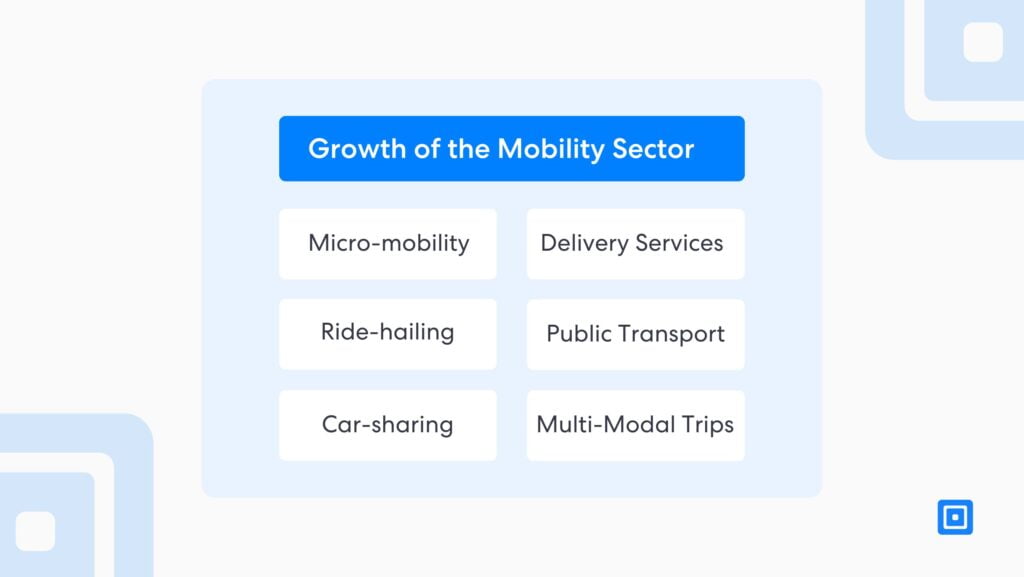
With this in mind, some of the key growing trends in mobility include:
Micro-mobility solutions (e-scooters and e-bikes): Micro-mobility solutions are certainly a great example of innovation within the sector, with businesses such as Bird and Lime leading the charge in electric scooter sharing. eBikes have also gained popularity, with VanMoof and Cowboy merging electric bikes with smart technology.
The global market value of micro-mobility was valued at approximately $3.4 billion in 2022 and is projected to reach $6.1 billion by 2027, growing at a compound annual growth rate (CAGR) of 12.5% from 2022 to 2027.
Ride-hailing and ride-sharing services: Businesses like Uber and Lyft have led the growth of the ride-hailing service market, with people having become heavily reliant on these services in their daily lives. In just 2023, Uber generated $37.2 billion in revenue, an impressive 16% year-on-year increase. The demand for time-saving, convenient transportation and the ever-rising cost of owning a vehicle encourage the growth of these services.
The global ridesharing market is estimated at USD 47.62 billion in 2024 and is expected to reach $89.99 billion by 2029.
Car-sharing services: Car-sharing services like Zipcar and Car2Go are also popular alternatives to owning a car, as they provide flexible vehicle access. IMARC Group expects the market to reach US $23.3 billion by 2032, exhibiting a growth rate (CAGR) of 12.3% from 2024 to 2032.
The Regulatory Landscape
Consequently, as the MaaS industry continues to develop and evolve, so must the regulations in place. It upholds safety and security standards. Driver verification is needed to ensure the safety of passengers and other road users and to comply with regulations. For example, in the UK, the mobility sector faces substantial regulations to help safeguard passengers, with Transport for London (TFL) requiring thorough background screenings for all taxi drivers within the city.
Similarly, regulations exist in the US. This includes the Federal Motor Carrier Safety Administration (FMCSA), which regulates the trucking industry and checks driver qualifications and background checks. On the other hand, the Transportation Network Company (TNC) mandates different regulations in each state to dictate specific rules for ride-sharing companies such as Uber or Lyft. This also includes background checks and vehicle inspections. Many more national and international regulatory standards exist for the mobility industry, which must be met to ensure high safety standards.
Uber Case Study
For instance, in 2015, a BBC news article highlighted that Uber’s driver background checks were simply “not good enough”. The MaaS giant was accused of not doing their part to verify these drivers and ensure the safety of passengers. The piece echoes the words of George Gascon, district attorney in San Fransisco, stating,
Uber’s screening only covered the last seven years and omitted biometric checks that would uncover people who had falsified their identity to avoid being spotted by screening.
As a result, this piece revealed that many of Uber’s drivers did have criminal backgrounds, with several having criminal backgrounds of substantial offenses, which were not flagged in the driver verification process. Gascon also noted that Uber’s data relied upon was not comprehensive.
The Future Of Mobility as a Service is Verified
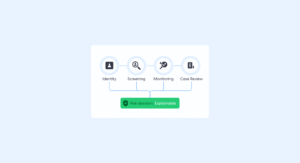
For this reason, driver verification is an incredibly important next step in the future of Mobility-as-a-Service. So, verification needs to be streamlined with accurate, efficient checks, such as:
- Document Checks: Verifying the validity of their driving license and any other essential government-issued documentation.
- Biometric Identity Checks: These checks ensure that the driver is who they claim to be. They use a biometric facial recognition engine to examine biometric data from a provided selfie and compare it with government-issued documentation.
- DBS Checks: Running a background check on whether drivers have committed criminal offenses.
- Agency Checks: The competency of drivers can be corroborated with intergartions to the DVLA (UK) and AAMVA (US) integration. This provides critical data points on drivers.
Key Takeaways
- MaaS integrates ride-hailing, deliveries, and micro-mobility for urban growth.
- Driver screening prevents fraud and underage driving in MaaS onboarding.
- Driver’s license check via DVLA and AAMVA verifies validity and points.
- Driver screening boosts safety and efficiency in MaaS ecosystems.
- ComplyCube automates verification for MaaS compliance and trust.
Driver Verification and Mobility as a Service Solutions with ComplyCube
In summary, ComplyCube gives market-leading driver verification checks. On the whole, it includes integration with the DVLA in the United Kingdom and AAMVA in the United States. In fact, it allows for extremely thorough identity verification, document validation, and background checks on drivers.
Altogether, their comprehensive driver’s license check and verification for the Mobility as a Service (MaaS) sector feature integrations with the Driver and Vehicle Licensing Agency (DVLA) in the UK and with the American Association of Motor Vehicle Administrators (AAMVA) in the US.
Get in touch with one of their compliance experts for more information on driver’s license checks.
Frequently Asked Questions
What is Mobility as a Service (MaaS)?
Mobility as a Service (MaaS) integrates ride-hailing, public transport, car-sharing, and micro-mobility into a single seamless platform for urban commuters. As a result, it eliminates the need for personal vehicles by offering on-demand access via apps, optimizing routes and reducing congestion.
Why is driver screening essential for MaaS platforms?
Driver screening is critical for MaaS platforms to verify identities, criminal records, and qualifications before onboarding. It prevents fraud, underage driving, and safety risks in high-volume driver networks. Robust processes build passenger trust and ensure regulatory compliance across operations.
How does a risk-based approach work for AML in finance?
A risk-based approach assesses customers or entities according to their risk level. High-risk individuals must undergo stringent checks, including sanctions and politically exposed person screening. This approach enables financial institutions to focus their resources where risks are highest, while allowing low-risk users to onboard more swiftly.
How does a driver’s license check enhance MaaS safety?
A driver’s license check confirms validity, expiry dates, penalty points, and restrictions in real-time for MaaS drivers. It mitigate risks like unlicensed or disqualified individuals accessing platforms. This verification step enhances overall road safety and operational reliability.
How does ComplyCube support MaaS driver verification?
ComplyCube provides automated driver screening and driver’s license checks integrated with global authorities like DVLA and AAMVA. Its’ AI-driven platform ensures fast, scalable verification for MaaS providers worldwide. This reduces fraud risk while enabling compliant growth and user trust.