TL;DR: KYC API pricing can be a key concern when evaluating identity verification vendors. As regulatory scrutiny heightens, businesses need to balance cost management with compliance precision. This guide explores the pricing models, cost variables, and investment decisions affecting the KYC API market.
Understanding KYC API Pricing Models
Selecting an affordable KYC API is no longer just about finding the lowest price; it is about finding scalability with compliance without compromising on verification quality. KYC API pricing structures vary considerably between vendors based on the differences in architecture, product maturity, and market focus. Model choice can have a substantial impact on compliance cost and the scalability of the business.
1. Per-Call Pricing
It entails charging a fixed amount per verification request, such as document verification, biometric verification, or AML screening. It is easy and uncomplicated but can be expensive for high-volume operations.
2. Tiered Pricing
Vendors offer levels of pricing based on usage levels. As the number of verifications increases, the per-call cost decreases. The model promotes volume but creates price cliffs when volume fluctuates wildly.
3. Volume-Based Subscriptions
Customers pre-pay for a bundle of verifications on a monthly or annual basis. It provides cost predictability and bulk discounts. Unused verifications may not roll over, so there can be waste in case of wrong estimates.
4. Flat-Rate or Custom Bundles
Some providers offer flat monthly rates or custom packages combining multiple services such as IDV, biometric liveness, and AML filtering. That model best suits mature compliance companies that want the flexibility and ease of use.
Which Is Best For Your Business?
The ideal API Pricing model depends on business size, speed of onboarding, and compliance risk exposure. Startups may like the ease of pay-as-you-go, while banks or large fintech players are benefited by subscription predictability. For more on KYC pricing, read “How Much Does KYC Cost?”
Key Cost Drivers Behind KYC API Pricing
While the pricing models provide the structure, the real cost of KYC APIs is determined by a chain of underlying technical and operational drivers. Understanding these drivers enables organisations to budget correctly and avoid hidden costs.
1. Geographic and Document Coverage
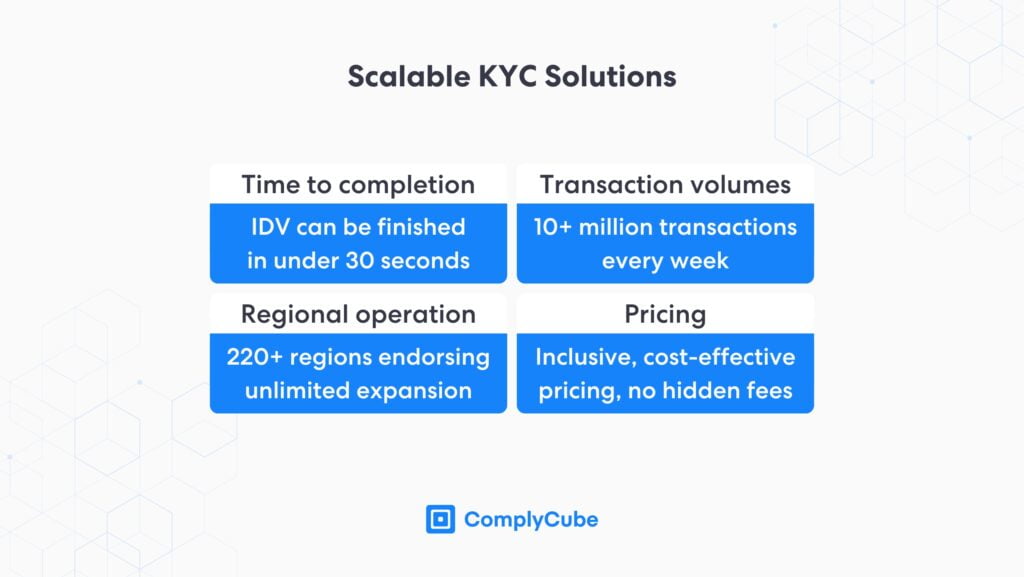
Global operations require KYC solutions that can verify ID documents in several hundred countries. The wider the coverage, the more investment in document templates, OCR models, and mapping compliance rules, all of which affect costs.
2. Verification Layer Complexity
More advanced solutions past simple ID verification, such as adding biometric liveness, AML screening, and fraud detection, have a higher cost of operations and infrastructure. Multilayered checks enhance reliability while affecting pricing.
3. Accuracy and False Positive Handling
Solution vendors that invest in low false-positive rates, manual fallback processes, and continuous model training return better-quality results. This raises the cost of operations but reduces long-term risk to clients.
4. Usage Patterns and Infrastructure Load
Extended onboarding periods might cause spikes in volume. APIs must handle high concurrency, geographic load balancing, and failover processes, all with enterprise-class price plans.
Total Cost of Ownership (TCO) Implications
In determining KYC API cost, with one eye on per-call pricing only telling half the story, actual budgeting must take into consideration the Total Cost of Ownership (TCO), such as integration, scalability, and ongoing operational overheads.
1. Integration and Setup Costs
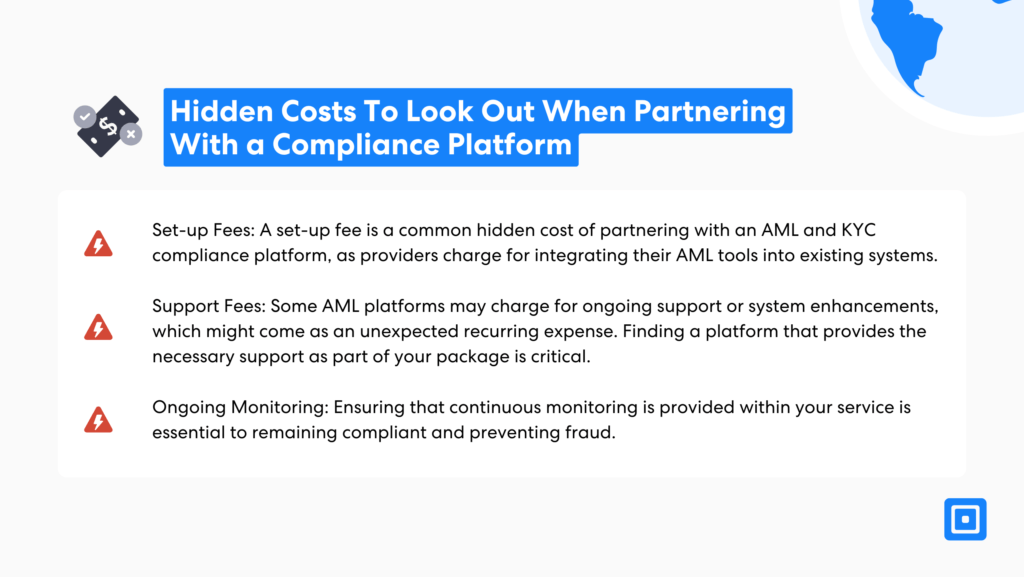
Initial configuration charges vary based on the architecture of the vendor. REST APIs with robust SDKs and sandbox environments reduce time-to-market and developer frustration. But there are vendors who purchase setup support, test materials, or specialist technical support at additional costs.
2. Maintenance and Compliance Updates
Continuous maintenance, from bug fixes, new doc templates, and compliance upgrades, can be bundled, but perhaps not. Sneaky costs can arise if consumers are charged for every update or minor tweak.
3. Automation and No-Code Workflows
No-code orchestration platforms reduce the reliance on engineering teams. These platforms enable business users to build and edit compliance flows cost-effectively, decreasing operational costs in the long term.
4. Support, SLA, and Monitoring
Premium SLAs, 24/7 support, and real-time monitoring dashboards are possible add-ons. They are essential for high-risk sectors but need to be factored into the overall pricing strategy.
Pricing Benchmarks and What to Expect
KYC API pricing is fuelled by evolving regulatory needs, advanced fraud, and the evolution of AI-powered verification. While actual prices vary on the vendor and the setup, industry benchmarks serve as a place to start comparing.
1. Typical Price Ranges
- ID Document Verification: $0.10 to $1.50 per check, depending on the type of document and region.
- Biometric Liveness & Face Match: $0.25 to $2.00 per session.
- AML and Watchlist Screening: $0.05 to $0.80 per search.
Bundling (combining IDV, biometric, and AML checks) can offer efficiency, especially whenboarding thousands of customers monthly.
2. Regional Price Variations
Pricing is based on regional risk exposure and document diversity. For example:
US and Canada: Reasonable prices due to coverage by digital ID and relatively homogenous document structure.
EU and UK: Higher compliance mandates (e.g., GDPR, DIATF) may increase verification costs.
APAC and LATAM: Prices are highly volatile due to document heterogeneity and region-level verification infrastructure.
3. Impact of Regulation and Risk
Categories more vulnerable to money laundering, such as crypto or fintech, generally require more screening, which increases average cost. Additionally, changes to regulation can influence vendor cost. For example, the Financial Action Task Force (FATF) guidance on digital identity expects firms to assess the level of assurance offered by a platform, rather than selecting low-cost technology that merely confirms an identity document exist.
As such, organizations will need stronger biometric evidence, reliable data sources, and clear audit trails, which can dramatically impact KYC cost. For more on regulatory requirements, read “Understanding KYC Requirements UK.”
Case Study: Reduce Verification Costs with a Scalable KYC Solution
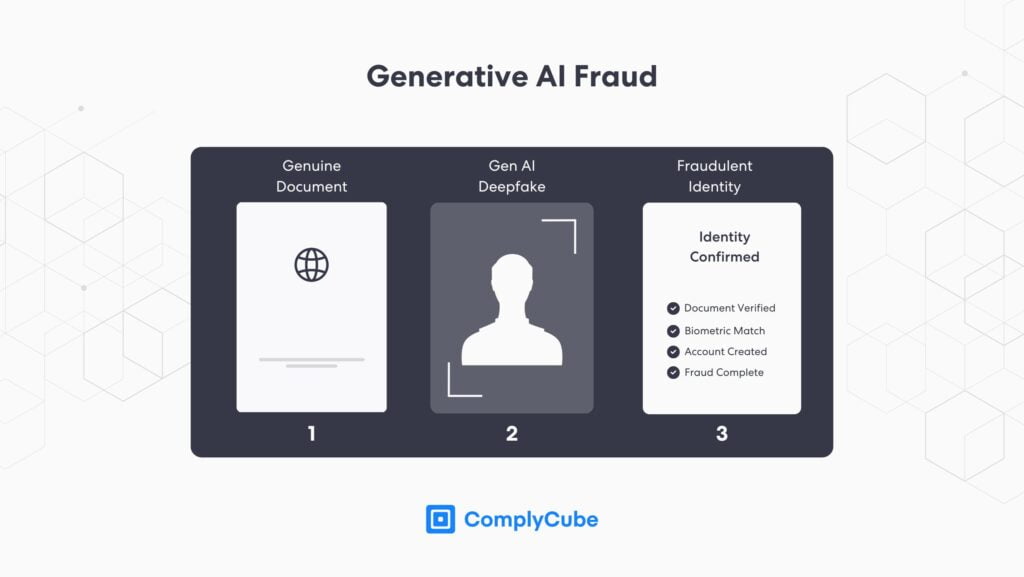
With the rise of AI, tampered documents, including false driving licenses has seen a steep increase. For Turo, the leading car-sharing company in the UK, this meant security, scalability and trust are more important than ever for customer and driver safety.
The Need for Scalable, Customizable KYC
Turo’s partnership with ComplyCube presented the quickest way for Turo to achieve secure end-to-end identity verification without unnecessary friction in its operations or driver journeys. ComplyCube’s automated KYC platform enhanced onboarding while lowering costs.
Outcomes
Turo significantly reduced verification costs by 34% through automation, enabling a higher focus on more important growth initiatives.
The company was able to enhance its rider and driver conversion by 15%, boosting frictionless user journeys and trust.
- Turo reduced its false positive and customer support contact rate by 36%, enhancing onboarding for legitimate users.
Measuring ROI Beyond Price
1. Fraud Mitigation and Onboarding Precision
High-precision KYC APIs abolish abandonment, false positives, and manual verification during onboarding. These improvements accelerate revenue growth, enhance customer satisfaction, and protect against reputational harm from fraudulent accounts.
2. Regulatory Risk Mitigation
Automation of compliance reduces the risk of regulatory breaches and fines. Real-time screening for PEP and sanctions, logging of audits, and liveness detection all contribute to robust compliance that finds favor with regulators.
3. Operational Efficiency
Automated orchestration and passive liveness detection solutions lower user friction. It results in higher completion rates and lower support intervention, improving scalability and customer satisfaction.
4. Strategic Growth Enablement
Flexible KYC APIs for emerging markets, languages, and ID types make it possible for organisations to grow without re-negotiating compliance processes. ROI in such a case is through faster market entry and localisation.
Key Takeaways
- Common KYC API pricing models include per-call, tiered, volume-based subscription, and flat-rate pricing.
- Factors influencing KYC API cost are geographic coverage, verification complexity, false positive accuracy, and usage patterns.
- Calculating the total cost of ownership provides a holistic understanding of the total KYC costs, including setup fees.
- Free trials and modular pricing support testing before committing, which is ideal for balancing compliance speed and budget.
- Businesses with high volume can expect lower costs per verification through automated KYC platforms such as ComplyCube.
How ComplyCube Optimizes KYC API Pricing
ComplyCube’s KYC API is priced on the principles of transparency, adaptability, and performance. It enables customers to scale without unexpected expenses or compliance compromises.
For more information on how to fortify our business with global Know Your Customer solutions, get in touch with one of our compliance experts.
Frequently Asked Questions
What are the main KYC API pricing models?
Main KYC API pricing models include pay-per-check, where a fee is paid for each complete KYC verification, volume-based subscription that scales discounts by verification volume, and tiered pricing, where pricing is based on usage level.
How much does KYC API pricing cost per verification?
Typical KYC API cost for document verification ranges from $0.10 to $1.50 per check, biometric liveness and face match from $0.25 to $2.00 per session, and AML and watchlist screening from $0.05 to $0.80 per search. However, these costs can vary due to country coverage and volume required.
What is the total cost of ownership of KYC solutions?
The total cost of ownership of KYC services includes integration, scalability, and ongoing operational costs. Initial configuration charges, such as setup cost, technical specialist, and integration support that are hidden, can cause frustration and overspend. Additionally, maintenance and monitoring fees can quickly raise fees.
What affects the cost of KYC API pricing?
The cost of KYC API pricing is influenced by usage patterns, verification complexity, and false positive accuracy. Moreover, geography coverage, where a business requires verification in multiple territories, can scale the KYC API cost.
How much does ComplyCube’s API pricing cost?
ComplyCube provides flexible, scalable KYC API pricing models that reduce costs for high-volume teams. Its automated document verification ranges from $0.75 to $1.05 per check, and the liveness check from $0.20 to $0.35 per check. ComplyCube provides zero setup fees and transparent pricing for high-growth firms.