TL;DR: A business risk score is a quantifying number assigned to a business risk assessment. However, companies today require more than static scoring. Business risk monitoring needs to be continuous, data-driven, and adaptive. It reduces exposure, improves risk management, and helps companies gain an edge over their competitors.
What is a Business Risk Score?
Business risk scores help companies answer one simple but critical question. They look at how risky a business, customer, or partner is. In today’s environment, this question becomes harder to answer because risks are not all in one place. They come from financial pressures, regulatory changes, and operational gaps. Even the World Economic Forum’s Global Risk Reports show how these risks are becoming much more connected and happening more often.
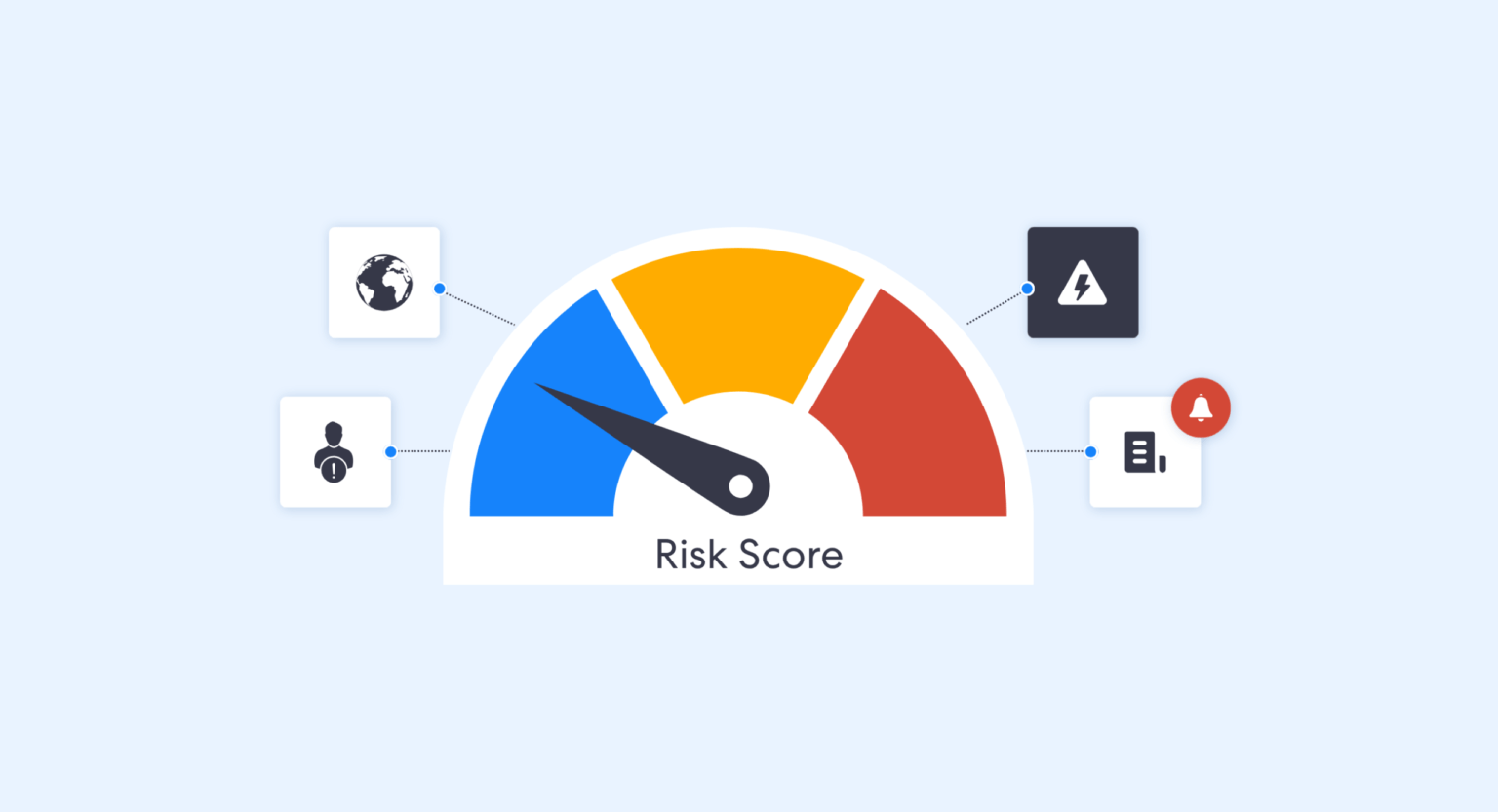
At its core, risk scoring relies on two key ideas. Business risk assessments look at likelihood and impact. Teams assess how likely an event is to occur and how severe the consequences would be. They then combine these factors to produce a risk score. This simple structure helps teams compare very different risks in a consistent way.
In practice, business risk assessments are rarely this straightforward. Teams often assign weights to key risk factors based on their importance before calculating a combined score. This allows organisations to focus on what matters most to their business strategy and risk appetite. They may also use two types of scores: internal risk scores built by their own teams, and external risk scores provided by third parties.
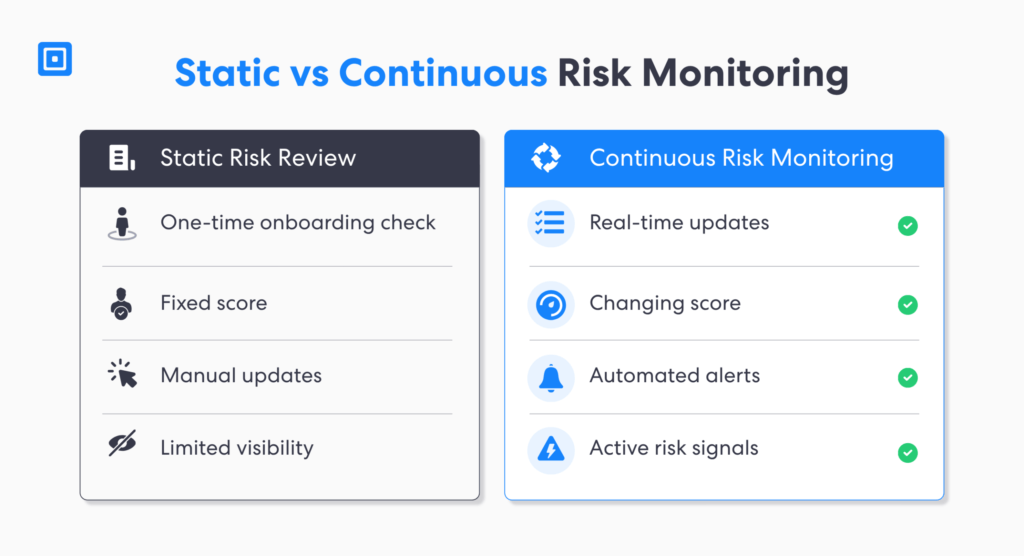
Therefore, the true value of a business risk score comes into play when it is treated as a real-time signal. Low-risk today may become high-risk tomorrow due to new business leaders, unusual behavior, or financial stress. This ensures regulatory compliance and business continuity. Risk scoring is essential because of its ability to spot risk and respond fast. This is what sets resilient organizations apart from vulnerable ones.
Why Business Risk Score Matters
A business risk score needs to be actionable. It should be able to move organizations from understanding their risks to actively preparing for them. According to PWC’s Global Risk survey, over 75% of organizations say they have experienced disruption from risks that were either underestimated or not foreseen. The structured assessment that risk scoring provides closes that gap by being prepared.
However, the range of risks that businesses encounter on a day-to-day basis continues to grow. Where certain strategic decisions can bring about long-term exposures, day-to-day carries their own individual vulnerabilities. Compliance expectations are only increasing, especially in regulated industries such as financial institutions.
As a result, conducting a thorough business risk analysis helps companies map these risks much earlier. It helps them understand how they could impact their organization’s objectives and support informed decisions. The Organization for Economic Co-Operation and Development (OECD) highlights that complexity in regulations has become more significant in the past decade. This grows the burden on organizations to keep risk monitoring important. The risk assessment process can no longer be static or periodic.
A strong business risk assessment helps organizations prioritize security risk mitigation. It allocates resources much more effectively and strengthens overall resilience. More importantly, it supports better decision-making at every team level. Businesses that invest in due diligence, specifically structured ongoing risk assessment, are in a much better position to change fast, lower risk exposure, and protect long-term performance.
Key Risk Indicators and Early Detection
Understanding why a business risk score matters is one thing, but knowing when that risk profile is starting to change is much more valuable. This is why key risk indicators (KRIs) act as early signals that show whether risk levels are increasing, decreasing, or changing in new ways. In a recent report by EY, 84% of executives said better signals around risk could impact a company’s operations and are necessary in achieving their strategic objectives.
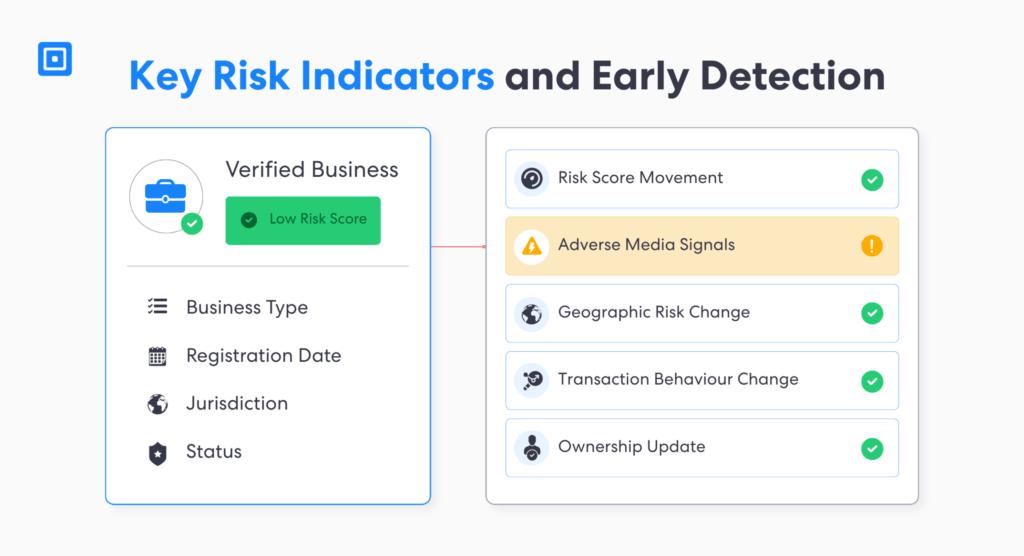
Risks build over time through small, often overlooked signals. They can be found in an organization’s operations across multiple departments. This can be found by documenting changes in behavior, unusual patterns in data, or subtle shifts in financial or operational performance. The Association of Certified Fraud Examiners (ACFE) found that organizations with continuous monitoring detect fraud up to 50% faster than relying on traditional methods, significantly reducing financial damage.
Teams create effective key risk indicators and a strong continuous business risk monitoring process by defining clear thresholds. They must link each indicator to specific risk factors and ensure that any change triggers the right response. For example, transaction anomalies, new adverse media, or changes in ownership structure should directly impact the risk score and prompt further review. This keeps risk teams aligned with company objectives and prevents risk monitoring from becoming disconnected.
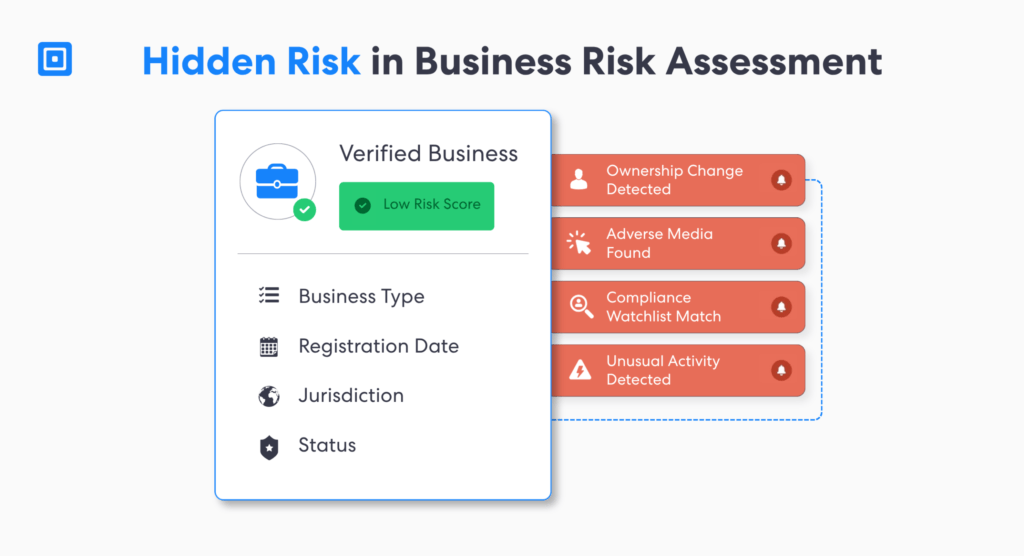
On the other hand, data analysis and automation support early detection. Today’s advanced business risk monitoring tools can deal with large amounts of data, find patterns, and place important signals in real time. According to McKinsey, organizations that prioritize data-driven risk management are much better at anticipating disruptions and responding fast. Being able to detect early warnings through business risk scores and act on them gives companies a clear advantage in reducing risk exposure and maintaining control.
Case Study: ION Group Cyberattack and Identified Risks
Financial software provider, ION Group, faced new scrutiny from the ongoing fallout from its previous cyberattack. Though risk signals existed, they were not prioritized or surfaced early enough. Weak visibility into vendor risk, system exposure, and evolving threat signals meant risks were not fully reflected in internal risk score models.
Enhanced Risk Scoring and Monitoring Integration
Impacted firms strengthened their approach to business risk scores. They built in more threat intelligence, vendor risk data, and system exposure metrics into their risk scoring. As a result, scores were subject to change as new risks emerged. This was combined with continuous processes for business risk monitoring that reflected real-world conditions.
Solutions & Outcomes
Improved visibility into third-party and operational risk across critical systems
Faster escalation of high-risk signals through dynamic risk scoring updates
Stronger alignment between risk scoring, monitoring, and incident response
Regulatory Compliance and Business Risk Analysis
Once organizations improve early detection through key risk indicators, the next challenge is putting things into action that meet regulatory expectations. Compliance is a core part of managing risk in a defensible way. In reality, failures in compliance can bring about serious consequences. A great example of that is the Financial Conduct Authority (FCA) issuing billions in fines over the past decade for weaknesses in controls and practices. This shows how quickly small gaps can, in fact, turn into major exposure.
As a result, a strong risk management framework helps companies stay aligned with changing expectations. It connects risk scoring, risk monitoring, and responses into one clear system. This covers clear risk management policies, running regular risk audits, and keeping a consistent monitoring process across the whole organization. Regulators such as the Basel Committee have stressed the need for stronger risk data collation. Firms must track and report risk correctly across all business areas.
These risk management practices should be built on the basis of consistency and adaptability. If the risk changes, so must the controls around them. According to KPMG, organizations that embed continuous risk monitoring into their operations are much better equipped for regulatory reviews and respond more effectively to emerging threats. This approach makes sure that risk responses are aligned with real-world conditions. This gives business leaders much greater confidence that risks are being managed with both internal and external expectations.
Natural Disasters, External Threats, and Risk Exposure
However, many of the most disruptive risks come from outside the company’s control. The UN Office of Disaster Risk Reduction reports that the number of disasters globally has increased sharply over the past two decades. Natural disasters, geopolitical tension, and economic shocks can impact operations with very little warning. This places much more pressure on businesses to prepare for sudden disruption to their operations.
According to the Federal Emergency Management Agency (FEMA), it estimated that almost 40% of small businesses never reopen after a major disruption. This highlights the importance of identifying potential business risks in advance. These events do not just impact physical buildings. They disrupt supply chains, stop operations, and cause long-term financial strain. Without having a structured approach to risk identification and mitigation, even well-run organizations can struggle to recover.
To manage this, organizations must build environmental and external links into their risk monitoring process. Effective risk management includes contingency planning, clear resource allocation, and effective processes that track early warning signals. Changes in weather patterns, supplier delays, or geopolitical developments can all act as early indicators of said disruption. If teams link these signals back to business risk scoring and monitoring systems, organizations can respond faster and lower the impact of such risks.
Compliance risks also need to take into consideration the future. Climate change, regulatory shifts in government regulations, and global economic instability influence risk probabilities. It can impact an organization’s ability to meet its strategic objectives. For example, the World Bank has showcased how climate-related risks alone are increasing operational uncertainty across industries. By integrating external risk factors into their management strategy, businesses that take a proactive approach are better prepared for what is to come.
Resource Allocation and Effective Risk Monitoring
So, the next challenge is deciding where to act first. Considering that, resource allocation becomes incredibly critical. There is no business that has unlimited amounts of time, budget, or people. This is where business risk scoring proves its value. Ranking risks clearly allows teams to prioritize high-impact threats instead of spreading compliance team efforts too thin. This leads to potential consequences and risks that could impact big or small businesses negatively.
However, organizations should not prioritise risks at random. They need to align resource allocation with their risk appetite and strategic objectives, especially when multiple departments manage different types of risk. Without this alignment, teams can misallocate resources, under-manage critical risks, and spend too much time on lower-priority issues.
As a result, technology now plays a key role in making this process more impactful. Modern risk management software helps automate workflows, improve data analysis, and provide real-time insights into changing risk levels. Gartner notes that organizations adopting integrated risk management platforms gain much better visibility across operations and make fast, more consistent decisions. By placing resources into high-risk areas and using data to guide decisions, organizations can lower overall risk exposure by prioritizing effectively. You can learn more here: What is a Risk-Based Approach (RBA)?
Mitigating Risks with a Business Risk Score
However, companies cannot eliminate all risk. That is virtually impossible. Trying to do so wastes time and resources. Instead, they should make clear, informed decisions about how to handle each risk. Many organizations fall short not because they lack data, but because they lack a structured way to turn that data into practical action.
Risk management is not about eliminating uncertainty. It is about responding to it with clarity and intent.
Solutions Consultant at ComplyCube, Milosh Caunhye, goes on to say that, “A business risk score should never sit passively in a report or dashboard. It should act as a trigger point within the risk management process for most businesses and organizations. It should guide teams on what to do next, how quickly to act, and which risks require escalation.”
Organizations use four core risk responses: accept, reduce, transfer, or avoid. They choose the right response based on their risk appetite and the nature of the risk. For example, teams can accept and monitor low-impact risks, while high-impact risks require immediate action, such as tighter controls, process changes, or reduced exposure.
However, a business risk score should also trigger a defined response. A rising risk score should lead to enhanced due diligence, additionally monitoring specific risks, or escalation to senior risk teams. There is now a clear connection between assessment and action in the risk management plan. It ensures that risk mitigation strategies are both analytical and operational.
Additionally, risks often overlap between many different departments. Risk management teams must align their mitigation efforts and strategies. In a complex risk landscape, organizations that respond with clarity and speed reduce exposure and protect their business interests. You can learn more here: Understanding User Risk from Identity Fraud.
Key Takeaways
Business risk scoring must grow from static models to real-time monitoring.
Effective risk monitoring supports early detection and proactive risk management.
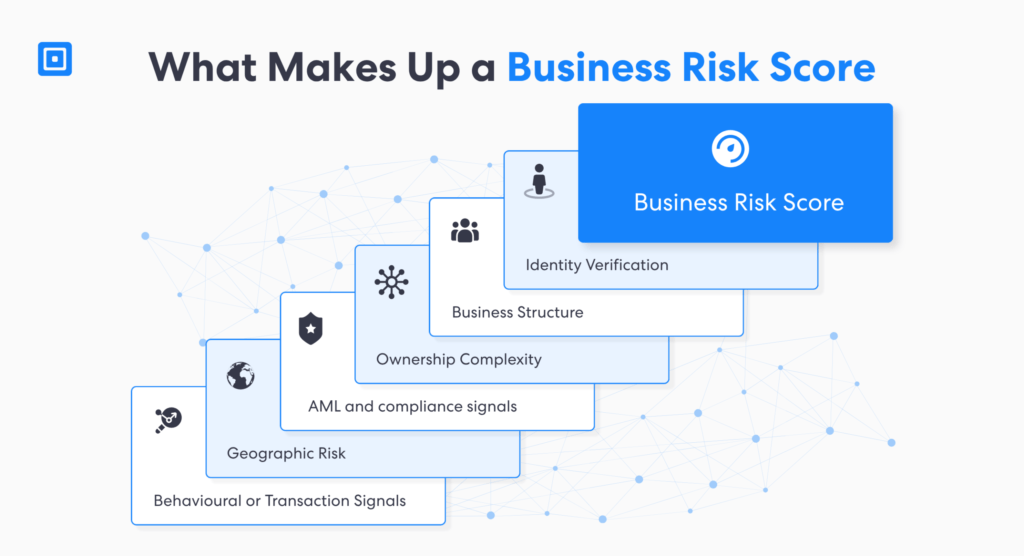
Risk scores should look at many risk factors, such as behavioral and external threats.
A strong risk framework improves regulatory compliance and business continuity.
Advanced data analysis and automation are critical for correct risk assessment and mitigation.
Assess Business Risk Score with ComplyCube
In summary, accurate business risk scores are a fundamental need for most organizations. It is hard to navigate the complex risk landscape and potential threats that change every day. By adopting an ongoing risk monitoring approach, businesses can speed up decision-making, lower risk exposure, and gain a competitive edge.
Want to move beyond static compliance models? ComplyCube can help you implement a smarter, real-time risk intelligence solution tailored to your needs. Contact us today.

Frequently Asked Questions
What is a business risk score and why is it important?
A business risk score is a numerical value assessing the likelihood and impact of potential risks impacting an organization. It helps businesses monitor risks, allocate resources effectively, and ensure regulatory compliance while supporting strategic decision making.
How does business risk monitoring improve risk management?
Business risk monitoring improves risk management by providing continuous insights into risk levels based on relevant risks such as data breaches. It is important to enable early detection of threats, and ensure that mitigation strategies remain effective over time.
What are the key components of a business risk assessment?
A business risk assessment includes risk identification, analysis of risk probabilities and impacts, evaluation of risk exposure, and implementation of mitigation strategies to manage identified risks effectively in a changing risk landscape.
How can organizations mitigate risks effectively?
Organizations can mitigate risks effectively by implementing a comprehensive risk management framework based on their risk tolerance. They can use data analysis, using risk monitoring tools, and updating their risk management strategy to address evolving threats.
How does ComplyCube support business risk scoring?
ComplyCube supports business risk scoring by providing the ongoing process of real-time monitoring, advanced data analysis, and configurable risk scoring frameworks that enable organisations to manage risk proactively and maintain regulatory compliance.