TL;DR: Liveness detection is a critical feature in identity verification. Spoofing attacks utilize increasingly sophisticated technologies to bypass verification engines. Thus, an equally sophisticated liveness detection SDK with Presentation Attack Detection (PAD) is critical. This guide explores what liveness detection is and the benefits of facial matching SDK.
How Does Liveness Detection Work?
Liveness detection technology uses motion analysis and sophisticated algorithms to confirm that a user is physically present during biometric authentication or verification. These verification steps, known as liveness checks, confirm real human interaction. For instance, systems actively detect micro-movements, such as involuntary eye blinks and facial muscle twitches, to verify a live person.
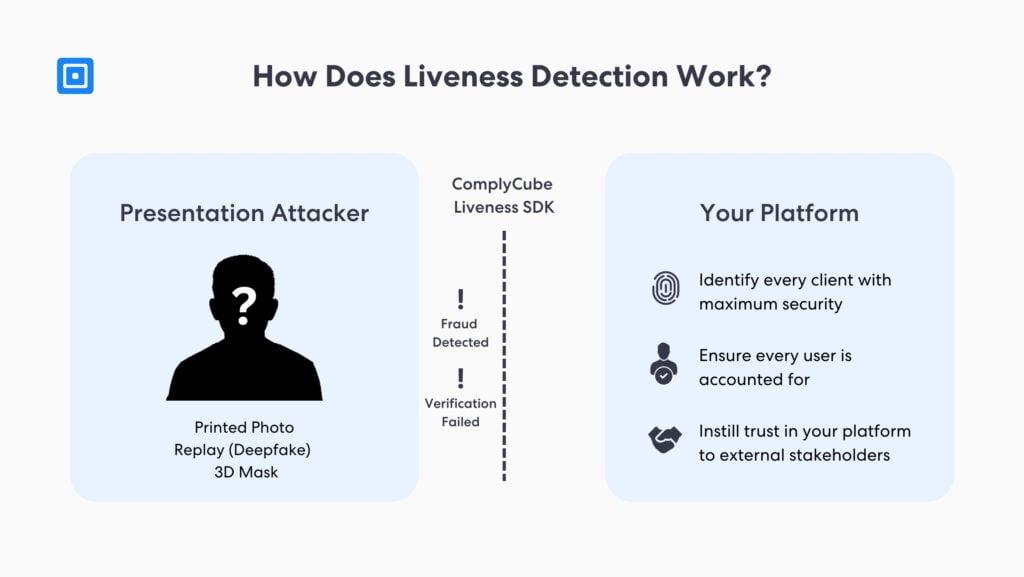
Liveness detection actively lowers privacy risk by capturing only genuine biometric data. Without a liveness detection feature, firms make it far too easy for individuals with malicious intent to bypass security systems using fake representation methods, such as a tampered biometric sample (a selfie).
Types of Liveness Detection Systems
Liveness detection techniques divide into two main types, active versus passive liveness detection. The former uses live responses to on-screen prompts, including blinking and smiling. On the other hand, passive liveness authentication occurs in the background, using advanced algorithms to detect natural signs of life without requiring user interaction.
Each liveness method has different use cases. For example, active provides strong identity assurance, usually used for high-risk individuals or jurisdictions. However, companies actively use passive liveness detection if they prefer a frictionless, quicker IDV process for low-risk users.
What is Presentation Attack Detection (PAD)?
PAD is a crucial fraud prevention technology that plays a key role in biometric verification. Presentation Attack Detection technology helps identify and block fraudulent attempts to gain unauthorized access to a platform, product, or service.
To achieve this, advanced PAD technologies combine both passive liveness detection and active liveness detection to ensure a real person is completing the biometric verification process. Moreover, global regulatory authorities, such as the Financial Action Task Force (FATF), encourage the use of liveness technology. This shift underscores the growing need to protect businesses and consumers from surges in fraudulent and spoofing attacks.
Types of Presentation Attacks
As technology evolves, it has enabled new techniques of presentation attacks. However, some of these are only detectable through the most advanced identity verification solutions, embedded with liveness checks. Additionally, Artificial intelligence (AI) plays a crucial role in this process, continuously learning from large datasets to search emerging attack patterns and improve spoof detection mechanisms over time.
Modern solutions actively catch spoof artifacts. These spoof artifacts include artificial skin tones, inconsistent facial hair, and texture analysis of a user’s face, used to commit fraudulent attempts. For example, a common challenge-response method asks the user to blink or smile to confirm they are a live person and not a static image or mask.
Printed Photo Presentation Attacks
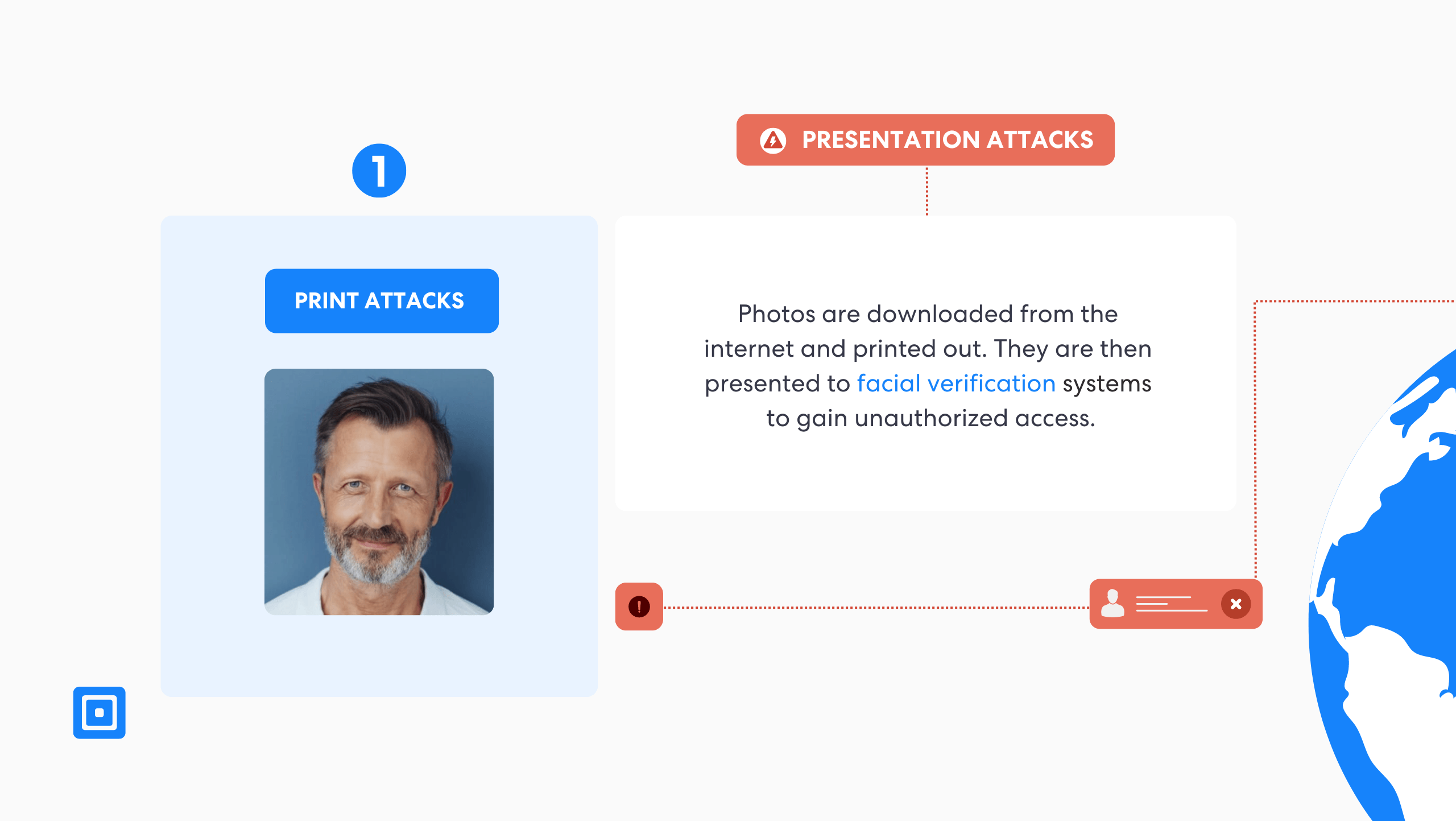
These are among the simplest forms of spoofs. Without PAD technology, attackers can easily bypass facial recognition authentication processes by presenting printed identity documents or images of another person. This is why featuring a live upload during the biometric liveness detection process is critical to enhancing security.
Replay Attempts and Deepfake Attacks
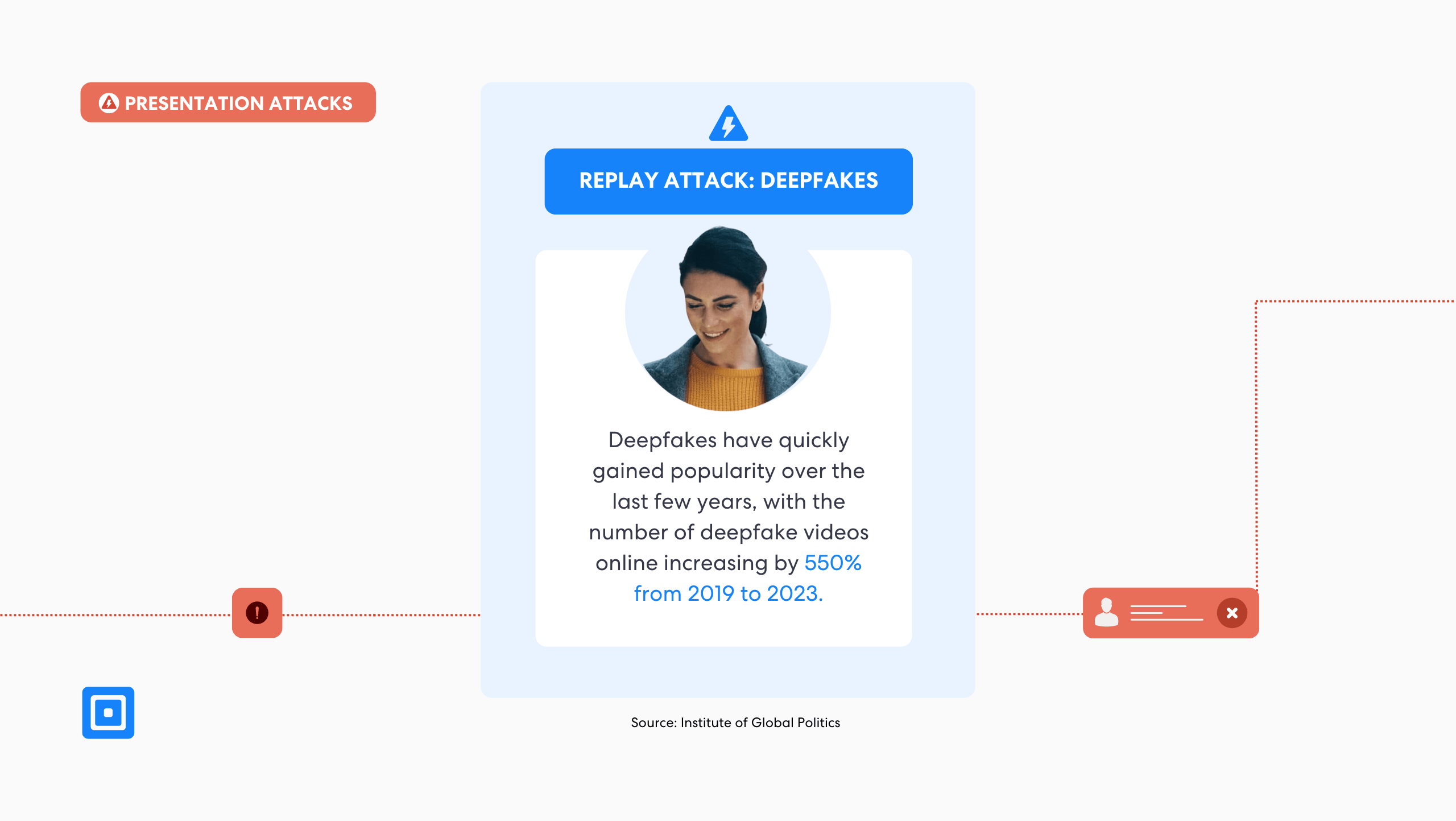
Deepfake or replay attacks occur when the attacker plays a pre-recorded video or presents a digital image to the facial authentication system. Deepfakes are an advanced form of synthetic media used in presentation attacks. It is created by machine learning techniques, making it difficult to detect without advanced PAD methods.
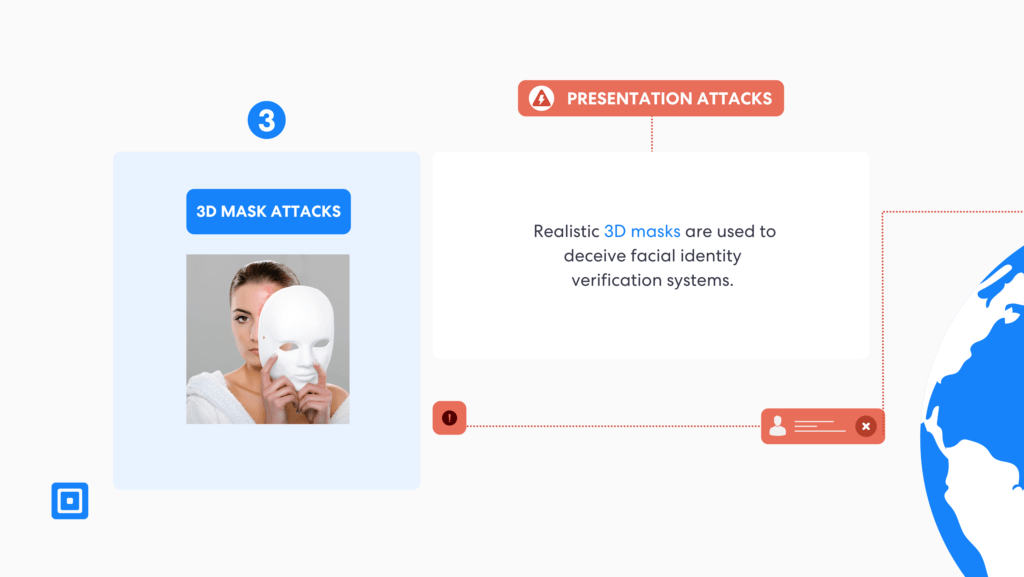
3D Mask Presentation Attacks
These occur when fraudsters use a 3D mask with their target’s physical characteristics to deceive biometric systems. These masks are often made using a mold of their target’s face to replicate the facial biometric characteristics of the genuine user with high precision. Learn more about PAD by reading Presentation Attack Detection: A Comprehensive Guide.
Integrating with a Liveness Detection SDK
Software Developer Kits are building tools for developers, providing a specific utility to a particular system. SDKs are built to be easily integrated into existing software, making them flexible tools for developers. Most IDV SDKs will come with liveness detection algorithms already built in; if you are looking for a provider, make sure you know what the SDK you’re integrating with is capable of.
Additionally, many liveness detection SDKs process biometric data locally to enhance data privacy and security. Requiring multiple biometric inputs, such as facial recognition and fingerprint recognition, is one of the most secure ways to use biometric authentication, and some SDKs support these multiple modalities.
88% of all deepfake cases detected in 2023 were in the crypto sector.
This is an alarming figure, especially when considering many crypto exchanges do not feature a liveness detection solution during their KYC onboarding flow. However, crypto aside, the volume of deepfake and spoofed identities is increasing month on month. Tough KYC integrations are a must for protection from malicious individuals.
Liveness Detection: Web and Mobile SDKs
Customizing a web or mobile SDK is key for firms that want to provide a seamless on-brand user experience. Developers can tailor each step of the verification process such as the introduction screen, document capture settings, and much more.
Developers can use this function to ensure that the liveness check integrates smoothly with the rest of the IDV flow, facilitating a seamless and user-friendly experience that guarantees a high-quality verification. Properly branded SDKs not only reinforce brand recognition but also build trust and confidence among users, a vital practice for robust modern customer acquisition strategies.
Common Use Cases and Industries
Liveness technology is central to secure IDV and biometrics systems. It enables firms to determine whether they are onboarding a genuine user or an attacker attempting to deceive the system. Namely, regulated industries, such as financial institutions utilize it for secure online banking and remote onboarding. In addition, government agencies also utilize it to increase secure access to e-passport and digital services.
For digital-first companies, including e-commerce and crypto platforms, liveness biometric authentication to defend against other presentation attacks while maintaining a frictionless user journey. This solution validates the authorized user’s face in real-time, which strengthens anti-spoofing methods while enhancing customer satisfaction, security, and trust.
ComplyCube Web SDK
ComplyCube’s web SDK is a user-experience-optimized (UX-optimized) interface that creates an easy-to-follow verification process. Integration involves two steps:
- Generating an SDK token to permit the sending of data securely to the ComplyCube platform via the SDK.
- Following this, the SDK is mounted into your platform’s code for seamless integration.
ComplyCube Mobile SDK
The mobile SDK provides the most frictionless customer onboarding and authentication experience for users. With a smart, customizable UX in your platform’s app. Mobile SDKs grant several perks, such as:
- Intuitive UX
- PAD (level 2) liveness
- RFID authentication
- Automatic document and biometric capture
- Personalization and branding
- International reach
ComplyCube’s IDV and Liveness Detection Solutions
ComplyCube’s industry-leading Identity Verification solutions with advanced liveness detection are PAD level 2 certified, making them amongst the most resistant to fraudulent attacks worldwide. Many firms around the world that have integrated their IDV and liveness detection SDK have experienced significantly reduced rates of fraud and reduced time and cost of onboarding new users.
A key nuance provided by the KYC provider is the customizability of their solutions. Once your platform has integrated with its technology, they are the market leader in providing tailored packages that accentuate your business’s development and scale at your demand.
Key Takeaways
Liveness Detection SDK enables the real-time detection of presentation attacks, enabling only genuine customers to pass verification.
Integrating facial matching SDKs with simple APIs supports checks with complex user instructions required.
Active liveness detection involves real user interaction, such as blinking, while passive liveness detection uses advanced technologies to analyze micro-expressions.
Presentation Attack Detection (PAD) is the broader s ystem that identifies blocked and spoofed attempts using combined liveness and passive liveness checks.
ComplyCube’s liveness detection SDK empowers businesses to scale biometric onboarding volume while maintaining high accuracy, security, and speed.
Start a Conversation Today
ComplyCube empowers hundreds of organizations worldwide by catalyzing business growth through secure, seamless client-acquisition solutions. As a result, your team can focus on the initiatives that are most important to your business. If you’re looking for a robust anti-spoofing solution, get in touch with a ComplyCube specialist today.
Frequently Asked Questions
What are examples of spoofing attacks in facial biometrics?
Spoofing attacks regarding facial biometrics refer to the act of using fake representations to bypass recognition controls. For example, it includes 3D masks (custom-printed faces), deepfake videos (generated by AI), print (high-resolution imitation photos), and replay attacks (pre-recorded videos that mimic real human motion).
What does liveness detection mean?
Liveness detection is a term used to check whether someone is a real living person and not a spoof. Modern liveness checks analyze biometric data, including real-time eye blinks and skin texture, to differentiate a real person from false or static images/videos.
What is face presentation attack detection (PAD)?
A face PAD is a broad system that can identify real-time attempts to spoof facial biometrics. A PAD-certified company uses advanced technologies to effectively detect synthetic faces, motion inconsistencies, and printouts.
How does AI prevent deepfakes?
AI-powered models enable the quick and precise detection of advanced deepfakes and synthetic media. Equipped with AI, deepfake detection is critical for biometric authentication and for securing systems against identity fraud. As criminals are constantly looking for ways to fool facial recognition technology, deepfake detection is vital to global security and safety.
Does ComplyCube provide liveness checks?
Yes, ComplyCube provides robust liveness checks within its unified AML and KYC platform. Its SDKs feature both passive and active ways to prevent sophisticated spoofing attacks. Additionally, the firm is PAD level 2-certified, providing end-to-end compliance to the highest global standards for IDV.