
TL;DR: How much does KYC cost businesses across the world, and how can you tell if the cost is justified? KYC compliance is a non-negotiable to avoid both financial crime and hefty penalties. However, costs can escalate quickly if these checks are carried out manually. This guide will show you how to manage your KYC costs effectively while maintaining accuracy and compliance.
What is KYC?
Know Your Customer (KYC) encompasses a range of checks and processes that verify customer identity and perform the necessary customer due diligence. It enables financial institutions to detect and prevent onboarding clients who may pose a risk to the organisation, such as those involved in money laundering and tax evasion. KYC compliance requirements include collecting customer data via identity documents during the customer onboarding process.
Several regulators, both nationally and internationally, have established regulatory standards for KYC verification processes. Document verification and continuous monitoring are a must, as well as increased due diligence depending on the risk assessment. An effective KYC system supports the broader scope of global Anti-Money Laundering (AML) requirements.
KYC has remained a critical component in safeguarding financial systems.
KYC regulations have undergone significant evolution over the past few years. Forbes states, “the evolution of KYC from its regulatory roots to its contemporary digital prowess reflects a dynamic response to the evolving landscape of financial transactions. From the manual processes of the early days to the technological innovations of today, KYC compliance has remained a critical component in safeguarding financial systems.”
Why Manual KYC Checks Are Expensive
The cost of KYC can increase significantly with manual KYC reviews. These costs accumulate due to labor-intensive processes, as skilled compliance staff must manually review documents, assess risk, and enter data into systems. On top of this, there are also operational costs related to secure data storage, software tools, and ongoing staff training. Additionally, manual checks carry the risk of human error, which can result in costly fines, reputational harm, and a poor customer experience.
Labor Costs: Skilled compliance staff are expensive, and manual reviews take time.
Document Handling: Verifying IDs and other documents manually is slow, error-prone, and less effective at spotting fraud.
Data Entry: Manual input increases errors and requires more oversight.
Compliance Risk: Regulatory updates, audit needs, and potential fines demand thorough (and costly) processes.
Poor Scalability: Manual checks don’t scale well with growth, causing bottlenecks.
Customer Friction: Slow onboarding and rework can drive customers away.
Infrastructure Needs: Secure systems for storing and accessing data add to costs.
On the other hand, KYC tasks that leverage automation technologies, including Optical Character Recognition (OCR) and Artificial Intelligence (AI), reduce expenses. KYC automation streamlines identity verification by seamlessly verifying customer information in real-time. Financial institutions can focus on high-risk scenarios by simplifying new account creation and eliminating manual data collection.
How Much Does KYC Cost? The Costs of KYC Essentials
Understanding the cost of Know Your Customer (KYC) compliance begins with understanding the key checks involved in the process. A laborious KYC process can incur associated costs, especially when outsourced or conducted at scale. Here’s a breakdown of the core KYC verification and their typical price ranges:
Document Check
Document verification includes document authentication, data extraction, cross-referencing and image verification. These processes ensure that the right security features, such as watermarks, holograms, and other markers, are authentic and that information can be cross-referenced with other data sources. Document checks can include passport verification, diver’s license verification, and many other forms of documentation, including social security cards, tax documents or employment records.
With volume-based pricing, document verification typically ranges from $0.80 to $1.35 per check at lower volumes. For instance, competitors such as Sumsub charge $1.35 onwards per verification. However, higher-volume organizations benefit from more cost-efficient rates and better ROI. For example, high-volume companies leveraging ComplyCube’s proprietary AI document checks enjoy greater cost savings.
Biometric Check
The user submits a selfie or live video as part of the identity verification process. The facial recognition software compares the live image to the image on the submitted document (e.g., passport or driver’s license). The software looks for specific facial features, such as the distance between eyes, nose shape, and overall facial structure, ensuring that the person in the document matches the one in the selfie.
Companies such as ComplyCube enable organizations to conduct liveness and facial similarity checks from $0.20 at lower volumes, reducing even further for higher-volume use cases. Find more information on all of ComplyCube’s biometric checks here.
Case Study: Paxos $48.5 Million Penalty for Poor KYC and AML Programs
New York Department of Financial Services (NYDFS) Findings
NYFDS penalized Paxos a whopping $48.5 million in August 2025. This fine marked one of the largest fines in 2025 for compliance failures. Paxos Trust is a leading blockchain provider based in New York. NYFDS investigations exposed systematic gaps in the firm.
The Cost of Non-Compliance
Reports showed that Paxos did not conduct adequate customer due diligence and ongoing monitoring during its partnership with Binance. This failure enabled over $1.6 billion in illegal funds to flow. The cost of non-compliance is steep, costing million-dollar fines.
Outcome
- The NYFDS fined Paxos Trust $26.5 million, with $22.5 million allocated for remediation and monitoring of compliance gaps.
- Partnerships and business relationships now demand rigorous measures, including Know Your Business (KYC) checks.
- This case exposed Paxos Trust to reputational damage, as the news served as a stern warning on the cost of non-compliance.
Pricing Factors To Consider in KYC Verification Process
When evaluating the cost of KYC, financial institutions must consider the direct and indirect costs. Increased cost can arise from verification volume, level of automation, and geographic scope. The balance between complex KYC processes and maintaining positive customer relationships continues as an ongoing challenge for businesses. Organizations can address this by adopting a risk-based approach and utilizing scalable automation tools that expedite customer onboarding, comply with KYC regulations, and minimize costs.
Verification Depth
- Standard KYC: Typically, this check includes document and biometric verification.
- Enhanced Due Diligence (EDD): Includes increased Customer Due Diligence (CDD) than a standard KYC check, with added checks such as adverse media and Politically Exposed Person (PEP) screening.
- Ongoing Monitoring: Real-time alerts and monitoring for changes in customer risk profiles, new adverse media, etc. Additionally, transaction monitoring systems can incur a high cost.
Volume-Based Pricing
- Bulk discounts: Lower per-check cost for higher monthly or annual volumes.
- Tiered pricing: Pricing levels that change once certain volume thresholds are hit.
- Commitment levels: Discounts for committing to a minimum monthly or annual volume.
Geographic Scope
- Domestic vs. international checks: International verifications often cost more due to data access costs and regulatory complexity.
- High-risk jurisdictions: Enhanced checks in sanctioned or high-risk countries may incur premium fees.
Automated KYC
- High automation: Utilizes AI and machine learning to replace manual, repetitive KYC reviews which reduces time, effort, and manual labor.
- Low automation: Dependence on employee review and IT increases the risk of human error and a slower onboarding process.
Hidden Costs to Watch Out For To Reduce KYC Costs
- Set-up fees: This is a common cost that you might find with some AML and KYC platforms, which can amount to £20,000 in some cases.
- Support fees: Some platforms charge for ongoing support, which can quickly become very expensive for businesses. Ensuring that support is included within your package is critical.
- Data retention and report downloads: Another hidden cost to be weary of is the ability to download data and reports without paying an additional fee.
Harry Varatharasan, Chief Product Officer at ComplyCube, states, “A lot of providers may seem to have cost-effective pricing models, yet their standard packages do not include essential features, such as report downloads, data security, or support fees”.
Ask potential providers the tough questions before it’s too late.
“This then leaves customers vulnerable to constantly paying extra fees to obtain the service that was actually required. Ask potential providers the tough questions before it’s too late,” he adds. You can learn more here AML Check Cost: Hidden Fees in Compliance.
What Does Non Compliance Look Like?
For many financial institutions, especially corporate and institutional banks, the cost of incorporating cutting-edge KYC technology may seem steep. While compliance costs that include services such as identity verification with liveness detection and customer due diligence to ongoing maintenance, these are nothing in comparison to the regulatory fines, reputational harm, and lost business that result from non-compliance.
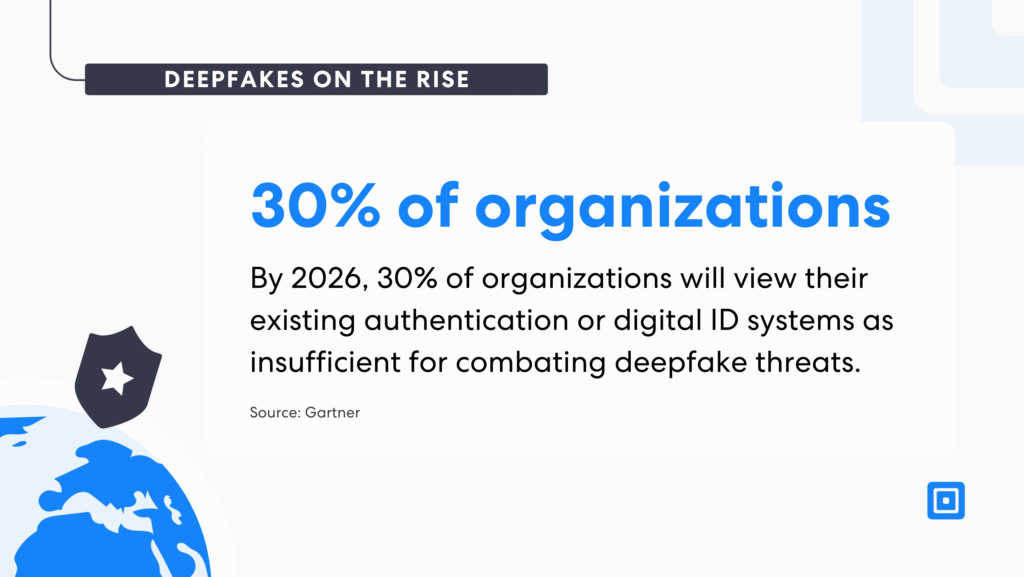
Furthermore, research by Gartner shows that by 2026, 30% of organizations will view their existing authentication or digital ID systems as insufficient for combating deepfake threats. This highlights the importance of maintaining robust KYC processes and conducting regular training sessions to detect fraudulent identities. You can learn more here: Are KYC Onboarding Processes Worth It?
The Real Cost of Neglecting KYC Compliance
Failing to invest properly in KYC compliance is not just risky, it’s expensive. Regulatory bodies around the world are issuing record-breaking fines for lapses in KYC processes, especially those involving financial crime, money laundering, terrorist financing, or failure to identify beneficial owners. A single violation can result in:
- Fines running into the millions: Major banks and other financial institutions have been penalized upwards of $100 million for inadequate customer identification programs, poor ongoing monitoring, and weak risk assessment.
- Increased compliance scrutiny: Once flagged, institutions often face more frequent audits, KYC reviews, and must implement expensive remediation plans under tight deadlines.
- Business disruption: Weak KYC systems can lead to the suspension of licenses, loss of business relationships, and denied access to international markets, particularly when operating in high-risk jurisdictions.
- Reputational damage: Non-compliance erodes customer trust and harms your brand, often causing long-term revenue losses beyond immediate penalties.
Key Takeaways
International regulations mandate KYC compliance, as it is crucial in preventing money laundering, identity fraud, and financial crimes.
Identity verification forms a key component of KYC, which includes gathering and verifying the identity documents of users for authenticity.
KYC processes can be significantly streamlined through automation, leveraging features such as artificial intelligence and machine learning.
The cost of KYC is influenced by verification depth, check volume, geography scope, and the level of automation involved in the KYC processes.
KYC costs increase significantly due to hidden expenses, which include setup and support fees, data retention, and report downloads.
Strengthen Operations with KYC Automation
Comprehensive KYC streamlines customer onboarding process, increasing customer trust, and ensuring compliance with national and international regulations. With strong automation technology, organizations can rapidly verify customer identity accurately and securely, reducing onboarding cost significantly. For more information on how to integrate cutting-edge KYC solutions, get in touch with one of our compliance experts.

Frequently Asked Questions
Is KYC expensive?
The cost of KYC can exceed $48 million a year on average. However, the reason KYC can be expensive is because it is largely driven by complex regulations, fines for non-compliance, and manual processes. Modern organizations utilize an all-in-one, automated compliance platform to streamline regulatory requirements and reduce labor bottlenecks.
Is KYC mandatory?
Yes, Know Your Customer (KYC) programs are legally required by many B2B and B2C firms. Under laws such as the US Bank Secrecy Act, the EU’s Anti-Money Laundering Directive (AMLD) and, the UK’s Proceeds of Crime Act require businesses to verify customer identity and to perform ongoing monitoring to prevent illicit activities and safeguard the economy’s financial system.
How much does banks spend on KYC programs?
Banks spend an average of $40-60 million annually with global operations. This cost can increase up to $500 million for enterprises with large verification volumes. However, legacy KYC systems rely on manual processes, significantly responsible for this high cost figure.
What is required for KYC compliance?
For KYC compliance, businesses need to gather and verify if a customer is who they say they are. This is done through the Customer Identification Program (CIP) where a customer’s data, including passport, date of birth, and proof of address is collected to verification. It also extends throughout a customer’s lifecycle journey, requiring continuous monitoring and risk management.
How does ComplyCube’s KYC cost differ from competitors?
ComplyCube offers a unified AI-driven platform for businesses of all sizes to achieve global KYC and AML requirements. We offer tailored cost pricing, offering lower cost per-check for high-volume companies. ComplyCube do not charge set-up fees and provides price transparency for our checks.